Correction: Rare earth metal (Sm)-doped NiMnO3 nanostructures for highly competent alkaline oxygen evolution reaction
S. Swathi, R. Yuvakkumar, G. Ravi, Abdullah G. Al-Sehemi, Dhayalan Velauthapillai

TL;DR
This paper corrects an earlier study on rare earth metal-doped nanostructures for improving oxygen evolution reactions in alkaline conditions.
Contribution
The correction addresses errors or updates in the original study on Sm-doped NiMnO3 nanostructures for oxygen evolution.
Findings
The correction clarifies aspects of the experimental setup or results.
It ensures accurate interpretation of the material's performance in alkaline oxygen evolution reactions.
Abstract
Correction for ‘Rare earth metal (Sm)-doped NiMnO3 nanostructures for highly competent alkaline oxygen evolution reaction’ by S. Swathi et al., Nanoscale Adv., 2022, 4, 2501–2508, https://doi.org/10.1039/D2NA00022A.
Genes, proteins, chemicals, diseases, species, mutations and cell lines named across the full text — each resolved to its canonical identifier and authoritative record.
Click any figure to enlarge with its caption.
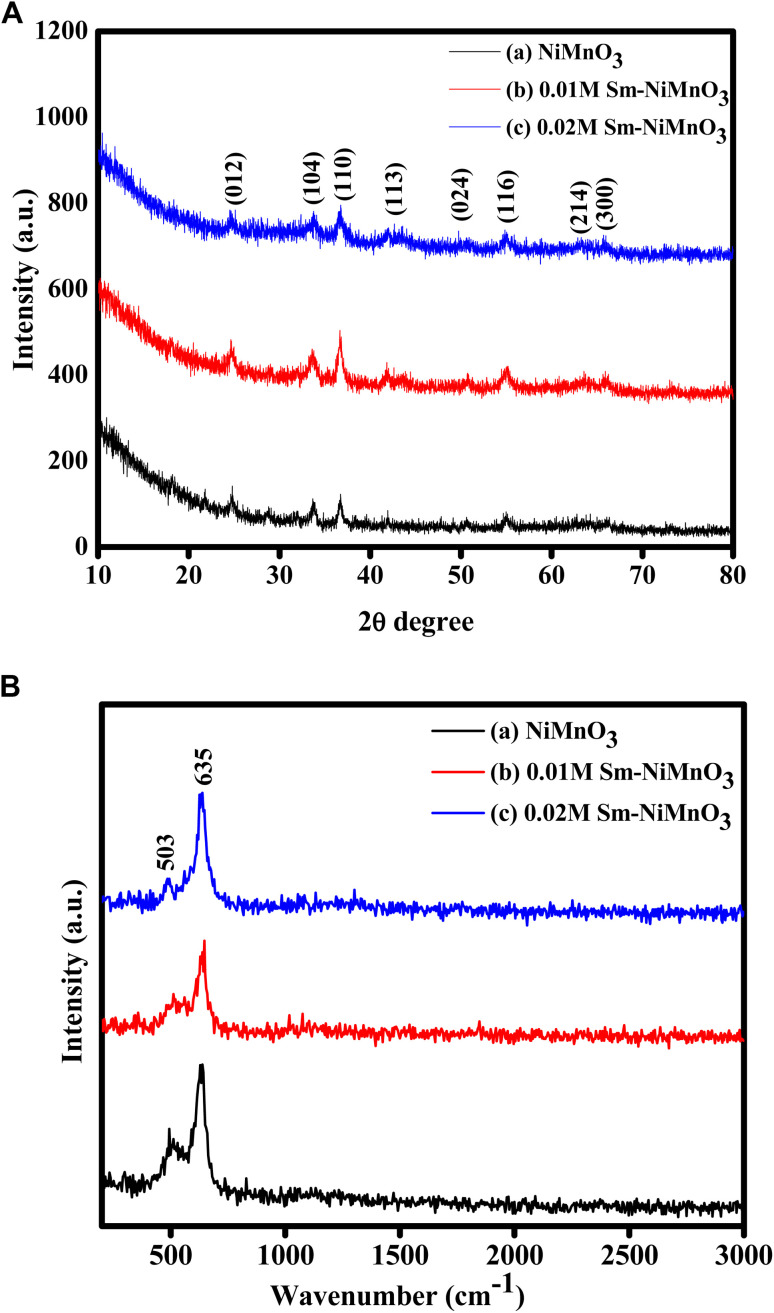 Figure 1
- —Ministry of Human Resource Development10.13039/501100004541
- —Høgskulen på Vestlandet10.13039/100016999
- —Research Center for Advanced Materials Science, King Khalid University10.13039/501100016045
Peer Reviews
No public reviews on file for this paper yet. If you reviewed it on a platform where reviews are public (OpenReview, ICLR, NeurIPS, ICML), you can paste yours below so the community can read it here.
Videos
No videos yet. Explain this paper in a talk, walkthrough, or lecture? Add one.
Taxonomy
TopicsElectrocatalysts for Energy Conversion · Advanced Nanomaterials in Catalysis · Advanced Memory and Neural Computing
The authors regret there is an apparent similarity in the XRD and Raman patterns of the Sm-doped NiMnO_3_ samples in Fig. 1A and B in the original article. The authors supplied the raw data and an independent expert verified the traces were different. The authors state the similarity in the two graphs is due to a processing error that occurred when they plotted the smoothed data and applied the smoothing to the wrong dataset. The authors have provided the graphs plotted with the original raw data without applying the smoothing function.
The authors state the XRD and Raman characterization presented in Fig. 1A and B of this published paper is one of several characterization methods employed to analyze the samples and is of supportive nature. The unfortunate mistake made during selection of data smoothening process for plotting has no consequences in results, discussions, conclusions or outcomes of the published article.
The Royal Society of Chemistry apologises for these errors and any consequent inconvenience to authors and readers.