Detection of Bovine Leukemia Virus in Argentine, Bolivian, Paraguayan and Cuban Native Cattle Using a Quantitative Real-Time PCR Assay-BLV-CoCoMo-qPCR-2
Guillermo Giovambattista, Aronggaowa Bao, Olivia Marcuzzi, Ariel Loza Vega, Juan Antonio Pereira Rico, Maria Florencia Ortega Masague, Liz Aurora Castro Rojas, Ruben Dario Martinez, Odalys Uffo Reinosa, Yoko Aida

TL;DR
A new PCR test found bovine leukemia virus in 31% of native Latin American cattle, with infection rates varying by breed and country.
Contribution
First comprehensive report of BLV proviral load in Latin American Creole cattle using a novel qPCR assay.
Findings
BLV-CoCoMo-qPCR-2 detected BLV in 76 of 244 native cattle (31.1%).
Infection rates varied significantly by breed and country, with the highest in Paraguay (83.8%).
Most infected cattle had low to moderate proviral loads, suggesting resistance to disease progression.
Abstract
Bovine leukemia virus (BLV), an oncogenic retrovirus of the genus Deltaretrovirus, causes enzootic bovine leukosis (EBL), the most prevalent neoplastic disease in cattle and a major source of economic loss. While BLV prevalence has been studied in commercial breeds, data on native Latin American cattle remain limited. This study assessed BLV infection and proviral load in 244 animals from six native breeds: Argentine Creole (CrAr), Patagonian Argentine Creole (CrArPat), Pampa Chaqueño Creole (CrPaCh), Bolivian Creole from Cochabamba (CrCoch), Saavedreño Creole (CrSaa), and Siboney (Sib), sampled across Argentina, Bolivia, Paraguay, and Cuba. BLV-CoCoMo-qPCR-2 assay detected BLV provirus in 76 animals (31.1%), with a mean load of 9923 copies per 105 cells (range: 1–79,740). Infection rates varied significantly by breed (9.8% in CrAr to 83.8% in CrPaCh) and country (15.6% in Argentina to…
Genes, proteins, chemicals, diseases, species, mutations and cell lines named across the full text — each resolved to its canonical identifier and authoritative record.
Click any figure to enlarge with its caption.
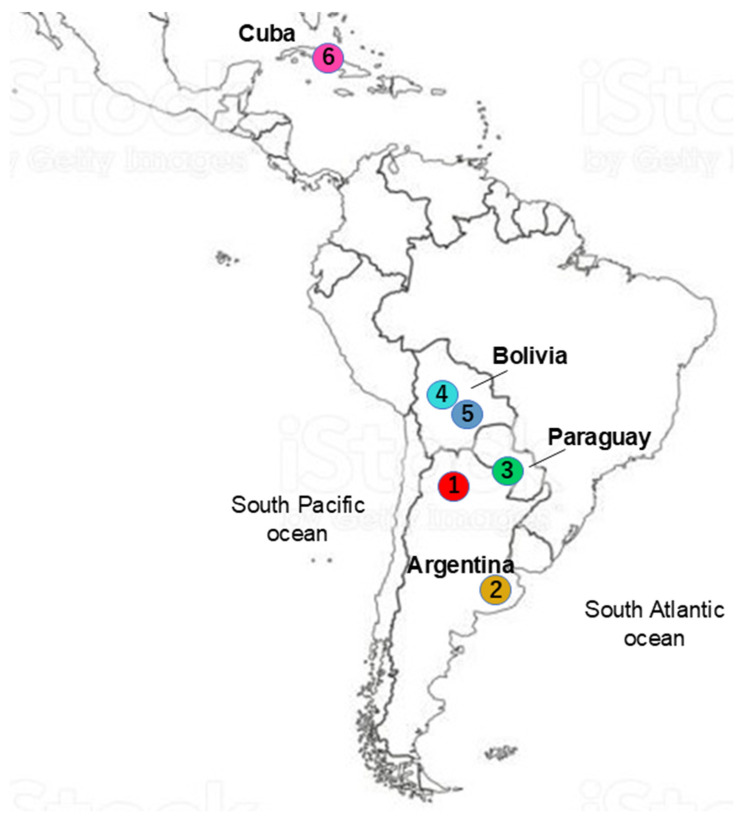 Figure 1
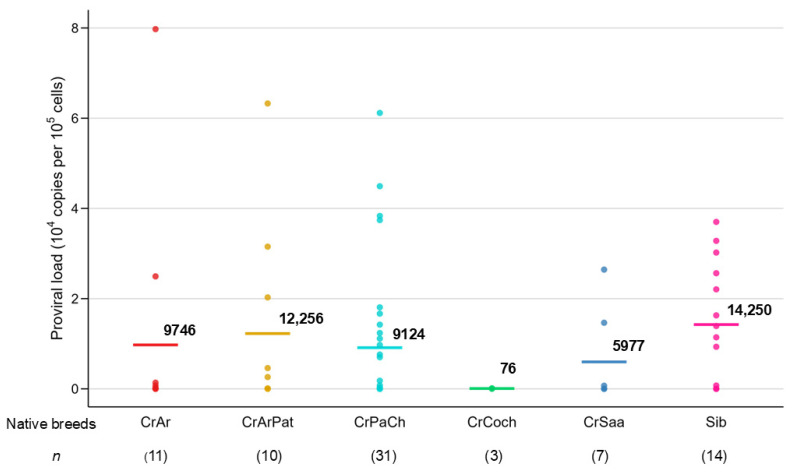 Figure 2
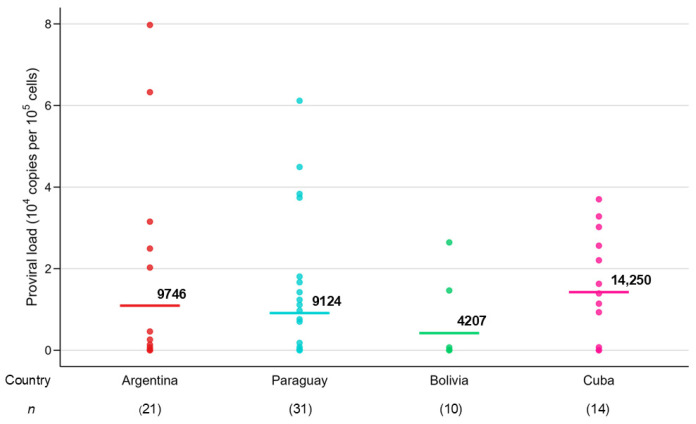 Figure 3
- —FY2023 JSPS Invitation Fellowships for Research in Japan (Long-term)
Peer Reviews
No public reviews on file for this paper yet. If you reviewed it on a platform where reviews are public (OpenReview, ICLR, NeurIPS, ICML), you can paste yours below so the community can read it here.
Videos
No videos yet. Explain this paper in a talk, walkthrough, or lecture? Add one.
Taxonomy
TopicsT-cell and Retrovirus Studies · Animal Disease Management and Epidemiology · Vector-Borne Animal Diseases
1. Introduction
Bovine leukemia virus (BLV), a tumorigenic retrovirus belonging to the genus Deltaretrovirus, is the etiological agent of enzootic bovine leukosis (EBL), one of the most prevalent neoplastic diseases affecting cattle. Upon infection, BLV integrates into the host genome and may remain clinically asymptomatic in a condition referred to as the aleukemic state. Alternatively, it can progress to persistent lymphocytosis, a hematological disorder characterized by an elevated population of B lymphocytes, which may ultimately develop into B-cell lymphomas across various lymphoid tissues in infected animals [1,2]. Moreover, BLV-induced malignant cells are capable of infiltrating multiple organ systems, including the abomasum, heart, intestine, kidney, lungs, liver, and uterus. Clinical manifestations of BLV-associated tumors predominantly include gastrointestinal dysfunction, loss of appetite, weight loss, generalized weakness, lymphadenopathy, decreased milk yield, and reproductive inefficiency, each contributing to considerable economic losses within the livestock industry [3,4,5,6,7,8].
EBL was first documented in 1871 in Germany [9]. The virus initially emerged in the Memmel region of East Prussia, now Klaipėda, Lithuania, and subsequently disseminated across all continents, primarily via the international trade of breeding livestock. The prevalence of BLV infection exhibits considerable variability both among and within countries. Due to the implementation of successful eradication programs [10,11], most Western European nations, along with Australia and New Zealand, are either entirely free of BLV or maintain restricted zones of infection. In contrast, elevated BLV prevalence rates have been reported in both dairy and beef cattle populations across many countries outside these regions [12,13,14,15]. In Latin America, EBL was first recognized in Brazil in 1943 [16]. Estimates of BLV prevalence in Zebu, Taurine pure breeds, and crossbred cattle across Latin American countries range from below 20% to over 80% at the national survey, and from 0% to nearly 100% across specific breeds [17,18,19,20,21,22,23,24,25,26].
In Latin America, the dairy and beef cattle industries are well developed and contribute substantially to regional economies. The continent’s diverse agroecological zones support the breeding of various cattle types for dairy, beef, or dual-purpose production systems.
These include Zebuine breeds (e.g., Nellore, Brahman, Gir, Guzerat), Taurine breeds (e.g., Angus, Hereford, Holstein, Jersey), and composite breeds (e.g., Brangus, Braford, Girolando). Within the Taurine group, Creole breeds hold particular historical and genetic significance. These cattle are direct descendants of animals introduced by Spanish and Portuguese colonists during the late 15th and early 16th centuries. Following over 500 years of natural selection, Creole cattle have evolved into resilient populations exhibiting adaptation to local environmental conditions, extensive phenotypic variation (notably in coat coloration), elevated longevity and fertility, and notable resistance to endemic subtropical diseases. This includes reduced susceptibility to the tick Boophilus microplus, a prevalent vector of multiple bovine pathogens [27,28].
A range of diagnostic techniques has been developed and implemented for BLV, including serological assays targeting anti-BLV antibodies (such as agar gel immunodiffusion [AGID], enzyme-linked immunosorbent assay [ELISA], phytohemagglutinin [PHA], and radioimmunoassay [RIA]), as well as nucleic acid-based polymerase chain reaction (PCR) assays for the detection of the proviral genome (e.g., standard PCR, nested-PCR, quantitative real time PCR [qPCR], and direct blood-based PCR) [13,14,29,30,31,32,33,34]. Notably, the BLV provirus remains integrated into host cellular genomes even in the absence of detectable antibodies. Moreover, proviral load (PVL), which is the number of copies of a provirus, has been associated with BLV-associated disease progression [35,36,37] and transmission potential [35,38,39,40,41]. Accordingly, quantitative real-time PCR is recommended for accurate epidemiological assessments.
To date, ten BLV genotypes have been identified, initially through restriction fragment length polymorphism (RFLP)-PCR analysis and subsequently via partial or complete genomic sequencing [2,23,42,43], seven of which have been detected in Latin America [2]. The present study aimed to evaluate the prevalence of BLV in Creole cattle from Argentina, Bolivia, and Paraguay, as well as a composite local breed from Cuba. To our knowledge, BLV PVL has previously been assessed using the BLV-CoCoMo-qPCR-2 assay only in Bolivian Yacumeño Creole cattle, the Hartón del Valle Creole, and the Lucerna composite breed [23,44,45].
2. Materials and Methods
2.1. Sample Collection, DNA Extraction, and Plasma Isolation
Blood samples were collected from 244 adult cattle representing six distinct local breeds/populations: Argentine Creole (CrAr), Patagonian Argentine Creole (CrArPat), Pampa Chaqueño Creole from Paraguay (CrPaCh), Bolivian Creole from the Cochabamba Department (CrCoch), Saavedreño Creole (CrSaa), and the composite breed Siboney from Cuba (Sib), as detailed in Table 1 and illustrated in Figure 1. Genomic DNA was extracted using either the Wizard^®^ Genomic DNA Purification Kit (Promega, Madison, WI, USA) or the DNeasy Blood and Tissue Kit (QIAGEN, Hilden, Germany), following the manufacturers’ protocols.
2.2. Detection of BLV Proviral Load Using BLV-CoCoMo-qPCR-2
BLV PVLs were determined using a BLV-CoCoMo-qPCR-2 assay (Nippon Gene Co., Ltd., Toyama, Japan), developed based on the “Coordination of Common Motifs” (CoCoMo) algorithm [18,30] using a THUNDERBIRD Probe qPCR Mix (Toyobo, Tokyo, Japan). Briefly, a 183 bp region within the long terminal repeat (LTR) of the BLV genome was amplified using degenerate primers and a FAM-labeled minor groove binder (MGB) TaqMan probe in conjunction with the THUNDERBIRD qPCR Mix (Toyobo, Tokyo, Japan) [35,46]. Simultaneously, a 151 bp fragment of the single-copy bovine leukocyte antigen (BoLA)-DRA gene was amplified using a specific primer pair and a FAM-labeled MGB probe, serving as a normalization control for viral genomic DNA quantification [35,46]. Appropriate positive and negative controls were included throughout the assay. The number of proviral copies per 100,000 cells was calculated following the formula established by Jimba et al. [35].
2.3. Statistical Analysis
BLV prevalence among the tested cattle was assessed through the direct enumeration of positive and negative cases. Absolute frequencies and categories of BLV proviral load were statistically compared across breeds and countries using Fisher’s exact test based on 10,000 replicates, as implemented in the R statistical environment (https://www.r-project.org/, accessed on 1 August 2020).
2.4. Ethical Approval
All animal procedures were reviewed and approved by the Institutional Committee on Care and Use of Experimental Animals (CICUAL) from the School of Veterinary Sciences of the National University of La Plata (Buenos Aires, Argentina; protocols 89-1-18T, 41.2.14T).
3. Results
3.1. BLV Prevalence of Among Latin American Cattle Breeds
A total of 244 blood samples representing six Latin American cattle breeds were screened for BLV infection using the BLV-CoCoMo-qPCR-2 assay. All DNA samples successfully amplified the BoLA-DRA gene, which served as an internal control to verify host DNA integrity and to standardize PVL quantification across samples. BLV provirus was detected in 76 samples, corresponding to an overall prevalence of 31.1% (Table 2 and Table 3), with a mean PVL of 9923 copies per 10^5^ cells (range: 1 to 79,740 copies).
The proportion of BLV-positive animals varied significantly across breeds, ranging from 9.8% in CrAr to 83.8% in CrPaCh (p_among breeds = 9.999 × 10^−5^; Table 2). Fisher’s exact test revealed statistically significant differences in BLV prevalence between CrAr and CrArPat (p = 0.003), CrSaa (p = 0.001), and CrPaCh (p = 1.14 × 10^−8^), as well as between CrPaCh and Siboney (p = 0.006).
At the country level, BLV prevalence ranged from 15.6% in Argentina to 83.8% in Paraguay (p_among countries = 9.999 × 10^−5^; Table 3). Significant differences were observed between Argentina and Bolivia (p = 0.035), Argentina and Paraguay (p = 6.04 × 10^−7^), and between Paraguay and Cuba (p = 0.006).
3.2. BLV PVL Among Latin American Native Cattle Breeds
PVL is a critical factor influencing both the progression of BLV-associated disease [35,36,37] and the virus’s transmission potential [35,38,39,40,41]. First, PVL was quantified using the BLV-CoCoMo-qPCR-2 assay and summarized PVL in all BLV positive cattle for each sampled breed and country in Latin America (Table 4 and Table 5). Among BLV-positive individuals, a substantial proportion exhibited low PVL levels: 57.9% (44/76) had fewer than 1000 proviral copies per 10^5^ cells, and 13.2% (10/76) fell within the moderate range of 1001 to 9999 copies per 10^5^ cells (Table 4 and Figure 2). Only 28.9% (22/76) of infected animals presented with high PVL (>10,000 copies per 10^5^ cells), predominantly observed in CrPaCh and Sib breeds.
As shown Table 4, comparison of PVL in BLV-positive cattle for each sampled breeds in Latin America showed that Sib breed had the highest percentage of cattle showing high PVL of 10,000 proviral copies per 10^5^ cell and it showed the highest PVL among the six breeds. By contrast, all of three cows in CrCoch breed belonged to PVL levels below 1000 proviral copies per 10^5^ cells and it showed the lowest PVL among the six breeds. As shown in Figure 2, the order of intensity of BLV PVL among breeds was as follows: Sib breed > CrArPat breed > CrAr breed > CrPaCh breed > CrSaa > CrCoch breed.
Next, we summarized PVL in BLV-positive cattle for each sampled county in four Latin America countries (Table 5). Among BLV-positive individuals, three countries, Argentina, Bolivia, and Paraguay, had the highest proportion of cattle group with PVL levels below 1000 proviral copies per 10^5^ cells among low, moderate and high PVL groups. By contrast, Cuba had the highest percentage of cattle group showing high PVL of 10,000 proviral copies per 10^5^ cells. As shown in Figure 3, the order of intensity of BLV PVL among countries was as follows: Cuba > Argentina < Paraguay < Bolivia.
4. Discussion
Over the past several decades, BLV prevalence has been investigated across diverse cattle breeds and geographic regions. Polat et al. [2] provided a comprehensive summary of the data published to date. The risk of BLV infection and the associated proviral load are influenced by multiple factors, including geographic location, breed susceptibility (with Taurine breeds generally more vulnerable than Zebu), farm-level variation, production system (dairy herds typically exhibit higher infection rates than beef cattle), animal age, and the year of sampling [47,48,49]. Moreover, the reported prevalence is significantly affected by the diagnostic method employed [47]. Consequently, direct comparisons across studies are challenging and must account for these confounding variables to ensure accurate interpretation.
In the present study, six Latin American cattle breeds were screened for BLV infection using a quantitative PCR assay, revealing an overall prevalence of 31.1%. The proportion of BLV-positive animals varied markedly across breeds, ranging from 9.8% to 83.8%. Consistent with previous reports, high BLV prevalence levels have been documented throughout South America, with enzootic bovine leukosis present in most countries [2,23]. Individual infection rates reported across Latin America span a wide range (from below 20% to over 80%), depending on region, breed, and production system [16,18,19,21,23,24,25,26,50,51,52,53,54,55,56,57,58,59,60,61,62]. Most of these studies have focused on transnational dairy and beef breeds such as Holstein, Angus, and Nellore. In contrast, data on BLV prevalence in native Latin American cattle remain limited. Reports have documented BLV infection in various Creole cattle populations and local composite breeds from Bolivia, Colombia, Brazil, and Panama [21,23,26,44,59,60,61,62]. These findings are summarized in Table 6. However, only one of these studies employed quantitative methods [23], with the majority relying on qualitative detection, thereby limiting insights into viral load and disease progression.
A comparative analysis of BLV prevalence across native cattle breeds and countries reveals substantial variability, ranging from 0% to over 90% (Table 6). The elevated infection rates observed in CrPaCh, CrSaa and CrArPat are consistent with the widespread circulation of BLV in Paraguay, Bolivia and Argentina, particularly among dairy breeds such as Holstein [23,38]. Polat et al. [23] reported average Holstein farm-level prevalences of 77.4% in Argentina, 65.3% in Bolivia, and 54.7% in Paraguay, respectively. Comparable prevalence levels have been reported in other Creole breeds, including Hartón del Valle (83.3%) and Chino Santadereano (60%) from Colombia and Guaymí (8%) from Panama [21,61]. Moderate infection rates were recorded in CrCoch (23.8%) and Yacumeño (20.37%) from Bolivia. These figures are notably lower than those observed in the Bolivian dual-purpose CrSaa breed (70%), which may reflect the influence of more intensive dairy production practices. However, this hypothesis warrants validation through studies with larger sample sizes. The CrAr population from Argentina exhibited a low BLV infection rate, estimated at 9.8%. Additional data from Creole breeds in Brazil, Colombia, and Ecuador indicate intermediate prevalence levels ranging from 10% to 35% (Table 6). The Siboney breed from Cuba, a dairy composite developed in the 1970s through the crossbreeding of Holstein cattle with local Zebu to enhance milk production under tropical conditions, exhibited a relatively lower BLV prevalence (28.6%) compared to other composite breeds from Colombia, such as Lucerna and Velásquez, both with reported prevalences of 50% [21,44]. This reduced infection rate in Siboney may be partially attributable to the genetic contribution of Zebu (Bos indicus), which has been suggested to confer greater resistance to BLV, potentially mitigating the susceptibility associated with Taurine (Bos taurus) ancestry. However, the Velásquez breed, which includes approximately 25% Brahman genetics, also showed a prevalence of 50%, indicating that Zebu ancestry alone may not fully account for resistance. Additionally, Creole breeds across Latin America exhibit variable levels of Bos indicus introgression, typically lower in temperate and cold environments and higher in subtropical and tropical regions [63,64,65]. Nonetheless, current BLV prevalence data in Creole breeds from different countries do not reveal a consistent correlation between infection levels and the proportion of Zebu ancestry.
The BLV-CoCoMo-qPCR assay offers distinct advantages over conventional diagnostic methods. First, it enables the detection of a broad spectrum of BLV strains, including both known and potentially novel variants [35]. Second, it has enhanced sensitivity compared to that of other methods because it detects the BLV LTR region, which is present at two copies per provirus [35,66,67]. In previous study, our group evaluated the BLV provirus detection limit using BLV-infectious molecular clones (pBLV-IF2) by comparing to other two BLV proviral quantitative real-time PCR methods, such as TaqMan MGB assay targeting pol gene [68,69], and Cycleave assay targeting the tax gene [37]. The result shows that the BLV-CoCoMo-qPCR assay could detect 100% (3/3) of pBLV-IF2 when present at 0.78125 copies per 10^5^ cells, indicating that the BLV-CoCoMo-qPCR assay has a high sensitivity [67]. Thus, analytical sensitivity using BLV-infectious molecular clones of the BLV-CoCoMo-qPCR assay was found to be highly sensitive when compared with other real-time PCRs. Furthermore, we have successfully detected provirus in low-copy cows at one copy per 10^5^ cells using 370 field cattle [70]. Currently, we show that the BLV-CoCoMo-qPCR assay consistently detected BLV proviruses in low-copy cows at around 10 copies per 10^5^ cells using 82 field cattle [71]. Thus, the BLV-CoCoMo-qPCR assay has a high sensitivity for BLV provirus detection in diagnostic analysis using field samples. This discrepancy is largely attributable to sequence mismatches in the primer annealing regions, a common source of false negatives in conventional PCR and serological assays. The use of degenerate primers in the CoCoMo-qPCR assay effectively mitigates this issue. Importantly, BLV-CoCoMo-qPCR is a quantitative method that allows for precise estimation of proviral load, a critical parameter often overlooked in earlier prevalence studies, which typically reported only the proportion of infected animals. PVL has been positively correlated with the clinical progression of EBL, with higher BLV copy numbers associated with increased disease severity [35]. Moreover, PVL quantification may aid in identifying animals with natural resistance to BLV, offering a valuable tool for genetic studies aimed at uncovering markers of susceptibility or resilience.
As previously noted, BLV was detected across all studied breeds, with prevalence rates ranging from 9.8% to 83.8%. Notably, a substantial proportion of BLV-positive animals exhibited low proviral loads (PVL), with 57.9% harboring fewer than 1000 copies per 10^5^ cells and 13.2% between 1001 and 9999 copies per 10^5^ cells (Table 4 and Table 5). The highest proportions of animals with PVL exceeding 1000 copies were observed in the CrArPat and Siboney breeds. These findings suggest the potential presence of BLV-resistant individuals within certain Creole populations. Supporting this hypothesis, Hernández-Herrera et al. [44] reported that Hartón del Valle Creole cattle not only exhibited lower BLV infection rates but also showed reduced lymphocytosis, a more robust immune response, and significantly lower PVL compared to the Lucerna composite breed and Holstein. Collectively, these observations reinforce the notion that genetic resistance to elevated PVL and progression to enzootic bovine leukosis (EBL) may exist in specific Creole breeds. While multiple studies in transnational breeds such as Holstein have consistently demonstrated a strong association between low PVL and reduced risk of disease progression, further clinical and longitudinal data in Creole cattle are needed to validate this resistance hypothesis in Latin American native breeds. Such evidence could support the inclusion of PVL-based resistance traits in selective breeding programs aimed at improving herd resilience and mitigating BLV-associated economic losses.
5. Conclusions
This study provides the first comprehensive assessment of BLV prevalence and PVL in native Latin American native cattle populations across a broad geographical range, using the BLV-CoCoMo-qPCR-2 assay. These findings offer novel insights into BLV epidemiology in underrepresented genetic backgrounds and lay the groundwork for future surveillance and control strategies in the region.
The reference list from the paper itself. Each links out to its DOI / PubMed record.
- 1Aida Y. Murakami H. Takahashi M. Takeshima S.N. Mechanisms of pathogenesis induced by bovine leukemia virus as a model for human T-cell leukemia virus Front. Microbiol.2013432810.3389/fmicb.2013.0032824265629 PMC 3820957 · doi ↗ · pubmed ↗
- 2Polat M. Takeshima S. Aida Y. Epidemiology and genetic diversity of bovine leukemia virus Virol. J.20171420910.1186/s 12985-017-0876-429096657 PMC 5669023 · doi ↗ · pubmed ↗
- 3OIE Manual of Diagnostic Tests and Vaccines for Terrestrial Animals: Chapter 2.4.11Enzootic Bovine Leukosis 7th ed.World Organization for Animal Health Paris, France 2012
- 4Ott S. Johnson R. Wells S.J. Association between bovine-leukosis virus seroprevalence and herd-level productivity on US dairy farms Prev. Vet. Med.20036124926210.1016/j.prevetmed.2003.08.00314623410 · doi ↗ · pubmed ↗
- 5Ruggiero V.J. Norby B. Benitez O.J. Hutchinson H. Sporer K. Droscha C. Swenson C.L. Bartlett P.C. Controlling bovine leukemia virus in dairy herds by identifying and removing cows with the highest proviral load and lymphocyte counts J. Dairy Sci.20191029165917510.3168/jds.2018-1618631378496 · doi ↗ · pubmed ↗
- 6Bartlett P.C. Norby B. Byrem T.M. Parmelee A. Ledergerber J.T. Erskine R.J. Bovine leukemia virus and cow longevity in Michigan dairy herds J. Dairy Sci.2013961591159710.3168/jds.2012-593023332856 · doi ↗ · pubmed ↗
- 7Kuczewski A. Hogeveen H. Orsel K. Wolf R. Thompson J. Spackman E. van der Meer F. Economic evaluation of 4 bovine leukemia virus control strategies for Alberta dairy farms J. Dairy Sci.20191022578259210.3168/jds.2018-1534130639017 · doi ↗ · pubmed ↗
- 8Nakada S. Fujimoto Y. Kohara J. Adachi Y. Makita K. Estimation of economic loss by carcass weight reduction of Japanese dairy cows due to infection with bovine leukemia virus Prev. Vet. Med.202219810552810.1016/j.prevetmed.2021.10552834773833 · doi ↗ · pubmed ↗