Targeted Modification of the Antimicrobial Peptide DGL13K Reveals a Naturally Optimized Sequence for Topical Applications
Sven-Ulrik Gorr

TL;DR
Researchers found that the antimicrobial peptide DGL13K is already highly optimized for topical use due to its stability, broad effectiveness, and low toxicity.
Contribution
The study demonstrates that DGL13K's natural sequence is already optimized, with targeted modifications failing to improve its therapeutic properties significantly.
Findings
Modifications to DGL13K did not significantly improve its antimicrobial potency or reduce toxicity compared to the original sequence.
DGL13K and its variants showed reduced antibacterial efficacy in the presence of 50% serum, limiting systemic applications.
DGL13K is a promising candidate for topical treatments due to its stability, broad-spectrum activity, and low resistance profile.
Abstract
Antimicrobial peptides are potential alternatives to conventional antibiotics, primarily due to broad-spectrum activity and low propensity for inducing bacterial resistance. However, their clinical translation faces challenges, including peptide stability and potential mammalian cell toxicity. This study centers on DGL13K, an all D-amino acid peptide, which overcomes proteolytic susceptibility and demonstrates notable stability and broad-spectrum bactericidal activity without inducing de novo bacterial resistance. This work aimed to enhance the therapeutic properties of DGL13K by using targeted modifications to increase antimicrobial potency and decrease toxicity, as determined by hemolysis. DGL13K derivatives were synthesized and tested, involving amino acid substitutions, stereochemical alterations, and N-terminal functionalization with polyethylene glycol (PEG) or myristoylate. While…
Genes, proteins, chemicals, diseases, species, mutations and cell lines named across the full text — each resolved to its canonical identifier and authoritative record.
Click any figure to enlarge with its caption.
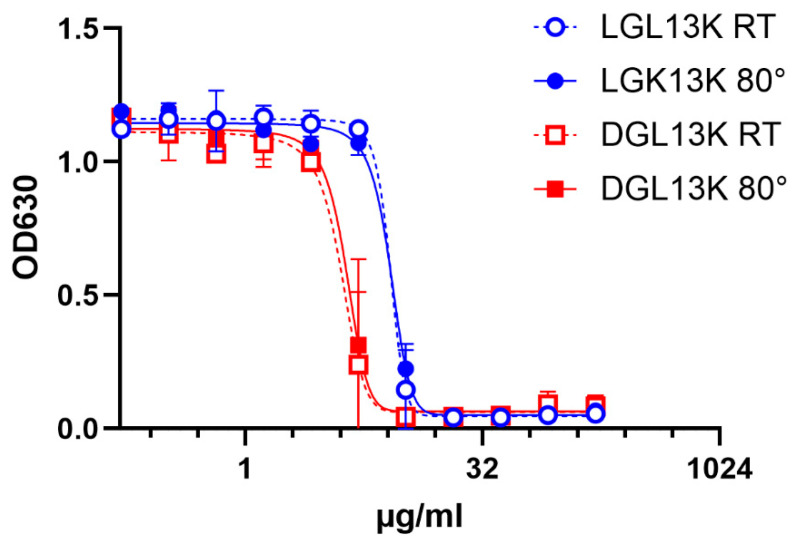 Figure 1
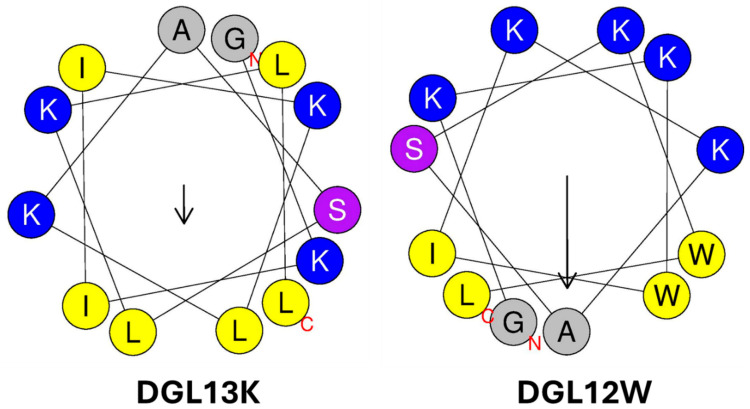 Figure 2
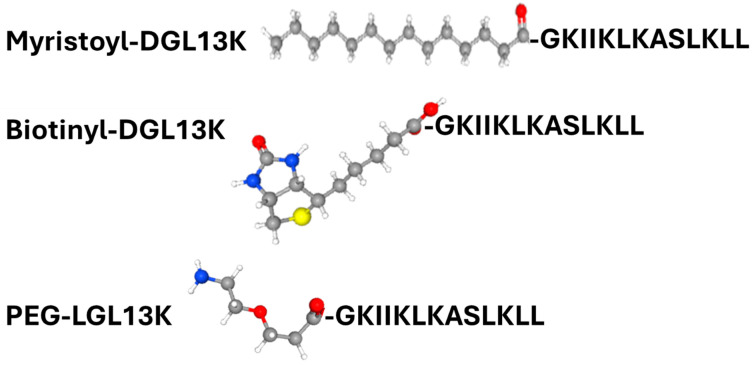 Figure 3
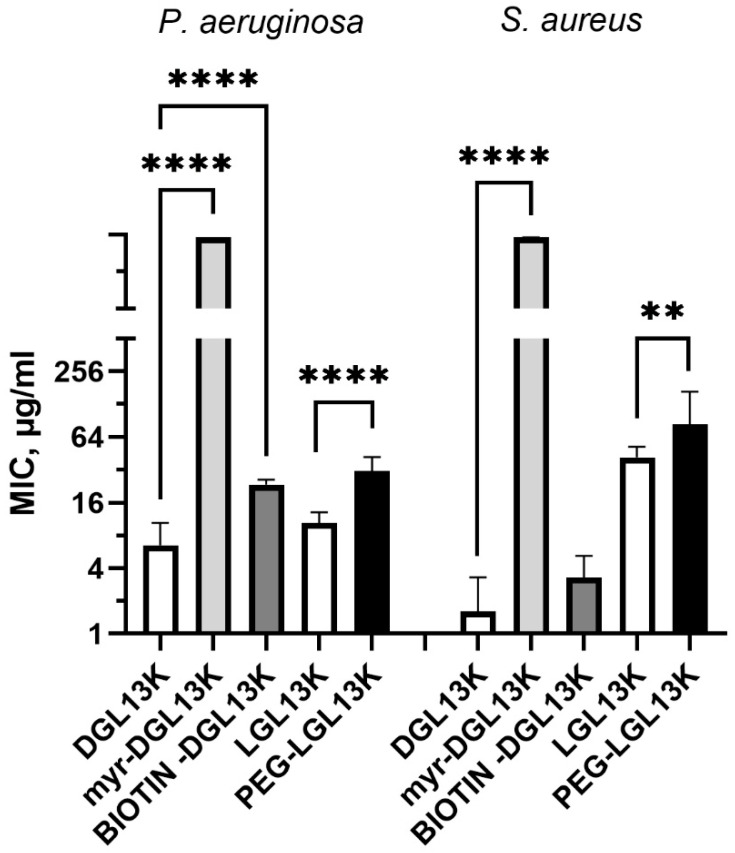 Figure 4
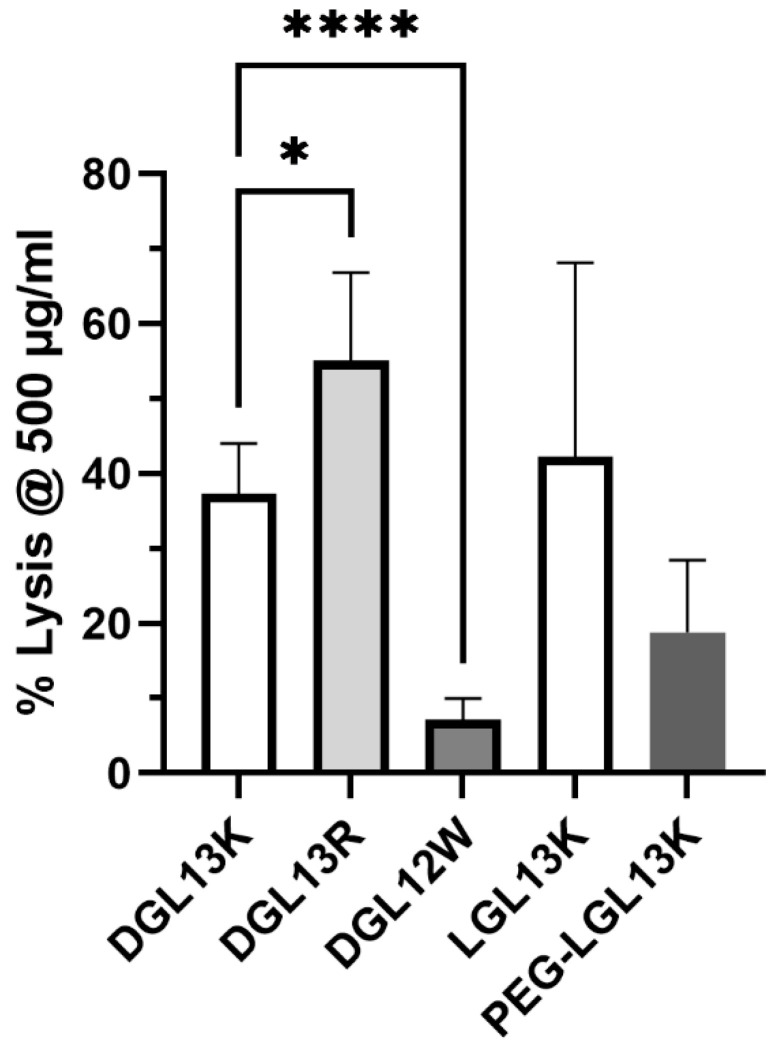 Figure 5
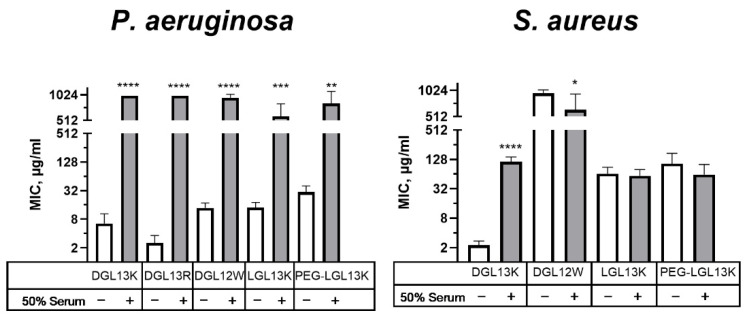 Figure 6
- —University of Minnesota School of Dentistry
Peer Reviews
No public reviews on file for this paper yet. If you reviewed it on a platform where reviews are public (OpenReview, ICLR, NeurIPS, ICML), you can paste yours below so the community can read it here.
Videos
No videos yet. Explain this paper in a talk, walkthrough, or lecture? Add one.
Taxonomy
TopicsAntimicrobial Peptides and Activities · Biochemical and Structural Characterization · Aquaculture disease management and microbiota
1. Introduction
Antimicrobial peptides (AMPs) are a diverse group of host-defense molecules that are found throughout nature in organisms from bacteria and fungi to plants and animals, serving as an ancient component of innate immunity [1,2,3]. Combined with synthetic versions of natural peptides and de novo designed peptides, this class of antimicrobial molecules displays a wide variety of sequences, structures, and antimicrobial properties [4,5,6,7,8,9]. Cationic AMPs are typically amphipathic molecules that can disrupt the bacterial cell membrane by interacting with membrane lipids. This interaction can follow several models and depends on the peptide structure, the peptide/lipid ratio, and the properties of the lipid membrane, including membrane structure, topology, aggregation, and lipid interactions of AMPs; reviewed in [4]. AMPs are prominent in mucosal surfaces where they serve as a first line of defense against invading microorganisms. As an example, we have cataloged at least 45 distinct antimicrobial peptides and proteins in the oral cavity [10,11]. Interestingly, this rich environment of AMPs, allows the colonization by commensal organisms while invading microbes are effectively killed in this environment. Thus, it was already noted in the 1930’s that saliva allows the growth of oral bacteria while killing non-oral bacteria [12]. These properties suggest that human AMPs could be exploited as a new class of antimicrobial therapeutics with a low potential to induce pathogen resistance, while triggering fewer side effects by limiting the disruption of the commensal host microbiome.
Despite their promise as an alternative to traditional antibiotics, a number of challenges have been identified in the attempt to develop AMPs for clinical use [13,14,15]. For example, natural peptides are susceptible to proteolytic degradation, although this can be largely overcome by the use of unnatural and D-amino acids in synthetic peptides [16,17,18,19]. Many AMPs target the bacterial cell membrane [20,21] but, due to similarities with mammalian cell membranes, this is not always a specific target and mammalian cell toxicity has been cited as a concern for clinical development [22,23,24].
Thousands of AMPs have been identified and can be found in several online databases [7,8,9,25]. These peptides typically contain hydrophobic and cationic amino acids but no consensus sequence has been identified for antibacterial activity and the roles of intervening amino acids is poorly understood. Nevertheless, these databases can be queried for common themes that define AMPs [26]. In addition, recent machine learning and broader AI models have been developed to better predict novel AMP sequences [27,28,29,30], although the ultimate success of these approaches remains to be demonstrated [31].
Our laboratory has developed the AMP DGL13K, which was derived from the anti-inflammatory salivary protein BPIFA2 [32,33,34]. BPIFA2 is a Leu-rich protein [35] that is abundant in rodent [36,37] and dog [38] salivary glands/saliva and present in human saliva [39], albeit in relatively low amounts [40]. This protein belongs to a family of antibacterial and anti-inflammatory proteins that are found in multiple mucosal surfaces and secretions [41,42,43]. We noted that BPIFA2 facilitates bacterial aggregation and LPS binding [44,45,46]. To identify the active domain of BPIFA2, the protein was compared to active domains in the related proteins BPI and LBP, which also exhibit LPS-binding activity [32,47]. The initial peptide, GK7 was extended to develop GL13NH2 that shows anti-LPS and bacteria agglutinating activity [33,44,46].
Similar to BPIFA2, GL13NH2 causes bacterial agglutination, which is able to prevent the spread of Pseudomonas infection in a plant model [33]. However, GL13NH2 does not kill the bacteria. To achieve bactericidal activity, the positive charge of the peptide was increased by substituting three polar amino acids with Lys residues [34]. The resulting peptide, GL13K (now named LGL13K) exhibits bactericidal activity against most Gram-negative bacteria but is relatively inactive against Gram-positive bacteria [19,34,48,49,50,51].
LGL13K is susceptible to bacterial proteases, which led to the design of the stereo-isomer DGL13K [16]. DGL13K resists proteolytic degradation [16,19] and has antibacterial activity against all tested strains of both Gram-negative and Gram-positive bacteria, including A. baumanii (six strains) [49], Enterococcus faecalis (seven strains) [19], K. pneumoniae (seven strains) [49], Porphyromonas gingivalis (two strains) [50], P. aeruginosa (nine strains) [16,48,49], S. aureus (two strains) [48], and Streptococcus gordonii (three strains) [19]. Recent unpublished data also show efficacy against Bacteroides fragilis, Clostridioides difficile, Enterobacter cloacae, Enterococcus faecium, and Escherichia coli, thereby completing the ESKAPEE pathogens [52]. In addition, DGL13K shows activity against drug-resistant Gram-negative bacteria [49], including extended-spectrum beta-lactamase (ESBL)-producing and carbapenemase (KPC)-producing K. pneumoniae, multi-drug resistant and extensively drug-resistant P. aeruginosa, and extensively drug-resistant A. baumannii carrying metallo-beta-lactamases. Activity against drug-resistant Gram-positive bacteria includes methicillin-resistant S. aureus (MRSA) [48] and vancomycin-resistant E. faecalis (VRE) [19].
LGL13K is predominantly found in a random coil conformation in the absence of membranes; the peptide adopts an α-helical structure from residue K5 to K11 in the presence of dodecylphosphocholine micelles [53]. In the presence of negatively charged lipid bilayers, the peptide is predominantly found in a ß-sheet structure [53,54]. These ß-sheets can assemble into nanofibrils, which may be the active form of the peptide [55,56]. Rather than forming membrane pores, the relatively short peptide (13 amino acids) disrupts the structure of the bacterial membrane by removing lipid micelles [53,54].
No tested bacteria have developed resistance to DGL13K: Prolonged treatment with sub-inhibitory concentrations (0.5xMIC) of DGL13K does not lead to resistance in P. aeruginosa [49], S. aureus [51], E. faecalis, or S. gordonii [19]. Remarkably, when S. aureus are treated with the L- or D-isomer of GL13K, they gain resistance to LGL13K but not DGL13K, which remains effective against the selected bacteria [51].
The goal of this study was to use targeted modifications of the peptide sequence and modification by functional groups to test if the activity of the peptide can be increased while reducing toxicity to mammalian cells.
2. Materials and Methods
2.1. Bacteria
Pseudomonas aeruginosa Xen41 and Staphylococcus aureus Xen36 were obtained from Xenogen (Alameda, CA; now Revvity, Waltham, MA, USA) and Revvity, respectively, and stored at −80 °C in 10% glycerol. P. aeruginosa were cultured in Luria-Bertani broth while S. aureus were cultured in Todd-Hewitt Broth (Difco, Franklin Lakes, NJ, USA) overnight at 37 °C and shaking at 200 rpm. Cultures typically reached an optical density at 600 nm of 1.7 for P. aeruginosa and 1.3 for S. aureus.
2.2. Peptide Sequences
Synthetic peptides and N-terminally modified peptides were purchased from Bachem (Torrance, CA, USA) or Aaptec (Louisville, KY, USA) (Table 1). Peptide identity and purity were verified by the manufacturer by mass spectrometry and RP-HPLC, respectively. Unless otherwise noted, the peptides were C-terminally amidated and delivered as a TFA salt at >95% purity. Peptide stock solutions were prepared at 10 mg/mL in dH_2_O or 0.01% acetic acid and stored at 4 °C until use. We have recently reported that the stock solutions are stable for at least 2 years under these conditions [51].
2.3. Heat Stability
Peptides were diluted to 1 mg/mL in sterile 10% PBS (1 part PBS, 9 parts dH2O) and heated for 60 min in a 0.5 mL microcentrifuge tube in a water bath set at 80 °C. Control samples were similarly incubated at room temperature. The samples were used for MIC assays, as described below.
2.4. Minimal Inhibitory Concentration
MIC assays were performed as previously described [51]. Briefly, overnight cultures of P. aeruginosa Xen41 were diluted to 10^5^ CFU/mL in Mueller-Hinton Broth (Difco) while S. aureus Xen36 were similarly diluted in Todd-Hewitt Broth. Bacteria (100 µL) were added to 20 µL of 2-fold peptide dilutions in 10% PBS in 96-well polypropylene culture plates. The plates were incubated overnight at 37 °C with gentle rocking and then the optical density at 630 nm (OD630) was recorded in a BioTek Synergy HT plate reader (BioTek, Winooski, VT, USA; now Agilent, Santa Clara, CA, USA). Bioluminescence was recorded for quality control of the bioluminescent bacteria.
In some MIC assays, the culture medium was supplemented with 60% heat-inactivated fetal calf serum (final assay concentration: 50% serum).
2.5. Hemolysis
Lysis of human red blood cells (Innovative Research; Novi, MI, USA) was determined as previously described [48]. Briefly, red blood cells were incubated with 500 µg/mL peptide in PBS for 1 h at 37 °C. Control cells were incubated in dH_2_O to determine 100% lysis or PBS (background lysis). Samples were centrifuged for 10 min at 10,000× g and the OD at 405 nm of the supernatant determined as a measure of hemoglobin release due to cell lysis. Relative lysis of peptide-containing samples (% Lysis) was expressed as [(OD405 with peptide − OD405 without peptide)/OD405 in dH_2_O] × 100%.
2.6. Statistical Analysis
Assays were analyzed by either Student’s t-test (for two groups) or one-way ANOVA (for three or more groups), as stated in the figure legends, using Graphpad Prism 10.4 (Dotmatics, Boston, MA, USA). This study screened a diverse array of modified peptides. In some cases, a low number of replicates was employed for the initial screening. These data are included to provide a more complete picture of the possible changes.
3. Results and Discussion
3.1. Stability of DGL13K in Aqueous Solution
Peptides are typically considered inherently unstable in aqueous solutions [57]. However, an aqueous solution of DGL13K did not lose antibacterial activity after storage at 4 °C for more than 2 years [51]. Similarly, there is no loss of activity when a solution of DGL13K is heated at 80 °C for an hour (Figure 1). Together these results point to the robustness of DGL13K, which overcomes the frequent concern that AMPs are not sufficiently stable for therapeutic use [58].
3.2. Peptide Stereo Chemistry
Proteolytic processing of AMPs has been cited as a concern for their development for clinical use [58,59]. DGL13K was originally designed to overcome proteolytic processing of the L-enantiomer in cultures of P. aeruginosa [16]. Indeed, DGL13K is not degraded in cultures of Gram-negative P. aeruginosa [16] and also resists proteolytic degradation in cultures of Gram-positive Enterococcus faecalis [19].
In addition to its greater stability, DGL13K also exhibits different antibacterial properties from the L-enantiomer. LGL13K is mainly active against Gram-negative bacteria while DGL13K also shows strong activity against Gram-positive bacteria [19,48] (Table 2). This difference may be due to the preferential binding of DGL13K to peptidoglycan, a component of the Gram-positive cell wall [60]. In contrast, both LGL13K and DGL13K bind to lipopolysaccharide, a component of the Gram-negative cell envelope [60]. Thus, the stereochemistry of the amino acids affects not only the stability of the peptide but also directly affects bacterial selectivity.
In addition to the chiral centers at the alpha-carbon, GL13K contains two isoleucine residues that exhibit a second chiral center in the side chain. To test if this chiral center affects peptide activity, LGL13K and DGL13K were synthesized with two allo-Ile residues. MIC assays showed that for DGL13K and LGL13K for each bacterial species, the activity of the allo-Ile peptides matched that of the unmodified peptides (Table 2). These results suggest that only the alpha-carbon chiral center affects peptide activity.
3.3. Amino Acid Substitutions
The antimicrobial activity and toxicity profile of AMPs can be optimized by targeted amino acid substitutions. The antimicrobial activity of AMPs is typically defined by cationic and hydrophobic amino acids that target and disrupt the negatively charged bacterial membrane, respectively [30]. In this context, tryptophan and arginine have been identified as enabling peptide–membrane interactions and antibacterial activity [26,61,62,63,64] and were the focus of the tested modifications to DGL13K.
The two cationic amino acids lysine and arginine are often found in AMPs. DGL13K contains four Lys residues that contribute significant positive charge to the peptide (Table 1). In fact, without these Lys residues, the peptide does not exhibit bactericidal activity [34]. Lys can be substituted for the cationic amino acid Arg, which shows a linear relationship with hydrophobic residues in AMPs that does not exist for Lys [26]. Thus, Arg substitutions have been described to affect the antibacterial activity of AMPs [61,64]. Lys contains a four-carbon chain ending in a primary amine group with a pKa of 10.8 while Arg contains a 3-carbon aliphatic chain attached to a positively charged guanidinium group with a pKa of 12.5 [65]. To test if Arg substitution affected the activity of DGL13K, we designed DGL13R [66], which contains four Arg residues in place of the Lys residues in the parent peptide. The activity of DGL13R was not different from the parent peptide when tested against S. aureus (Table 3).
In addition to positively charged amino acids, hydrophobic amino acids play a role in membrane interaction. These can be grouped as aliphatic amino acids (e.g., Ala, Ile, Leu, Val) and aromatic amino acids (Trp, Phe). DGL13K contains seven of the former but none of the latter. Trp residues, in particular, have been introduced in AMPs [62,64] due to their preference for the interfacial region of lipid bilayers [61]. To examine the role of hydrophobic amino acids in peptide activity, DGL13K was redesigned by substituting one Ile and one Leu residue for Trp residues. To optimize the steric presentation of these amino acids, Lys residues were moved to generate a more amphipathic peptide [62] (Table 1). A helical wheel representation of the redesigned peptide, DGL12W, shows that charged and hydrophobic amino acids are now arranged on opposite sides of a predicted alpha-helix (Figure 2).
DGL12W showed a two-fold increase in the MIC against P. aeruginosa but had lost its activity against S. aureus with a mean MIC above the tested concentration range in some experiments (Table 3). Thus, re-arranging the location of the cationic residues and substituting two Ile/Leu residues with Trp created a peptide with increased specificity for the Gram-negative bacteria P. aeruginosa, compared to DGL13K. It is noted that these empirical changes are based on general rules for AMP design since no specific “AMP sequence motif” has been identified. As a result, each newly designed peptide sequence must be carefully tested to ensure that it exhibits the desired properties for stability, activity, specificity, toxicity, and resistance.
3.4. N-Terminal Modifications
The addition of functional groups, including polyethylene glycol (PEG) or myristoylate, to the peptide sequence is known to affect peptide activity. For AMPs in particular, these modifications have been reported to increase antimicrobial activity and reduce peptide toxicity to mammalian cells [68,69,70,71]. To test the effect of these modifications on peptide activity, an N-terminally PEGylated version of LGL13K and N-terminally myristoylated or biotinylated (control) versions of DGL13K were prepared (Table 1) (Figure 3).
The N-terminal PEGylation of LGL13K caused a two- and three-fold increase in MIC for S. aureus and P. aeruginosa, respectively (Figure 4). Similarly, biotinylation increased the MIC for S. aureus and P. aeruginosa, two- and four-fold, respectively. In contrast, the addition of myristoylate to the N-terminus of DGL13K abolished its activity against both P. aeruginosa and S. aureus. Since the biotin molecule resembles the structure of PEG rather than that of myristate, these results suggest that the addition of a highly hydrophobic chain inactivates the antimicrobial activity of the peptide sequence whereas addition of more polar molecules, which include oxygen and NH groups has only a minimal effect on peptide activity.
3.5. Hemolysis
The selective activity of many AMPs exploits the compositional differences between prokaryotic and eukaryotic membranes to avoid mammalian cell toxicity. The selectivity of AMPs is typically determined as the ratio between the hemolytic concentration and the MIC of the AMP (therapeutic index) [72,73]. One measure of the hemolytic activity is the peptide concentration leading to 50% lysis of red blood cells (HC50 = hemolytic concentration 50) [74]. This assay is routinely used for screening purposes and the lack of red cell toxicity is an important consideration for IV delivery of an AMP. Dose response experiments with DGL13K and LGL13K had revealed that HC50 is 500–1000 µg/mL [48]. To compare multiple peptides, each peptide was incubated with human red blood cells at 500 µg/mL and hemolysis determined spectrophotometrically (Figure 5). DGL13K and LGL13K showed similar lysis as previously reported, while the Arg-modified peptide DGL13R exhibited a small increase in lysis.
DGL12W was created by introduction of Trp residues (Table 1). Since Trp has been reported to affect hemolytic activity [73], the peptide was simultaneously prepared without C-terminal amidation. Omitting this modification has been suggested to reduce hemolysis and increase the therapeutic index of AMPs in some cases [75]. Indeed, DGL12W caused less than 10% hemolysis at 500 µg/mL. Thus, the higher bacterial selectivity of this peptide also resulted in improved selectivity for bacterial membranes, i.e., less erythrocyte toxicity. The PEGylated LGL13K peptide appeared to show less hemolysis than the unmodified peptide but this difference did not reach statistical significance.
It is noted that the hemolytic concentration used here is about 100-fold higher than the MICs determined for several of these peptides (Table 2 and Table 3), suggesting a high safety margin for clinical application. Indeed, we have found that topical application of 1 mg/mL DGL13K does not cause acute skin toxicity [48].
3.6. Serum Activity
The relatively high safety margin for hemolysis, suggested that the peptides could have systemic applications. To explore this option, antibacterial activity of select peptides was compared in the presence and absence of 50% serum. Figure 6 shows that the antibacterial activity against P. aeruginosa is lost in the presence of 50% serum, suggesting that the interaction with the Gram-negative cell envelope is highly sensitive to serum components. We have previously formulated DGL13K with EDTA to enhance antibacterial activity against P. aeruginosa [48], suggesting that divalent cations, e.g., calcium, could play a role in this interaction. Interestingly, the effect of serum on the antibacterial activity was more modest for S. aureus (Figure 6). Several peptides, which showed low initial activity, were not affected by the presence of serum in the assay. These results support the view that the stereo-specific interactions of LGL13K and DGL13K with components of the Gram-negative and Gram-positive cell envelopes [60] are also differentially affected by serum.
4. Conclusions
The original design of the GL13 peptide family was based on the location of a potential anti-inflammatory peptide in the sequence of the salivary protein BPIFA2 [46]. Thus, peptide GL13NH2 exhibited anti-inflammatory activity that captures the activity of the parent protein since GL13NH2 blocks the binding of LPS to BPIFA2 [44]. The substitution of three polar amino acids in GL13NH2 for cationic amino acids (Lys) resulted in an antibacterial peptide, LGL13K (Formerly GL13K, [34]. The introduction of D-amino acids further optimized the properties of this peptide [16,19]. Modification of naturally occurring peptides has been used to optimize antibacterial properties and stability and reducing toxicity to human cells. The present study demonstrates that the sequence of DGL13K exhibits optimized properties, presumably derived from the natural evolution of the parent protein sequence. Thus, none of the introduced modifications were able to substantially alter the biological properties of GL13K. These results reinforce that “general rules” for AMP design are still empirical and must be balanced against the naturally evolved properties of AMPs. As an example, DGL12W exhibited low hemolytic activity, which was intended by design, while the selectivity for Gram-negative bacteria was not predicted by the design process. As far as AI models are trained on these data sets, it may still be challenging to design de novo peptides with fully predictable properties. The design process for DGL13K combined with the results of this study, suggest that naturally occurring proteins and peptides provide a robust platform for such peptide design projects.
The modified peptides showed no more than a two-fold increase in antibacterial activity, reduction in hemolytic activity, or activity in the presence of serum. The specific interaction of each peptide enantiomer with the cell envelopes of Gram-negative and Gram-positive bacteria deserve additional exploration as it may lead to the design of optimized AMPs with improved activity in serum [64].
The low serum activity is not unique to DGL13K and may be an inherent evolutionary aspect of these peptides, which are typically found in mucosal and skin surfaces [76]. Surprisingly the cationic peptide LL-37, which is found in circulating immune cells, also displays poor activity in the presence of serum; reviewed in [77]. Thus, it should be considered that in vitro assays with serum may not be a good approximation for in vivo activity in circulation. While the role of serum components in peptide inactivation is not fully elucidated, our unpublished data suggest that DGL13K binding to serum proteins (e.g., serum albumin) and the presence of divalent cations play a role. Indeed, we have previously reported that formulation of DGL13K with EDTA increases peptide activity [48].
Despite the low activity in the presence of serum, DGL13K shows activity in wound infections [48] and retains activity in synovial fluid (Gorr, unpublished) while LGL13K inactivates LPS in the peritoneum [34]. Given the stability and lack of bacterial resistance, in vivo activity and low in vivo toxicity of DGL13K, this peptide appears to be naturally optimized for the treatment of topical and localized infections.
The reference list from the paper itself. Each links out to its DOI / PubMed record.
- 1Zasloff M. Antimicrobial peptides of multicellular organisms Nature 200241538939510.1038/415389 a 11807545 · doi ↗ · pubmed ↗
- 2Ganz T. Lehrer R.I. Antimicrobial peptides of vertebrates Curr. Opin. Immunol.199810414410.1016/S 0952-7915(98)80029-09523109 · doi ↗ · pubmed ↗
- 3Hancock R.E. Peptide antibiotics Lancet 199734941842210.1016/S 0140-6736(97)80051-79033483 · doi ↗ · pubmed ↗
- 4Bechinger B. Gorr S.U. Antimicrobial Peptides: Mechanisms of Action and Resistance J. Dent. Res.20179625426010.1177/002203451667997327872334 PMC 5298395 · doi ↗ · pubmed ↗
- 5Wang G. Li X. Wang Z. APD 3: The antimicrobial peptide database as a tool for research and education Nucleic Acids Res.201644 D 1087 D 109310.1093/nar/gkv 127826602694 PMC 4702905 · doi ↗ · pubmed ↗
- 6Brahmachary M. Krishnan S.P.T. Koh J.L.Y. Khan A.M. Seah S.H. Tan T.W. Brusic V. Bajic V.B. ANTIMIC: A database of antimicrobial sequences Nucleic Acids Res.200432 D 586D 58910.1093/nar/gkh 03214681487 PMC 308766 · doi ↗ · pubmed ↗
- 7Pirtskhalava M. Amstrong A.A. Grigolava M. Chubinidze M. Alimbarashvili E. Vishnepolsky B. Gabrielian A. Rosenthal A. Hurt D.E. Tartakovsky M. DBAASP v 3: Database of antimicrobial/cytotoxic activity and structure of peptides as a resource for development of new therapeutics Nucleic Acids Res.202149 D 288D 29710.1093/nar/gkaa 99133151284 PMC 7778994 · doi ↗ · pubmed ↗
- 8Gawde U. Chakraborty S. Waghu F.H. Barai R.S. Khanderkar A. Indraguru R. Shirsat T. Idicula-Thomas S. CAMPR 4: A database of natural and synthetic antimicrobial peptides Nucleic Acids Res.202251 D 377D 38310.1093/nar/gkac 933 · doi ↗