Modulating Chitinase in the QS Biosensor Strain CV026: Do Not Forget to Release Carbon Catabolite Repression. Comment on Deryabin et al. Quorum Sensing in Chromobacterium subtsugae ATCC 31532 (Formerly Chromobacterium violaceum ATCC 31532): Transcriptomic and Genomic Analyses. Microorganisms 2025, 13, 1021
Alex Leite Pereira, Fernanda Favero, Angelo Henrique Lira Machado

TL;DR
The paper emphasizes the importance of using a specific medium to accurately test chitinolytic activity in Chromobacterium strains influenced by quorum sensing.
Contribution
The paper highlights the necessity of a minimal chitin-supplemented medium for reliable QS-related chitinolytic activity assays.
Findings
Chitinolytic activity in Chromobacterium strains is regulated by quorum sensing and carbon catabolite repression.
A minimal culture medium supplemented with chitin is essential for accurate testing of QS-modulated chitinolytic activity.
Abstract
Chitinolytic activity is a well-documented phenotype controlled by quorum sensing (QS) in Chromobacterium strains but also regulated by carbon catabolite repression mechanisms. This work comprehensively reviews scientific literature on chitinolytic activity, reinforcing the need to use a minimal culture medium supplemented with chitin for assays testing chitinolytic activity modulated by QS in Chromobacterium strains.
Genes, proteins, chemicals, diseases, species, mutations and cell lines named across the full text — each resolved to its canonical identifier and authoritative record.
Click any figure to enlarge with its caption.
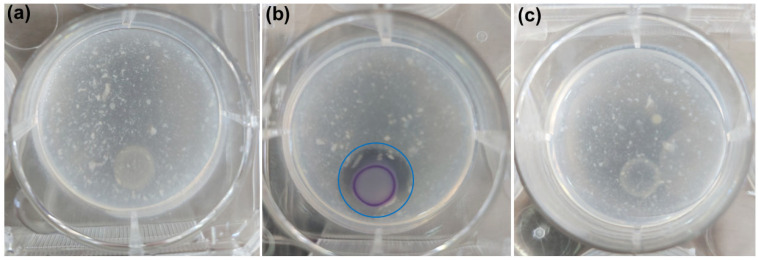 Figure 1
- —COORDENAÇÃO DE APERFEIÇOAMENTO DE PESSOAL DE NÍVEL SUPERIOR–BRAZIL (CAPES)
- —CONSELHO NACIONAL DE DESENVOLVIMENTO CIENTÍFICO E TECNOLÓGICO–BRAZIL (CNPQ)
- —FUNDAÇÃO DE APOIO À PESQUISA DO DISTRITO FEDERAL–BRAZIL (FAPDF)
- —Universidade de Brasília
Peer Reviews
No public reviews on file for this paper yet. If you reviewed it on a platform where reviews are public (OpenReview, ICLR, NeurIPS, ICML), you can paste yours below so the community can read it here.
Videos
No videos yet. Explain this paper in a talk, walkthrough, or lecture? Add one.
Taxonomy
TopicsMicrobial Metabolism and Applications · Enzyme Production and Characterization · Identification and Quantification in Food
1. Introduction
We read with great interest the recent article by Deryabin et al. addressing transcriptional and genomic analyses in the quorum sensing (QS) strain ATCC 31532 [1]. However, we were surprised to find that the authors stated in their concluding remarks that the results call into question “the chitinase assay in QS modulation experiments using the ATCC 31532-derived CV026 biosensor strain” published by our group [2].
Unfortunately, we suspect some experimental issues, including phenotypic modulation in bacterial culture and cloning approaches applied in Chromobacterium QS research, may have been misunderstood by Deryabin et al. [1].
2. Discussion
In the seminal series of papers published by Stewart and Williams’ group in the mid-1990s [3,4], the mini-Tn5 double mutant strain [∆-cviI, ∆-vioS] CV026, derived from C. subtsugae ATCC 31532, was phenotypically demonstrated to be defective in N-(hexanoyl)-L-homoserine lactone (C6-HSL) production. Consequently, it was shown to be completely deficient in both violacein production and chitinolytic activity [3,4,5]. Furthermore, supplementation of CV026 cultures with culture supernatants from the C. subtsugae wild-type strain or 10 μM of synthetic C6-HSL restored violacein and chitinase production to levels comparable to those of the parental wild-type strain (Figure 1) [3,4,5].
Since the initial experiments published on QS in Chromobacterium strains, violacein production is routinely achieved by growing bacterial strains in nutrient-rich medium such as Luria broth (LB) (tryptone 10 g/L, yeast extract 5 g/L and NaCl 10 g/L). Growth of wild-type strains of C. violaceum ATCC 12472 or C. subtsugae ATCC 31532 in LB under aeration or on LB agar produces detectable violacein, as does the QS-mutant strain CV026 when supplemented with exogenous C6-HSL [2,3,4,5,6,7,8].
However, a completely different culture environment must be established to enable the expression of chitinolytic activity in experimental models exploiting Chromobacterium spp. strains.
The extracellular degradation of chitin and subsequent uptake of chitin-derived oligosaccharides is an energetically demanding process for bacterial cells [9,10]. Therefore, prioritizing the consumption of simple sugars before expending energy to degrade complex polysaccharides, such as chitin, is energetically advantageous for bacteria, and allows for faster growth. Mechanisms that downregulate costly metabolic pathways in response to preferred carbon sources are known as carbon catabolite repression (CCR) [9,10].
CCR mechanisms have been shown to control chitinolytic activity in bacterial systems, including Gammaproteobacteria and Firmicutes species. In Pseudomonas spp., GacA (global regulator A) is a high-level regulator expressed during restricted bacterial growth under limited nutrient availability, activating regulatory RNAs (rmsY and rmsZ) to modulate carbon assimilation [11]. Studies have demonstrated that GacA controls chitinase activity in P. fluorescens and P. aeruginosa [12,13]. Additionally, QS regulation of chitinase has also been demonstrated in P. aeruginosa PAO1 [14]. However, evidence supports that Pseudomonas QS systems are under the modulation of the GacA system [15].
In Serratia marcescens, CCR is primarily modulated by the cAMP and its receptor protein (CRP), which triggers the expression of catabolite-repressed genes. Carbohydrate transport is achieved by the phosphoenolpyruvate (PEP)-dependent carbohydrate phosphotransferase system (PTS) [16]. The major CCR signal from PTS is the phosphorylation state of sugar-specific permeases (enzymes IIA-D). When preferred carbon sources are limiting, phosphorylated EIIA activates adenylate cyclase to generate cAMP, which in turn activates CRP and thereby releases CCR [17]. Studies have shown that mutations in CRP, EI or EIIA impair the expression of chitinase and chitin-binding protein in S. marcescens [17,18,19].
Vibrio cholerae maintains control over chitinase genes through molecular circuits similar to those in S. marcescens [10]. Furthermore, in V. cholerae, chitin oligosaccharides serve as both a nutrient source and an environmental signal that induces a strong transcriptional response [10].
The expression of chitinolytic activity in Bacillus thuringiensis is well characterized and demonstrates inhibition by glucose and induction in the presence of chitin. Chitinase genes are negatively regulated by CcpA (catabolic control protein A), which binds to and blocks cre (catabolic response element) sequences in target promoters when glucose is available [20].
Control over chitinase activity in Chromobacterium spp. has been characterized in less molecular detail. However, it is well documented that chitinase expression is directly controlled by QS-modulated transcriptional activator (CviR) (in C. violaceum strain 12472), induced in the presence of chitin (in C. subtsugae ATCC 31532), and restored in QS-mutant strain CV026 upon supplementation with C6-HSL [4,21].
CCR control over chitinolytic activity in C. subtsugae ATCC 31532 and its derivative mutant strain CV026 has also been demonstrated by Chernin et al. [4]. Using phenotypic assays on agar plates to visualize chitinolytic activity and extracellular protein extracts to measure enzymatic activity, the authors demonstrated that C. subtsugae ATCC 31532 produces chitinase only when grown in minimal media (LB diluted to 10% [vol/vol]) containing chitin (0.2% colloidal chitin), as does strain CV026 when supplemented with exogenous C6-HSL. Furthermore, neither strain showed constitutive chitinolytic activity when chitin was replaced by glucose or sucrose in the growth medium, regardless of HSL supplementation [4].
Given the role of CCR in regulating chitinase activity, short-incubation culture assays (up to 24–36 h) designed to detect chitinase activity in Chromobacterium strains require the growth of bacterial cells in minimal medium supplemented with colloidal chitin (0.2 to 1% w/v). This approach for detecting chitinase activity in Chromobacterium spp. models (ATCC 31532, ATCC 12472 or CV026) has been systematically reproduced in studies published by independent groups [4,5,22,23] and was reproduced in our previous article [2].
Despite its necessity for chitinase expression, a minimal culture medium supplemented with chitin was not utilized by Deryabin et al. [1]. As a result, their transcriptomic approach excluded chitinase genes from the set of QS-upregulated genes in C. subtsugae ATCC 31532 [1]. This result led the authors to inaccurately state that QS modulation of chitinase does not occur in C. subtsugae ATCC 31532, unlike C. violaceum ATCC 12472 [1]. Moreover, these inaccurate findings have served as the basis for their claim challenging the validity of QS experiments involving the ATCC 31532-derived strain CV026, which our group had previously published [2]
To leave no doubt in this discussion, QS modulation of chitinolytic activity in C. subtsugae ATCC 31532 has been demonstrated by genetic experiments [5]. In 2017, Devescovi et al. revealed that the repressor protein VioS adds another regulatory layer to the QS system [5]. The authors reported the negative regulation exerted by VioS on QS-mediated upregulation of the vioA promoter as well as on the chitinolytic activity of C. subtsugae. As part of their study, the authors also developed a cviR mutant strain (31532CVIR, cviR::Gm from C. subtsugae ATCC 31532) in which chitinase activity was abolished [5]. Additionally, it was demonstrated that VioS functions as a repressor of violacein production in C. violaceum ATCC 12472 when expressed in trans, confirming that QS modulation in these two model strains is functionally quite similar (except for cognate autoinducers: C6-HSL in strain ATCC 31532 and C10-HSL in strain ATCC 12472) [5].
Even though modulation of chitinase activity by both CCR and QS effectors in ATCC 31532 and CV026 strains is well-established through different phenotypic assays (Table 1) [2,4,5], direct transcriptomic approaches under conditions that ensure the release of CCR remain to be fully explored.
3. Conclusions
In our opinion, the validity of our experimental demonstration of QS modulation of chitinase activity in CV026 remains robust [2]. The results are valid because they align with extensive scientific research on CV026 model as a biosensor for QS.
The reference list from the paper itself. Each links out to its DOI / PubMed record.
- 1Deryabin D.G. Inchagova K.S. Nikonorova E.R. Karimov I.F. Duskaev G.K. Quorum Sensing in Chromobacterium subtsugae ATCC 31532 (Formerly Chromobacterium violaceum ATCC 31532): Transcriptomic and Genomic Analyses Microorganisms 202513102110.3390/microorganisms 1305102140431194 PMC 12114271 · doi ↗ · pubmed ↗
- 2Favero F. Tolentino T.A. Fernandes V. Treptow W. Pereira A.L. Machado A.H.L. α-Alkylidene δ-lactones inhibit quorum sensing phenotypes in Chromobacterium strain CV 026 showing interaction with the Cvi R receptor RSC Adv.202326180451805710.1039/D 3RA 01975 FPMC 1026777637323447 · doi ↗ · pubmed ↗
- 3Mc Clean K.H. Winson M.K. Fish L. Taylor A. Chhabra S.R. Camara M. Daykin M. Lamb J.H. Swift S. Bycroft B.W. Quorum sensing and Chromobacterium violaceum: Exploitation of violacein production and inhibition for the detection of N-acylhomoserine lactones Microbiology 19971433703371110.1099/00221287-143-12-37039421896 · doi ↗ · pubmed ↗
- 4Chernin L.S. Winson M.K. Thompson J.M. Haran S. Bycroft B.W. Chet I. Williams P. Stewart G.S.A.B. Chitinolytic Activity in Chromobacterium violaceum: Substrate Analysis and Regulation by Quorum Sensing J. Bacteriol.19981804435444110.1128/JB.180.17.4435-4441.19989721280 PMC 107452 · doi ↗ · pubmed ↗
- 5Devescovi G. Kojic M. Covaceuszach S. Cámara M. Williams P. Bertani I. Subramoni S. Venturi V. Negative regulation of violacein biosynthesis in Chromobacterium violaceum Front. Microbiol.2017834910.3389/fmicb.2017.0034928326068 PMC 5339254 · doi ↗ · pubmed ↗
- 6Blosser R.S. Gray K.M. Extraction of violacein from Chromobacterium violaceum provides a new quantitative bioassay for N-acyl homoserine lactone autoinducers J. Microbiol. Methods 200040475510.1016/S 0167-7012(99)00136-010739342 · doi ↗ · pubmed ↗
- 7Morohoshi T. Kato M. Fukamachi K. Kato N. Ikeda T. N-Acylhomoserine lactone regulates violacein production in Chromobacterium violaceum type strain ATCC 12472 FEMS Microbiol. Lett.200827912413010.1111/j.1574-6968.2007.01016.x 18177311 · doi ↗ · pubmed ↗
- 8Vasavi H.S. Arun A.B. Rekha P.-D. Anti-quorum sensing activity of Psidium guajava L. flavonoids against Chromobacterium violaceum and Pseudomonas aeruginosa PAO 1Microbiol. Immunol.20145828629310.1111/1348-0421.1215024698116 · doi ↗ · pubmed ↗