Clinical and Histopathological Correlates of Endometrial Proliferative Lesions in Perimenopausal Women: A Retrospective Study with Internal Validation of a Risk Model
Anca Daniela Brăila, Viorica Tudor, Cristian-Viorel Poalelungi, Constantin Marian Damian, Claudia Florina Bogdan-Andreescu, Alexandru Burcea, Andreea-Mariana Bănățeanu, Emin Cadar, Cristina-Crenguţa Albu

TL;DR
This study identifies diabetes and endometrial thickness as risk factors for advanced endometrial lesions in perimenopausal women, offering a risk model for clinical use.
Contribution
The paper introduces a risk model for predicting advanced endometrial pathology in perimenopausal women, validated internally with bootstrap resampling.
Findings
Diabetes is independently associated with advanced endometrial pathology (aOR 2.75).
Endometrial thickness increases with histopathological severity (ρ = 0.634).
The risk model shows moderate discrimination (AUC 0.68) and acceptable calibration.
Abstract
Background: Endometrial proliferative lesions are common in the menopausal transition and carry a measurable risk of carcinoma. Early risk stratification may guide evaluation and follow-up. Methods: We performed a single-center retrospective study of 315 women aged 45–55 years (May 2021–May 2024) at a private clinic in Bucharest. Lesions were classified per WHO 2014 as hyperplasia without atypia, atypical hyperplasia/endometrial intraepithelial neoplasia (AH/EIN), or adenocarcinoma; “advanced pathology” was defined as AH/EIN or adenocarcinoma. Clinical comorbidities and transvaginal ultrasound endometrial thickness were recorded. Associations were tested with χ2; odds were estimated with multivariable logistic regression (adjusted ORs), with a modified Poisson sensitivity analysis for adjusted relative risk. Thickness differences were compared by one-way ANOVA, and severity correlations…
Genes, proteins, chemicals, diseases, species, mutations and cell lines named across the full text — each resolved to its canonical identifier and authoritative record.
Click any figure to enlarge with its caption.
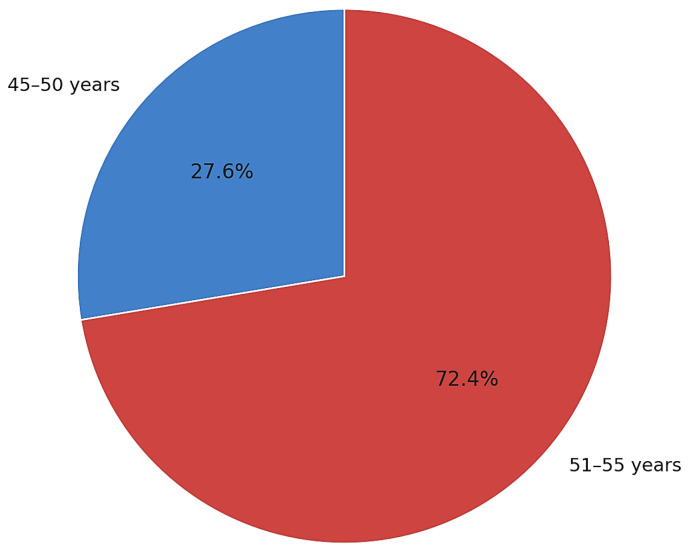 Figure 1
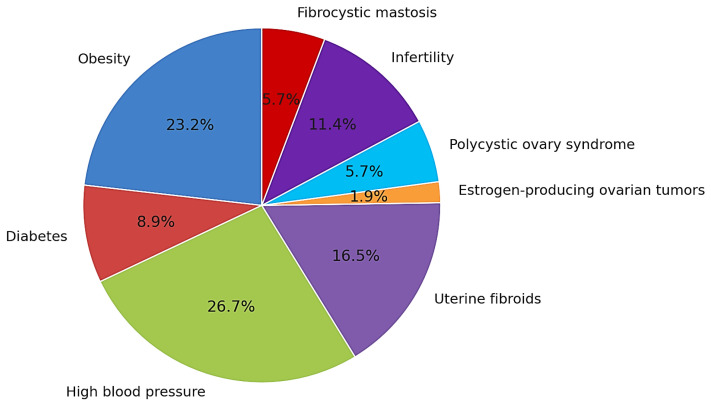 Figure 2
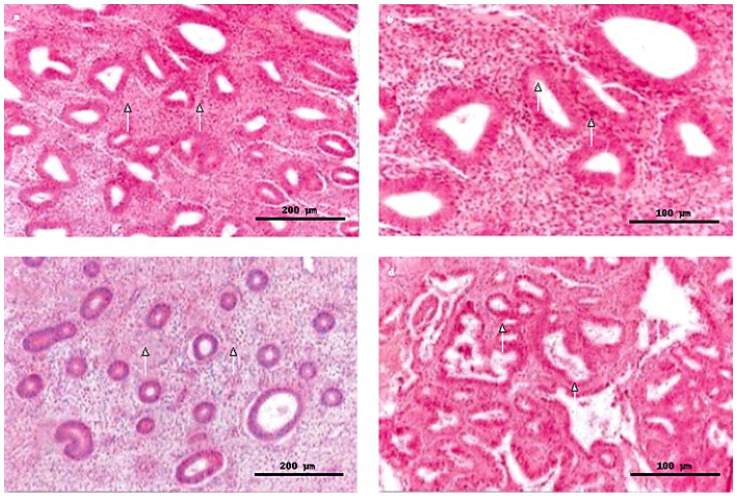 Figure 3
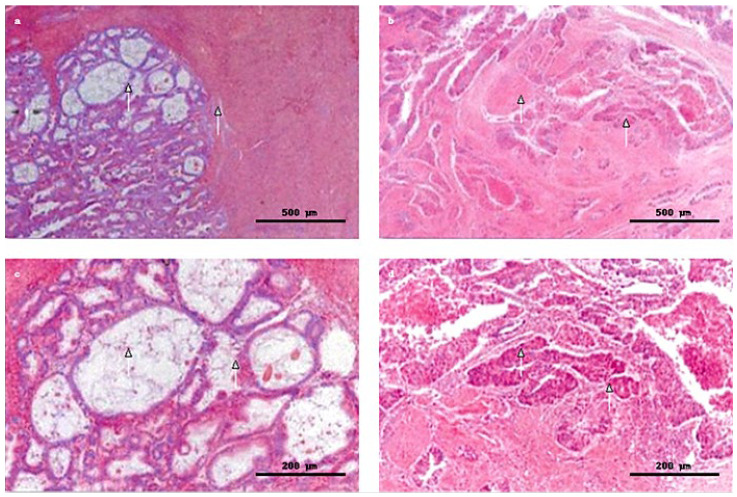 Figure 4
Peer Reviews
No public reviews on file for this paper yet. If you reviewed it on a platform where reviews are public (OpenReview, ICLR, NeurIPS, ICML), you can paste yours below so the community can read it here.
Videos
No videos yet. Explain this paper in a talk, walkthrough, or lecture? Add one.
Taxonomy
TopicsEndometrial and Cervical Cancer Treatments · Gynecological conditions and treatments · Ovarian cancer diagnosis and treatment