Complete Mitochondrial Genomes of Two Water Mite Species in the Family Sperchontidae (Acari: Hydrachnidiae): Characterization and Phylogenetic Implications
Xu Zhang, Xingru Nie, Xuhang Xia, Jiahui Song, Qingyu Wen, Ke Sun

TL;DR
This study sequenced the first complete mitochondrial genomes of two water mite species, revealing insights into their genetic structure and evolutionary relationships.
Contribution
The first complete mitogenomes of Sperchontidae water mites are reported, offering new data on gene rearrangements and phylogenetic relationships.
Findings
Both mitogenomes contain 37 genes with strong A+T bias and show purifying selection in protein-coding genes.
Gene rearrangements in Sperchontidae involve both tRNAs and PCGs, differing from patterns in other water mite families.
Phylogenetic analyses confirm close relationships within Hydrachnidiae and Trombidiae but leave higher-level relationships unresolved.
Abstract
Background: The family Sperchontidae Thor, 1900 is proposed as a transitional group between the “lower” and “higher” water mites (Subcohort Hydrachnidiae), and is important for understanding the evolutionary history of Hydrachnidiae. However, mitogenomic data are lacking. Methods: The first complete mitogenomes of Sperchontidae were sequenced from two species, Sperchon plumifer and Sperchon sp. Structural features were analyzed, gene rearrangements were compared with five published water mite mitogenomes, and phylogenetic relationships among 31 species within the order Trombidiformes were reconstructed. Results: Both mitogenomes contained the typical 37 genes and exhibited a strong A+T bias (73.1–73.6%), positive AT-skew, and negative GC-skew. Protein-coding genes (PCGs) were generally initiated with ATN/TTG codons and terminated with TAA/TAG or incomplete T–, with codon usage biased…
Genes, proteins, chemicals, diseases, species, mutations and cell lines named across the full text — each resolved to its canonical identifier and authoritative record.
Click any figure to enlarge with its caption.
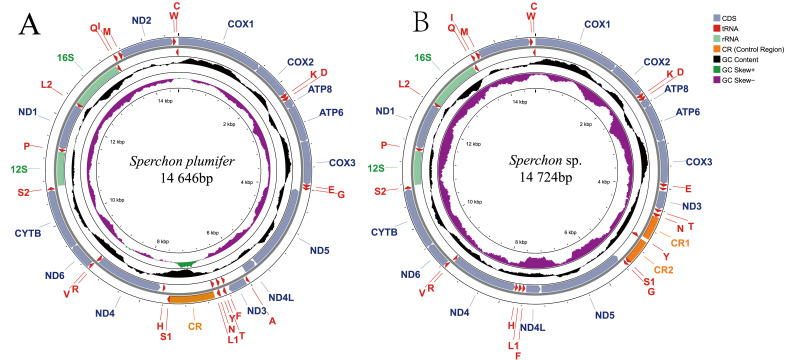 Figure 1
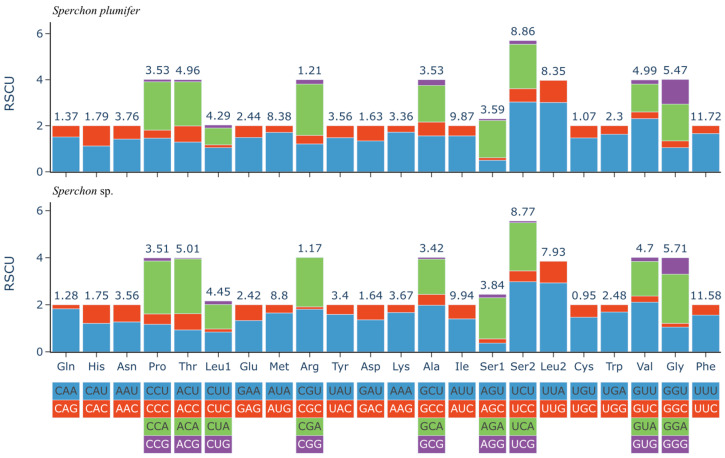 Figure 2
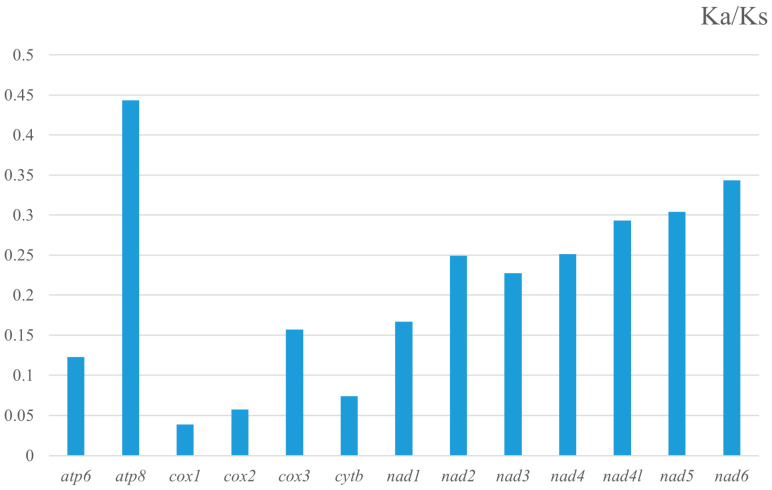 Figure 3
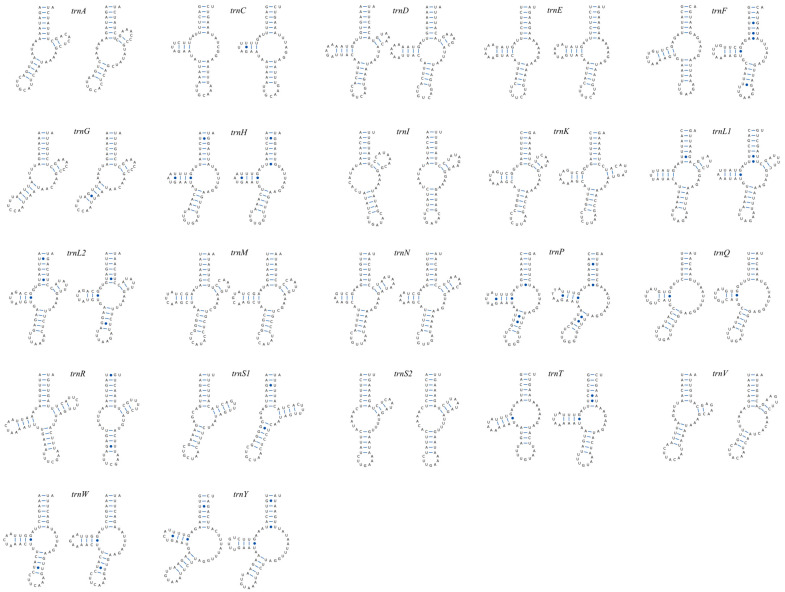 Figure 4
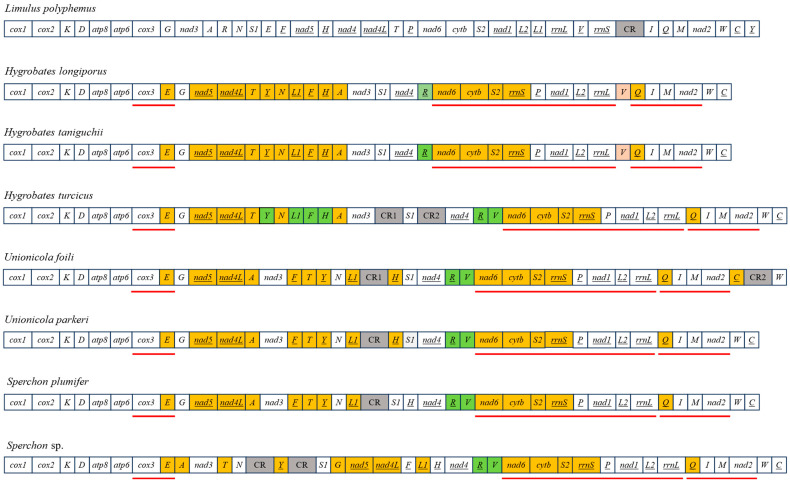 Figure 5
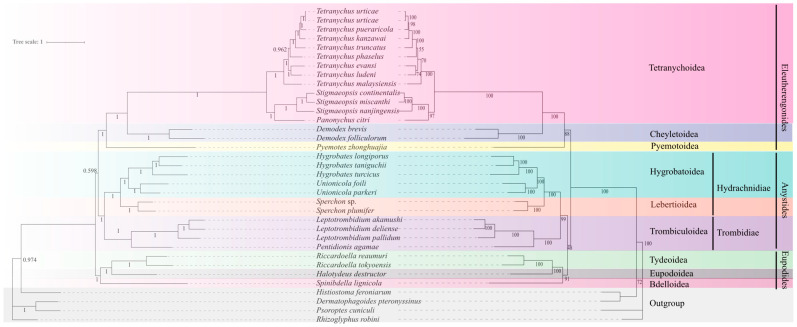 Figure 6
Peer Reviews
No public reviews on file for this paper yet. If you reviewed it on a platform where reviews are public (OpenReview, ICLR, NeurIPS, ICML), you can paste yours below so the community can read it here.
Videos
No videos yet. Explain this paper in a talk, walkthrough, or lecture? Add one.
Taxonomy
TopicsStudy of Mite Species · Insect-Plant Interactions and Control · Insect and Pesticide Research