Attachment Styles as Protective and Amplifying Factors in Caregiver Psychological Distress: A Multicenter Cross-Sectional Study in Oncology and Chronic Disease Caregiving
Ipek Özönder Ünal, Miray Pirincci Aytac, Nur Özgedik Turhan, Yunus Taylan, Çağlar Ünal, Atakan Topcu, Eyyüp Cavdar, Erkan Özcan, Tomris Duymaz, Tonguc Demir Berkol

TL;DR
This study explores how attachment styles affect psychological distress in caregivers of cancer and chronic disease patients, finding that secure attachment reduces burden while preoccupied attachment increases it.
Contribution
The study identifies attachment styles as protective or amplifying factors in caregiver psychological distress, particularly in oncology and chronic disease caregiving.
Findings
Secure attachment reduces caregiver burden in cancer caregivers.
Preoccupied attachment amplifies the impact of depression on caregiver burden in both cancer and chronic disease groups.
Psychological distress and burden are higher in cancer caregivers compared to chronic disease caregivers.
Abstract
Background/Objectives: Caregiving for patients with advanced cancer or chronic illness imposes substantial psychological burden, yet the role of caregiver attachment style in moderating this distress is underexplored. This multicenter, cross-sectional study investigates how attachment styles influence the relationship between psychological distress and caregiver burden in two populations: family caregivers of palliative-stage cancer patients and those supporting patients with chronic diseases. Methods: Across Turkey, 819 caregivers (412 cancer, 407 chronic disease) completed the Zarit Caregiver Burden Scale, DASS-21, and Relationship Scale Questionnaire. Hayes’ PROCESS macro was used to test the moderating role of attachment styles. Results: Cancer caregivers reported higher caregiver burden (Cohen’s d = 0.35, 95% CI [0.21, 0.49]) and stress than chronic disease caregivers, but lower…
Genes, proteins, chemicals, diseases, species, mutations and cell lines named across the full text — each resolved to its canonical identifier and authoritative record.
Click any figure to enlarge with its caption.
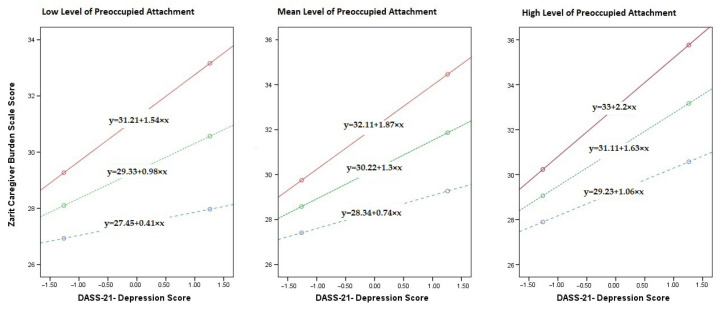 Figure 1
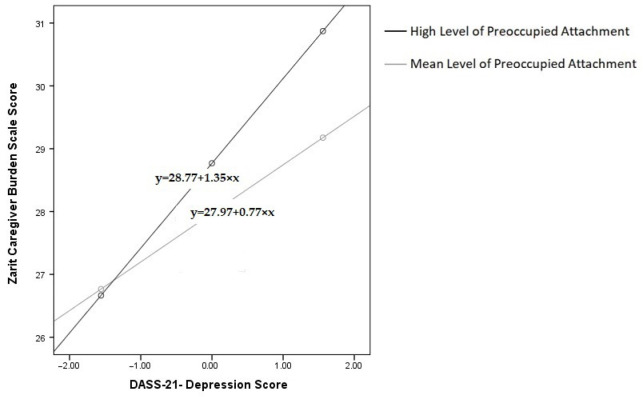 Figure 2
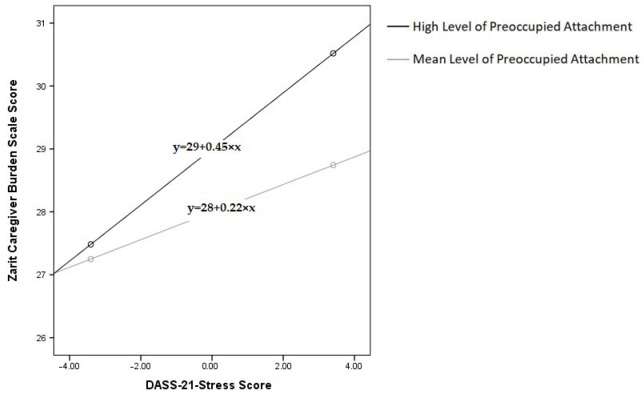 Figure 3
Peer Reviews
No public reviews on file for this paper yet. If you reviewed it on a platform where reviews are public (OpenReview, ICLR, NeurIPS, ICML), you can paste yours below so the community can read it here.
Videos
No videos yet. Explain this paper in a talk, walkthrough, or lecture? Add one.
Taxonomy
TopicsFamily Support in Illness · Family Caregiving in Mental Illness · Attachment and Relationship Dynamics