The Heteromeric Dopamine Receptor D2:D3 Controls the Gut Recruitment and Suppressive Activity of Regulatory T-Cells
Jacob Mora, Iu Raïch, Valentina Ugalde, Gemma Navarro, Carolina Prado, Pia M. Vidal, Pedro Leal, Alexandra Espinoza, Moting Liu, Rinse Weersma, Ranko Gacesa, Marcela A. Hermoso, Rafael Franco, Rodrigo Pacheco

TL;DR
The study shows that a dopamine receptor pair in the gut controls immune cells that reduce inflammation, and disrupting this pair worsens gut inflammation.
Contribution
The novel finding is that the Drd2:Drd3 dopamine receptor heteromer regulates Treg cell activity and recruitment during gut inflammation.
Findings
Mice with Drd2-deficient T-cells developed more severe colitis.
Drd2 stimulation enhances Treg suppressive activity and recruitment to the gut.
Disrupting the Drd2:Drd3 heteromer impairs Treg function and gut recruitment.
Abstract
Since colonic dopamine levels are markedly reduced during inflammatory bowel disease (IBD), we investigated how dopamine affects regulatory T-cells (Treg), which critically limit gut inflammation. Previously, we showed that the stimulation of the high-affinity dopamine receptor D3 (Drd3) impairs suppressive Treg activity and limits their recruitment into the colon upon gut inflammation. Here we study the role of the low-affinity dopamine receptor Drd2 in Treg. We find that mice harbouring Drd2-deficient T-cells developed more severe colitis induced by dextran sodium sulphate. The stimulation of Drd2 potentiated the suppressive Treg activity and increased their ability to reach the colonic tissue. A transcriptomic analysis of intestinal mucosa from IBD patients revealed an association with increased DRD3 and reduced DRD2 expression. Bioluminescence resonance energy transfer assays…
Genes, proteins, chemicals, diseases, species, mutations and cell lines named across the full text — each resolved to its canonical identifier and authoritative record.
Click any figure to enlarge with its caption.
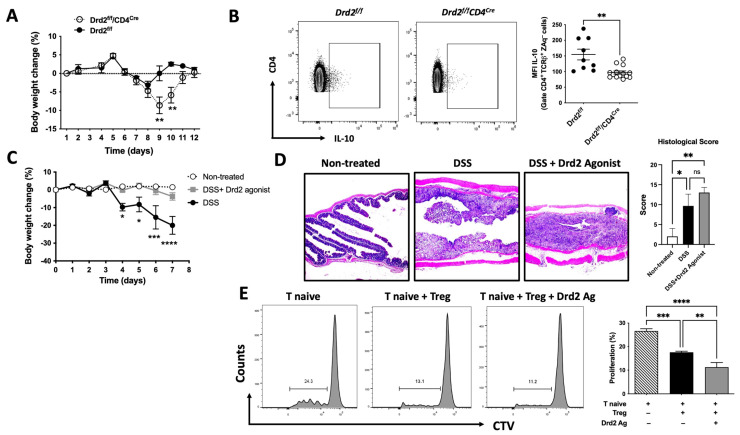 Figure 1
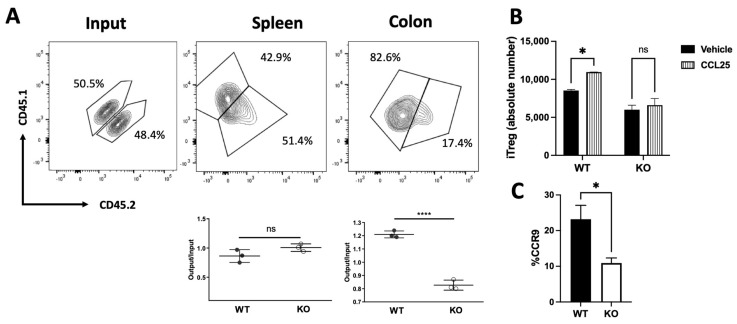 Figure 2
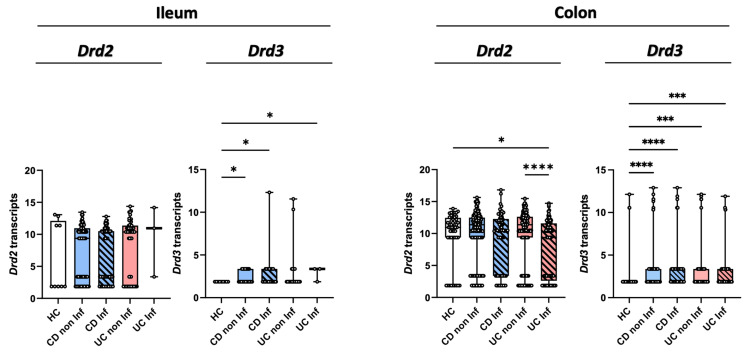 Figure 3
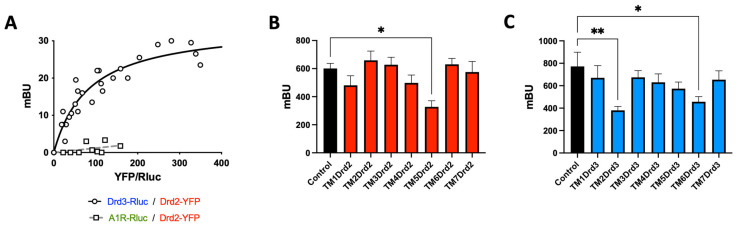 Figure 4
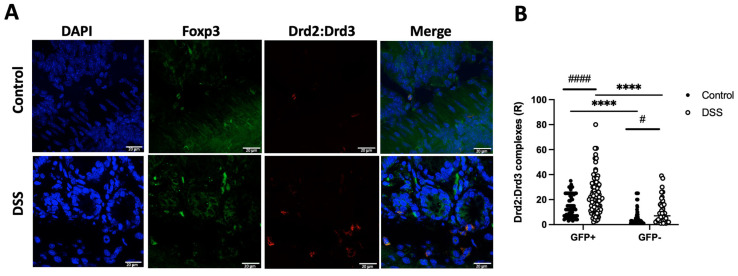 Figure 5
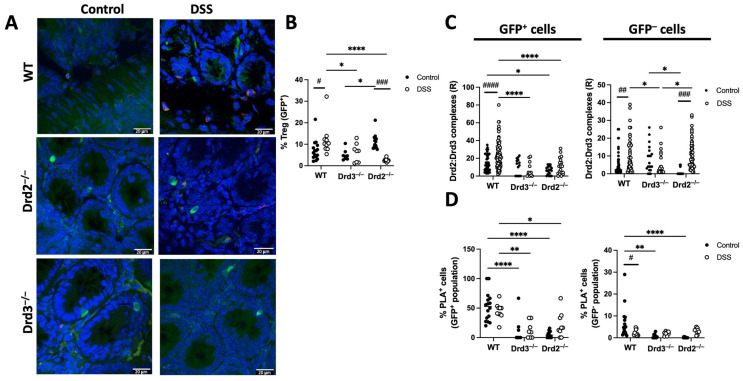 Figure 6
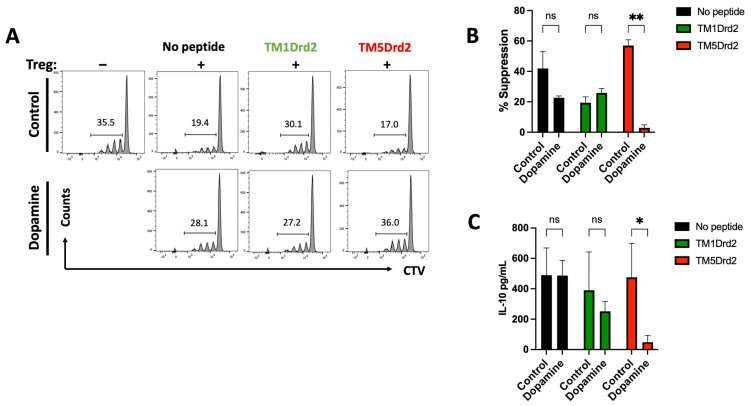 Figure 7
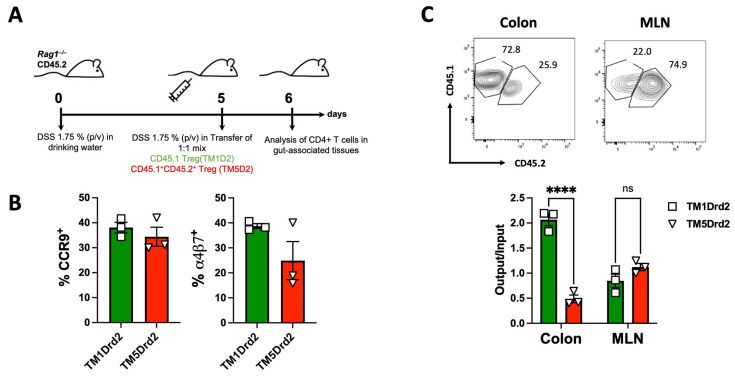 Figure 8
Peer Reviews
No public reviews on file for this paper yet. If you reviewed it on a platform where reviews are public (OpenReview, ICLR, NeurIPS, ICML), you can paste yours below so the community can read it here.
Videos
No videos yet. Explain this paper in a talk, walkthrough, or lecture? Add one.
Taxonomy
TopicsImmune Cell Function and Interaction · Tryptophan and brain disorders · T-cell and B-cell Immunology