Dynamics of Bioactive Compounds and Their Relationship with Antioxidant and Antimicrobial Activity in the Pulp, Peel, and Seeds of ‘Salak’ During Ripening
Elena Coyago-Cruz, Gabriela Méndez, Johana Zúñiga-Miranda, Nubia Jami, Ramiro Acurio-Vásconez, Jorge Heredia-Moya

TL;DR
This study examines how bioactive compounds in Salak fruit change during ripening and their antioxidant and antimicrobial properties in different parts of the fruit.
Contribution
The study reveals the ripening-stage-specific distribution of bioactive compounds and their functional properties in Salak fruit parts.
Findings
The peel of Salak fruit contains high levels of chlorogenic, caffeic, and ferulic acids at the early ripening stage.
Salak pulp and peel at later ripening stages show the highest antioxidant and antimicrobial activity against key pathogens.
Salak seeds have the highest vitamin C content at the M2 ripening stage.
Abstract
Fruit is an important source of bioactive compounds, and making full use of them can contribute to the development of natural alternatives to microbial resistance. This study aimed to evaluate the dynamics of bioactive compounds and their relationship with antioxidant and antimicrobial activity in the pulp, peel, and seeds of Salacca zalacca at three stages of ripeness (M1, 30 days after flowering; M2, 90 days after flowering; and M3, 120 days after flowering). The physicochemical characteristics (weight, size, pH, soluble solids, titratable acidity, moisture, ash, and minerals) and the bioactive compounds (vitamin C, organic acids, carotenoids, chlorophylls, and phenolic compounds) were determined using liquid chromatography. Antioxidant activity was determined using the ABTS and DPPH methods, and antimicrobial activity was assessed against Escherichia coli, Staphylococcus aureus,…
Genes, proteins, chemicals, diseases, species, mutations and cell lines named across the full text — each resolved to its canonical identifier and authoritative record.
Click any figure to enlarge with its caption.
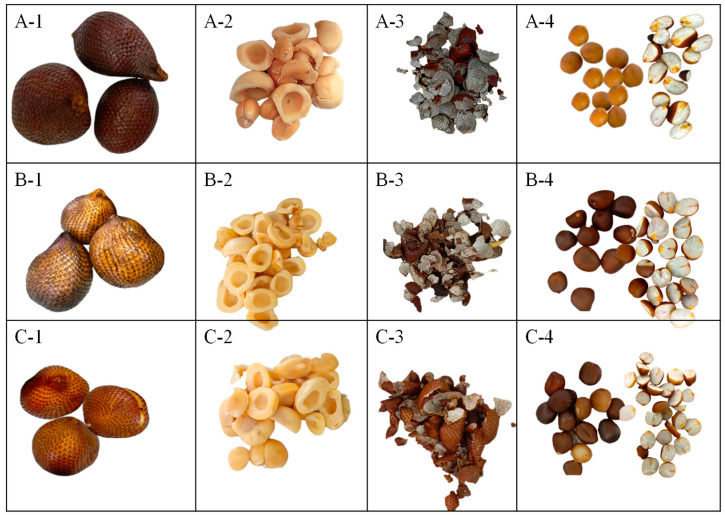 Figure 1
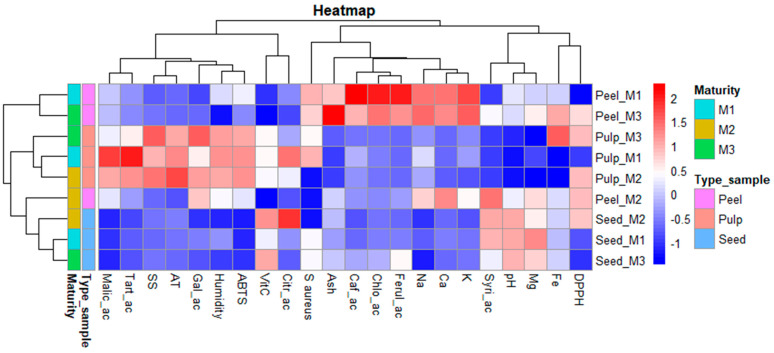 Figure 2
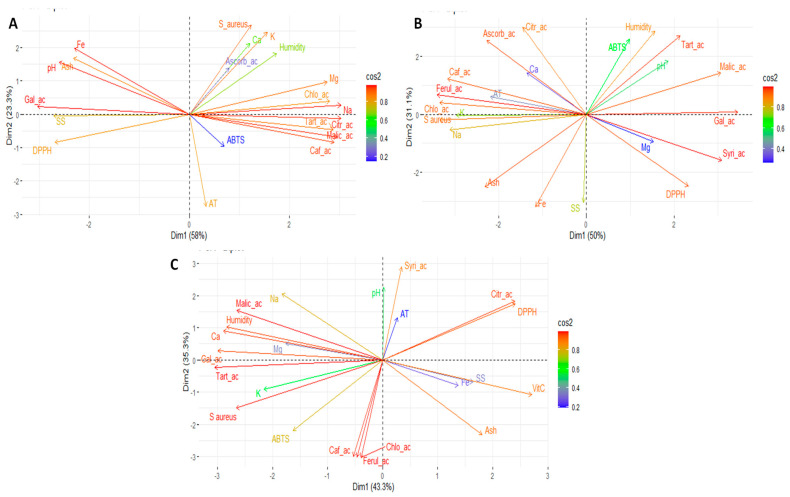 Figure 3
Peer Reviews
No public reviews on file for this paper yet. If you reviewed it on a platform where reviews are public (OpenReview, ICLR, NeurIPS, ICML), you can paste yours below so the community can read it here.
Videos
No videos yet. Explain this paper in a talk, walkthrough, or lecture? Add one.
Taxonomy
TopicsPhytochemicals and Antioxidant Activities · Phytochemical and Pharmacological Studies · Plant Physiology and Cultivation Studies