Codon Usage Bias Analysis in the Chloroplast Genome of Actinostemma tenerum (Cucurbitaceae)
Jing-Jing Mu, Ji-Si Zhang

TL;DR
This study analyzes the chloroplast genome and codon usage bias in Actinostemma tenerum, a medicinal plant from East Asia, to better understand its genetic characteristics.
Contribution
The study provides a complete chloroplast genome sequence and identifies codon usage patterns specific to Actinostemma tenerum.
Findings
The chloroplast genome of Actinostemma tenerum is 160,579 bp with a GC content of 36.5%.
Codon usage bias is weak, with an average effective number of codons (ENC) of 45.57%.
Natural selection is the main factor influencing codon usage bias in this species.
Abstract
The plant Actinostemma tenerum is endemic to East Asia and has been used as a traditional medicinal herb for over 1400 years. Investigating the chloroplast genome characteristics and codon usage bias (CUB) is essential for advancing research on molecular markers and genetic diversity in A. tenerum. In this study, we sequenced the complete chloroplast genome of A. tenerum, revealing a length of 160,579 bp, with a GC content of 36.5%. The genome comprised 132 coding genes, including 87 protein-coding genes (CDSs), 8 rRNA genes, and 37 tRNA genes. Analysis of the 51 selected CDSs showed average GC1, GC2, and GC3 values of 46.95%, 39.52%, and 28.11%, respectively. The effective number of codons (ENC) ranged from 35.34% to 56.23%, with an average of 45.57%, indicating a weak CUB. Nucleotide composition analysis revealed unequal distribution of A, T, C, and G, with codon preference biased…
Genes, proteins, chemicals, diseases, species, mutations and cell lines named across the full text — each resolved to its canonical identifier and authoritative record.
Click any figure to enlarge with its caption.
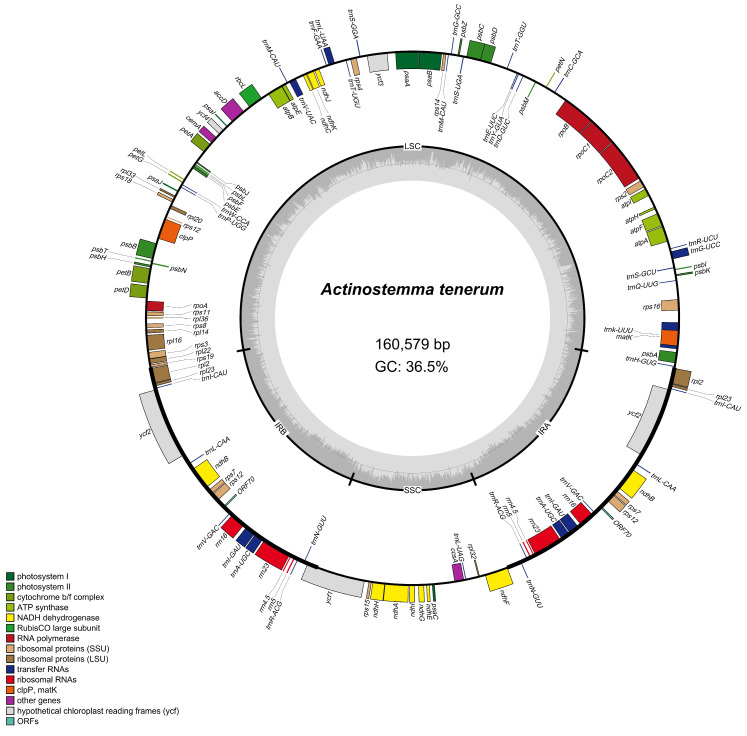 Figure 1
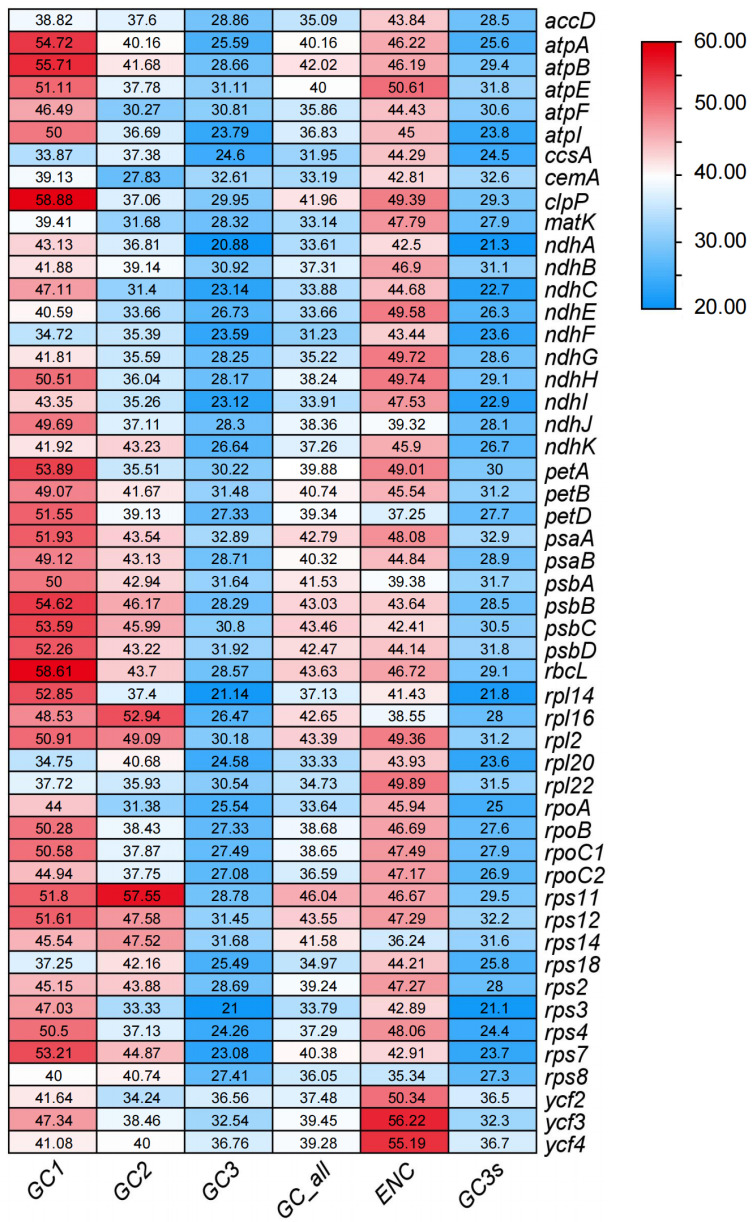 Figure 2
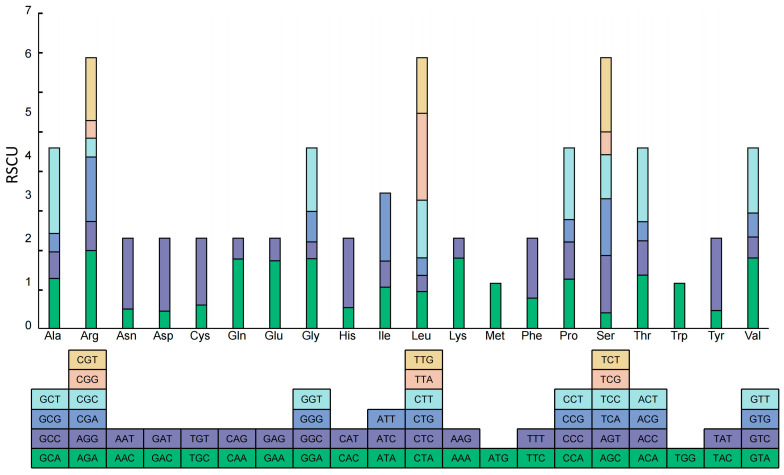 Figure 3
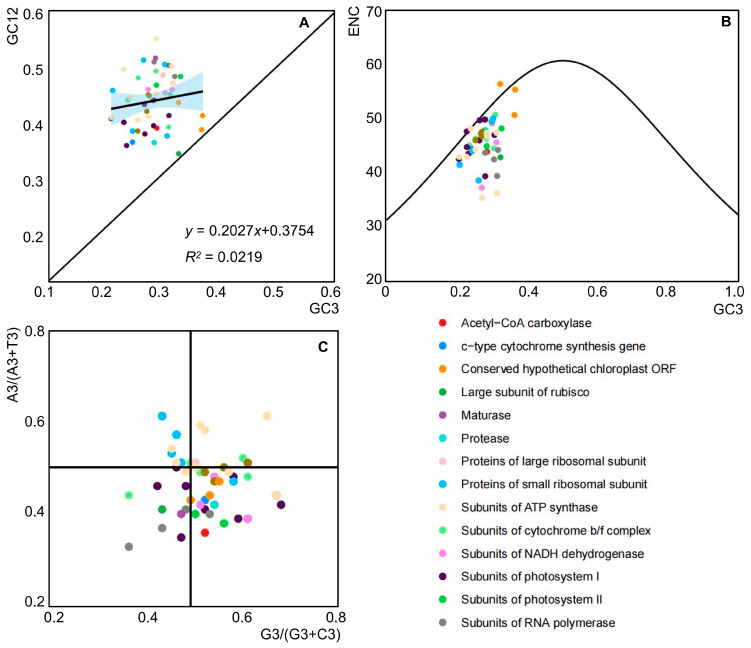 Figure 4
Peer Reviews
No public reviews on file for this paper yet. If you reviewed it on a platform where reviews are public (OpenReview, ICLR, NeurIPS, ICML), you can paste yours below so the community can read it here.
Videos
No videos yet. Explain this paper in a talk, walkthrough, or lecture? Add one.
Taxonomy
TopicsGenomics and Phylogenetic Studies · Chromosomal and Genetic Variations · Plant Pathogenic Bacteria Studies