Mitochondrial and Nuclear DNA Analyses of Rhipicephalus microplus from Mizoram, Northeast India: Insights into Genetic Diversity and Endosymbiont
Khawlhring Lalawmpuii, Siju Susan Jacob, Thingujam Chaa Tolenkhomba, Parthasarathi Behera, Joy Lalmuanpuia, Hmar Tlawmte Lalremsanga, Khawlhring Lalrintluanga, Chhakchhuak Lalchhandama, Lal Biakzuala, Hmar Lalrinkima

TL;DR
This study explores the genetic diversity and endosymbiont presence in Rhipicephalus microplus ticks from Mizoram, India, revealing new phylogenetic insights and regional population patterns.
Contribution
The first molecular analysis of R. microplus in Mizoram, revealing novel phylogenetic and endosymbiont data from a strategically important region.
Findings
R. microplus populations from India, Bangladesh, and Pakistan form a distinct matrilineal lineage within clade C.
24 COX1 haplotypes were identified globally, with only one found in India.
Coxiella-like endosymbionts were detected in 95% of the analyzed tick specimens.
Abstract
Background/Objectives: In this study, we conducted molecular identification of R.microplus and explored the genetic diversity of R. microplus for the first time in Mizoram, a Northeastern Hill (NEH) state of India bordering Myanmar. Methods: To assess genetic variation and evolutionary relationships, we employed phylogenetic analyses, genetic divergence metrics, and haplotype network construction based on mitochondrial (COX1 and 16S rDNA) and nuclear (ITS-2 and 18S rDNA) markers. Additionally, multivariate Principal Coordinate Analysis (PCoA) was used to visualize genetic differentiation among R. microplus populations. Results: Our analyses indicated that populations of R. microplus sensu lato from India, Bangladesh, and Pakistan form a closely related matrilineal lineage distinct from R. microplus sensu stricto, clustering within clade C of the COX1-based phylogeny. Globally, 24 COX1…
Genes, proteins, chemicals, diseases, species, mutations and cell lines named across the full text — each resolved to its canonical identifier and authoritative record.
Click any figure to enlarge with its caption.
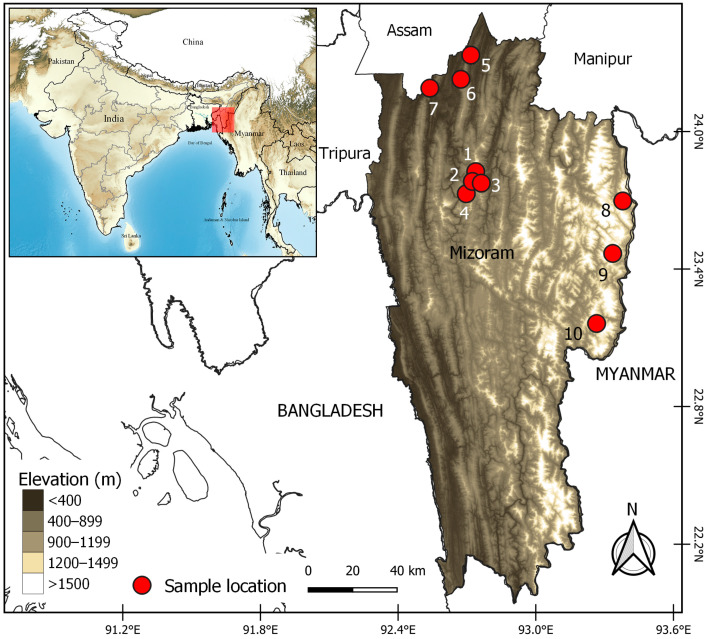 Figure 1
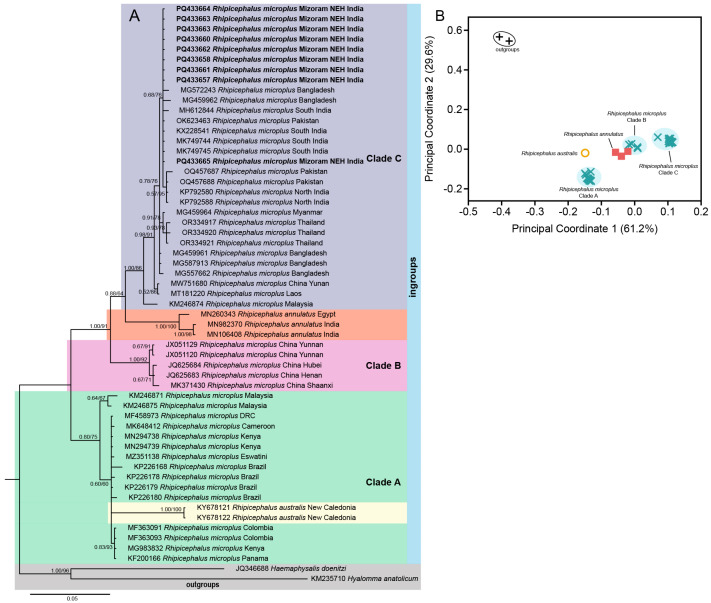 Figure 2
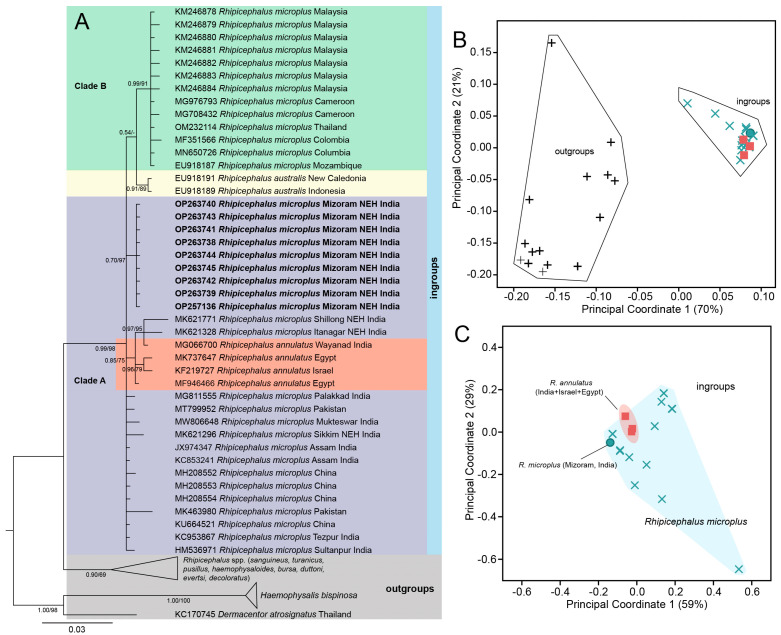 Figure 3
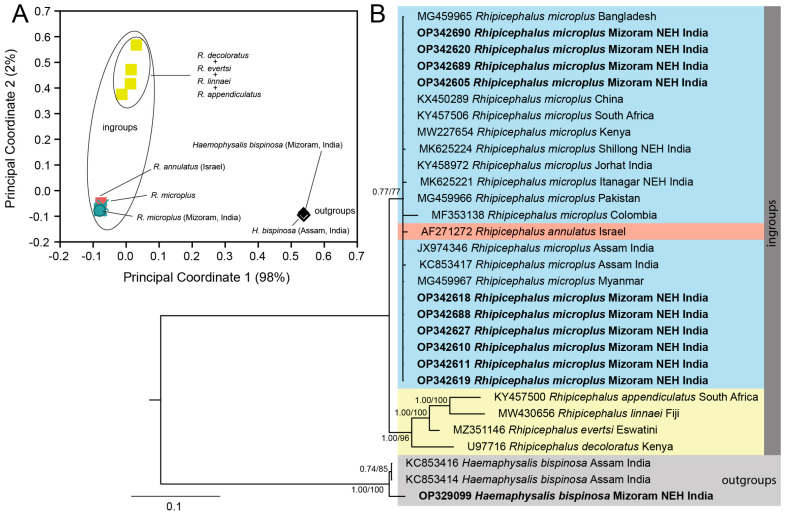 Figure 4
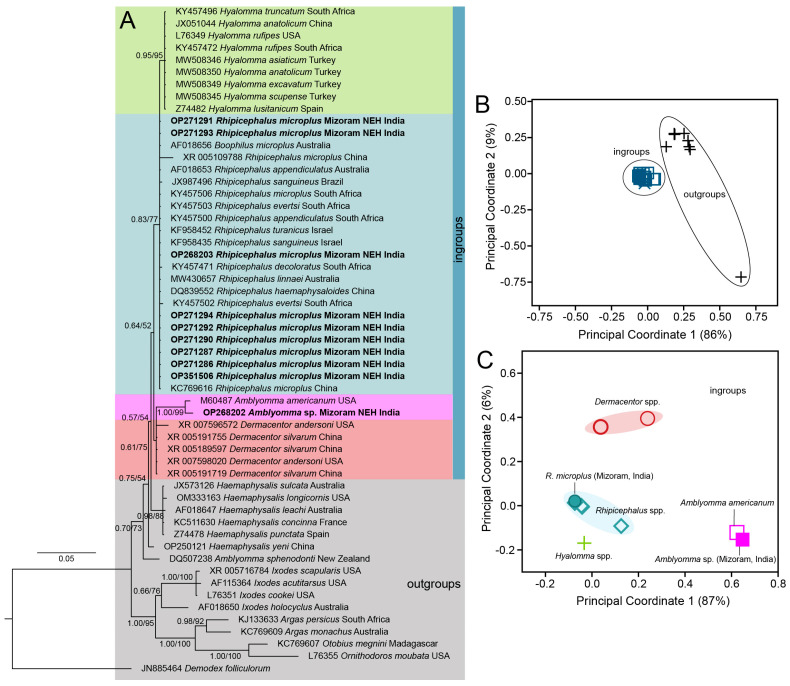 Figure 5
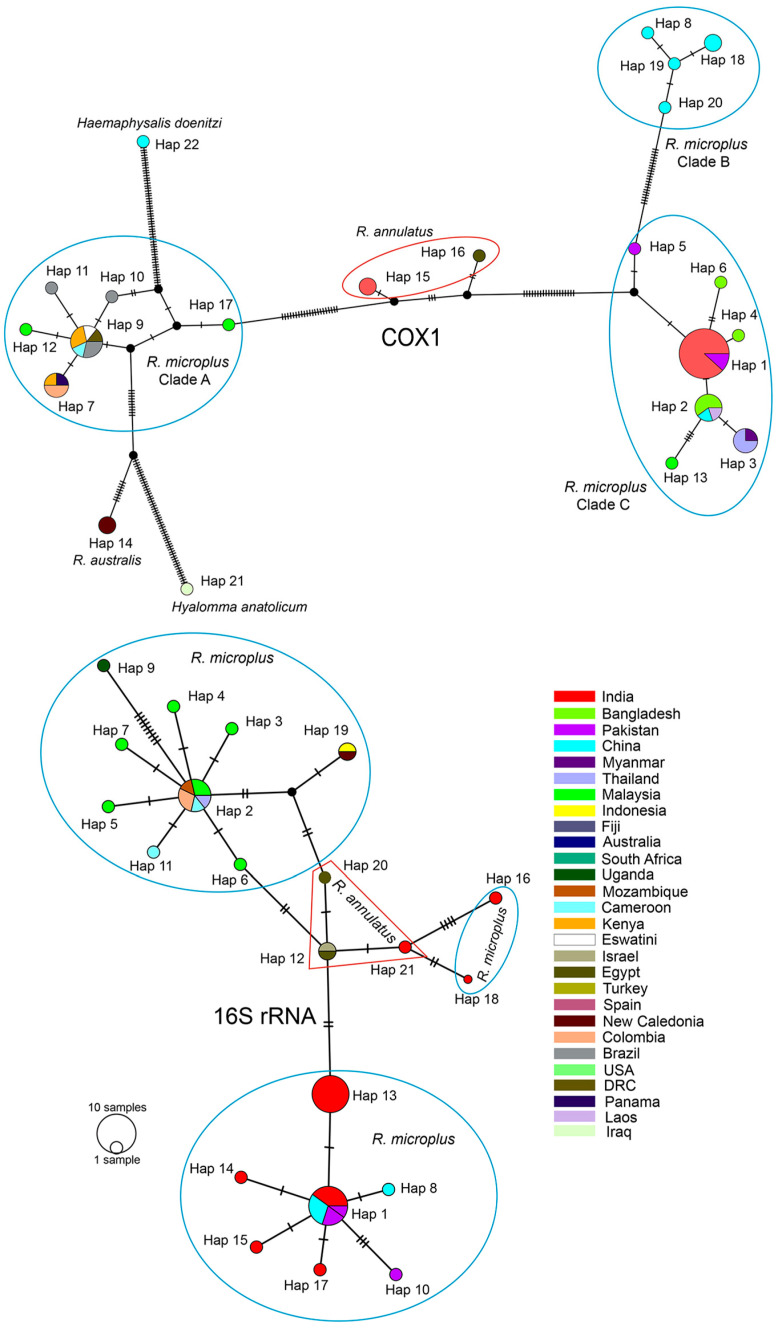 Figure 6
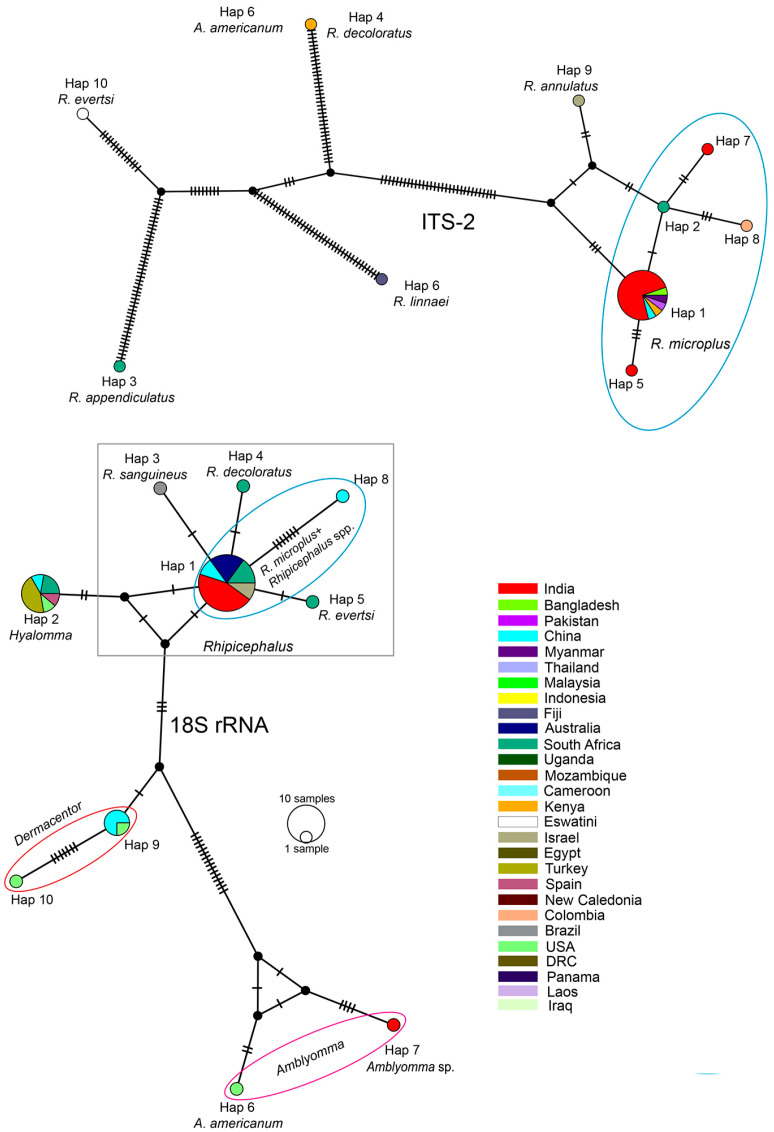 Figure 7
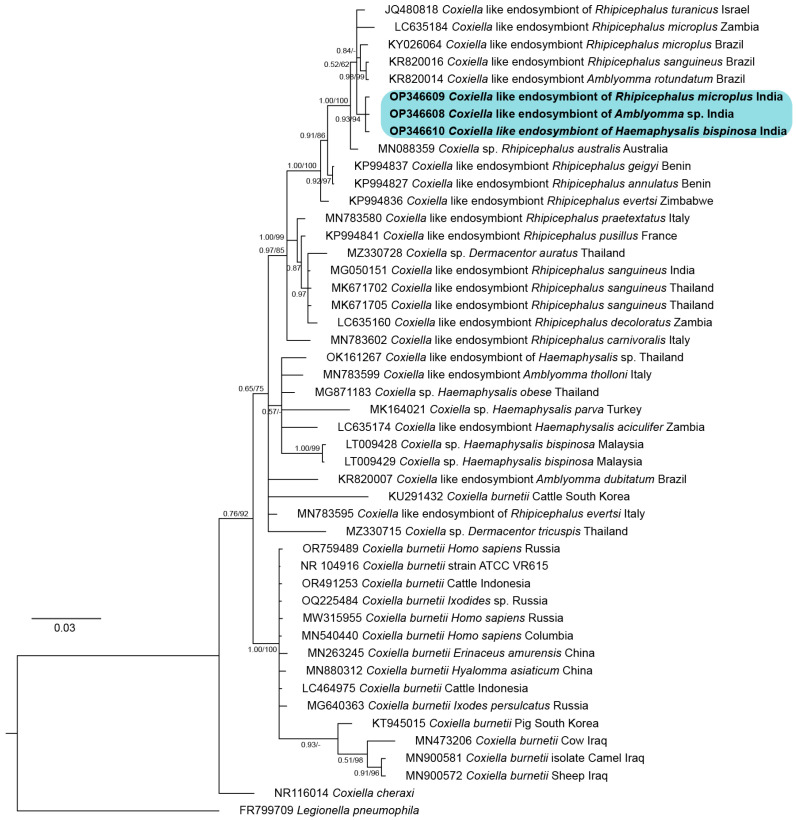 Figure 8
Peer Reviews
No public reviews on file for this paper yet. If you reviewed it on a platform where reviews are public (OpenReview, ICLR, NeurIPS, ICML), you can paste yours below so the community can read it here.
Videos
No videos yet. Explain this paper in a talk, walkthrough, or lecture? Add one.
Taxonomy
TopicsParasite Biology and Host Interactions · Genomics and Phylogenetic Studies · Vector-borne infectious diseases