Interactive Effect of C-Reactive Protein upon the Relationship Between Chlamydia trachomatis and Depression
Kay Banerjee, W. Sumner Davis, Sri Banerjee

TL;DR
This study finds that people with a history of Chlamydia trachomatis and high C-reactive protein levels are more likely to experience depression than those with Chlamydia alone.
Contribution
The study is the first to show that elevated C-reactive protein modifies the link between Chlamydia trachomatis and depression.
Findings
Individuals with Chlamydia trachomatis and high CRP had an adjusted odds ratio of 6.3 for depression.
Those with Chlamydia but low CRP had an odds ratio close to 1.0 for depression.
The study highlights the importance of mental health screening for those with STIs or infectious diseases.
Abstract
Introduction: Chlamydia trachomatis is an important indicator of overall health and plays a vital role in various health conditions. In 2018, C. trachomatis reached the highest level ever recorded, resulting in USD 691 million in expenditures, with 1.8 million reported cases. This amount reflects a 19% increase since 2014, according to the Centers for Disease Control and Prevention. Depression has also been on the rise between 2013 (8.2%) to 2023 (13.1%). C. trachomatis and depression may have inflammation as a final common pathway. The purpose of this study was to explore a potential connection between Chlamydia and depression, and whether C-reactive protein (CRP) modifies this effect. Methods: For this study, we utilized the 2005–2016 National Health and Nutrition Examination Survey (NHANES) and US adults aged between 20 and 59 years. Depression was determined from the Patient Health…
Genes, proteins, chemicals, diseases, species, mutations and cell lines named across the full text — each resolved to its canonical identifier and authoritative record.
Click any figure to enlarge with its caption.
 Figure 1
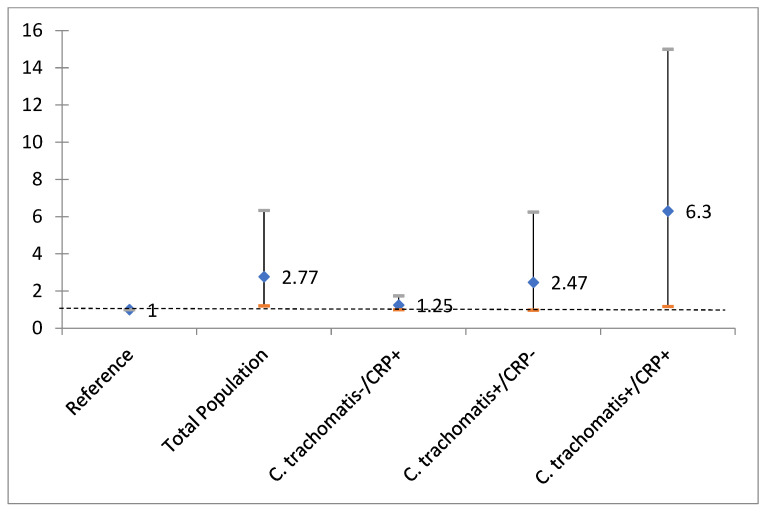 Figure 2
Peer Reviews
No public reviews on file for this paper yet. If you reviewed it on a platform where reviews are public (OpenReview, ICLR, NeurIPS, ICML), you can paste yours below so the community can read it here.
Videos
No videos yet. Explain this paper in a talk, walkthrough, or lecture? Add one.
Taxonomy
TopicsReproductive tract infections research · Tryptophan and brain disorders · Pelvic floor disorders treatments