Improving Peer Relationships Through Positive Deviance Practices and the HOPE (Healthy Outcomes from Positive Experiences) Framework
Laura Gallant, Catalina Borges, Alisha De Lorenzo, Curt Lindberg, Dina Burstein

TL;DR
This study shows that using positive deviance practices can improve peer relationships among youth in a community setting, leading to better positive childhood experiences.
Contribution
The study introduces the use of the HOPE framework and positive deviance approach to improve peer relationships in community-based youth programs.
Findings
Post-intervention focus groups showed improved peer relationships with youth describing peers as 'nice' and 'kind'.
The positive deviance approach was found to be a promising strategy for increasing access to positive childhood experiences.
Qualitative analysis using the HOPE framework domains revealed improvements in relationships, environment, engagement, and emotional growth.
Abstract
Positive Childhood Experiences (PCEs), including supportive peer relationships, are crucial for optimal adult health and socioeconomic outcomes. As part of a broader initiative to address trauma in youth, we conducted a quality improvement project using a Positive Deviance (PD) approach. We aimed to improve peer relationships among members of the Asbury Park Boy & Girls Club and evaluate the feasibility of using a PD approach in a community-based setting. Using PD methodology, we identified practices used by staff to improve members’ experiences. Pre-intervention focus groups with staff and youth, discovery and action dialogues and staff observations identified positive deviants (PDs) and PD practices. PD practices were further defined during staff observations and developed into staff training. Post-intervention focus groups assessed perceived changes. Qualitative data was analyzed…
Genes, proteins, chemicals, diseases, species, mutations and cell lines named across the full text — each resolved to its canonical identifier and authoritative record.
Click any figure to enlarge with its caption.
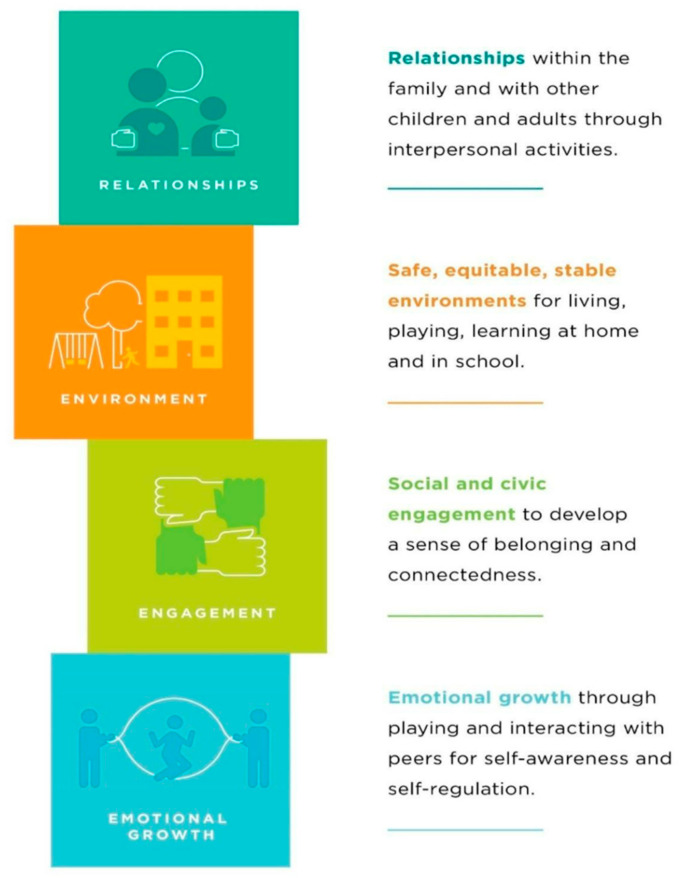 Figure 1
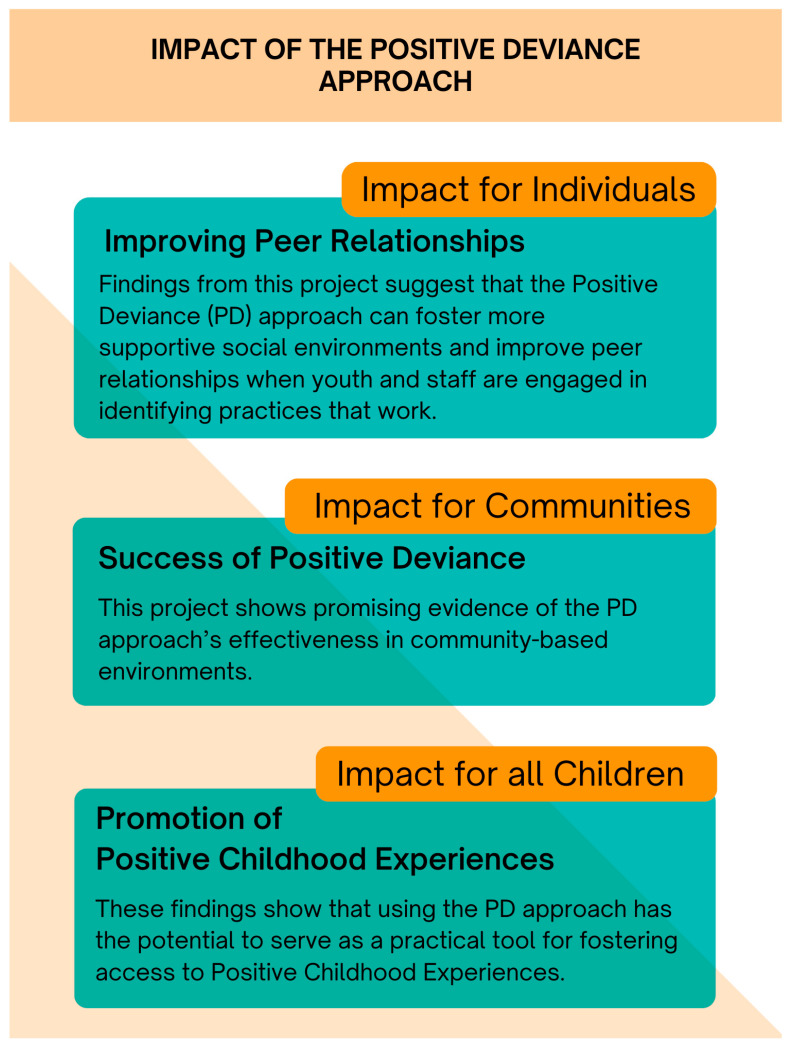 Figure 2
Peer Reviews
No public reviews on file for this paper yet. If you reviewed it on a platform where reviews are public (OpenReview, ICLR, NeurIPS, ICML), you can paste yours below so the community can read it here.
Videos
No videos yet. Explain this paper in a talk, walkthrough, or lecture? Add one.
Taxonomy
TopicsYouth Development and Social Support · Resilience and Mental Health · Early Childhood Education and Development