Lesion Stiffness Measured by Magnetic Resonance Elastography: A Novel Biomarker for Differentiating Benign, Premalignant and Malignant Prostate Lesions
Süheyl Poçan, Levent Karakaş

TL;DR
This study shows that measuring prostate lesion stiffness using magnetic resonance elastography can help distinguish between benign, premalignant, and malignant prostate lesions.
Contribution
Lesion-specific stiffness measurements by MRE are introduced as a novel diagnostic biomarker for prostate lesions.
Findings
Lesion stiffness increased significantly from benign to premalignant to malignant lesions.
Lesion stiffness outperformed central and entire gland stiffness in differentiating lesion types.
MRE-derived lesion stiffness showed high accuracy in distinguishing benign from premalignant and malignant lesions.
Abstract
Background/Objectives: This study aimed to assess whether magnetic resonance elastography (MRE)-derived stiffness measurements of the central gland, entire gland, and lesions of the prostate differ among benign, premalignant, and malignant lesions and to evaluate their diagnostic performance in distinguishing these groups. Methods: This prospective study enrolled 113 men (mean age, 62.7 ± 7.2 years). Patients were categorized into benign (n = 75), premalignant (n = 15; atypical small acinar proliferation and high-grade prostatic intraepithelial neoplasia), and malignant (n = 23; adenocarcinoma) lesion groups based on histopathological findings. MRE-derived stiffness was measured at the lesion, central gland, and entire gland levels. Other evaluated parameters included diffusion restriction, contrast retention, prostate-specific antigen (PSA) levels, prostate volume, and Prostate Imaging…
Genes, proteins, chemicals, diseases, species, mutations and cell lines named across the full text — each resolved to its canonical identifier and authoritative record.
Click any figure to enlarge with its caption.
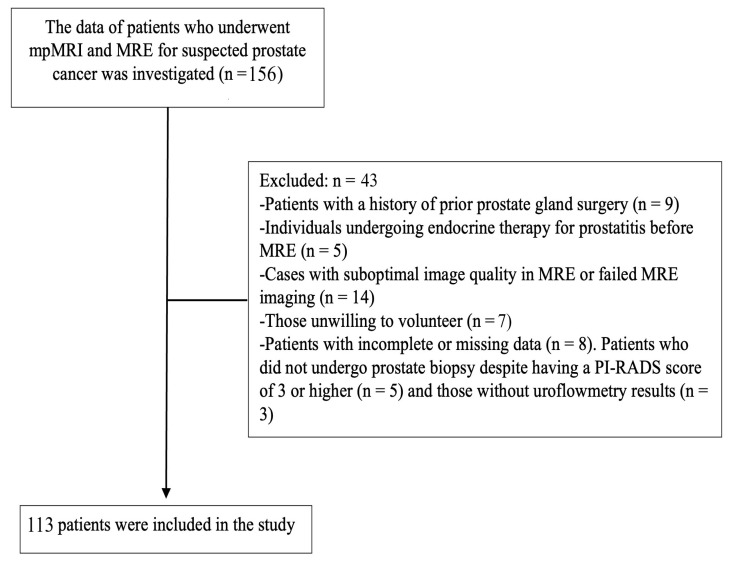 Figure 1
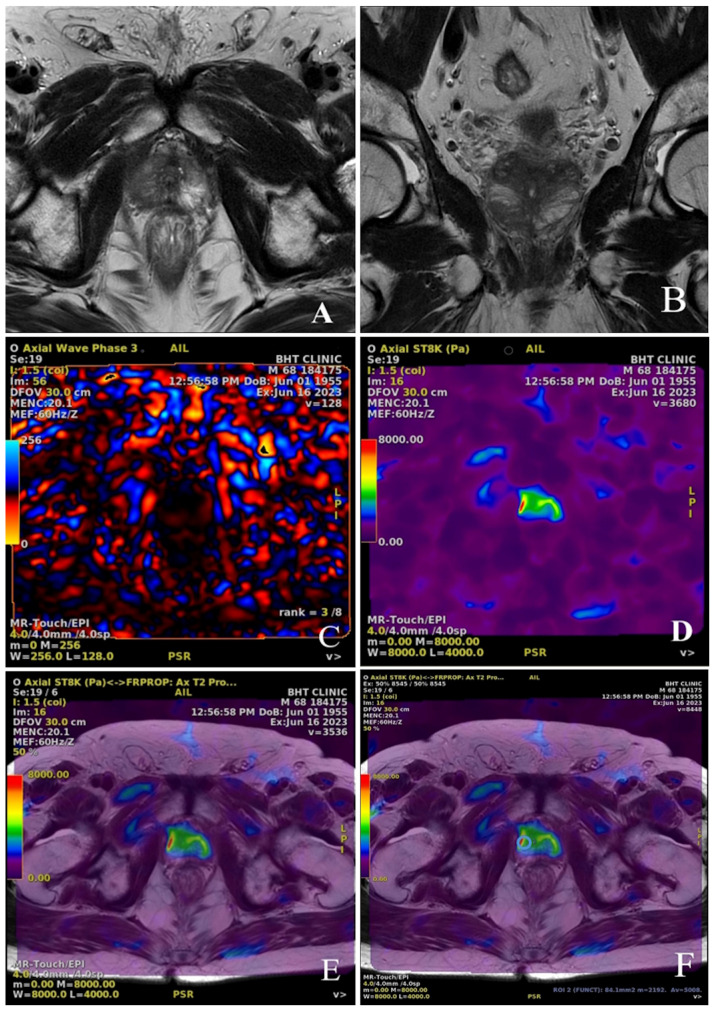 Figure 2
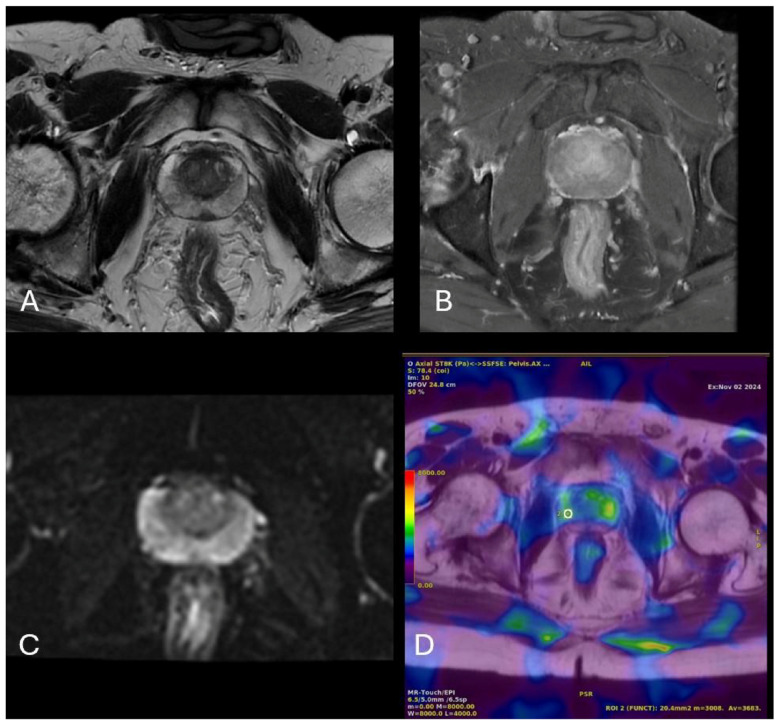 Figure 3
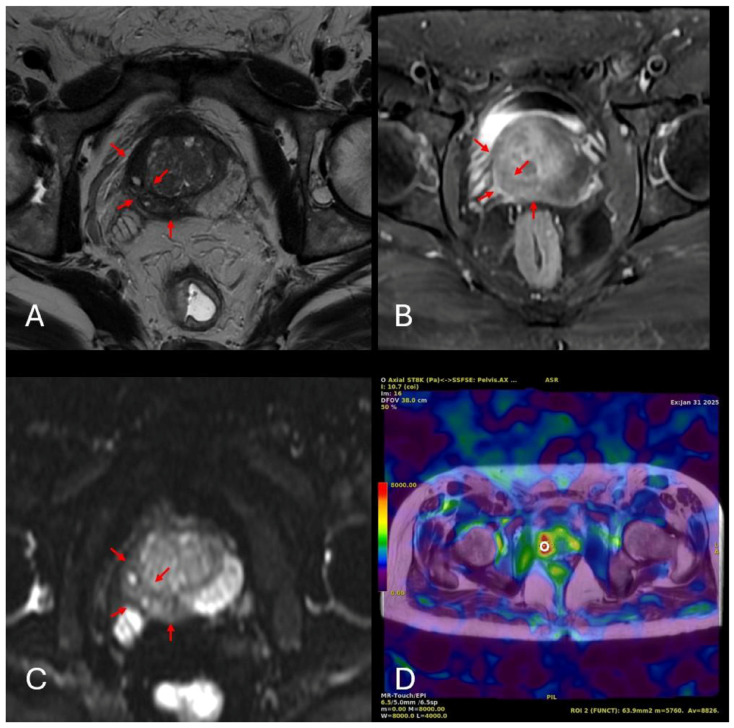 Figure 4
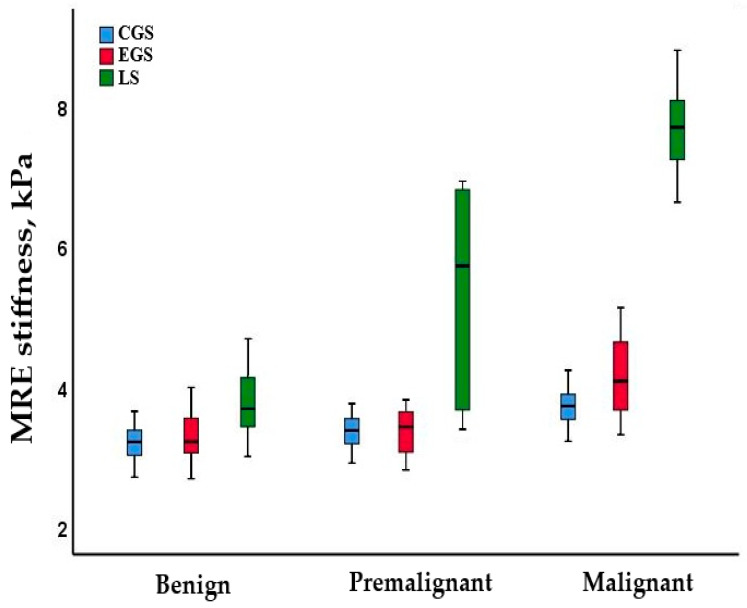 Figure 5
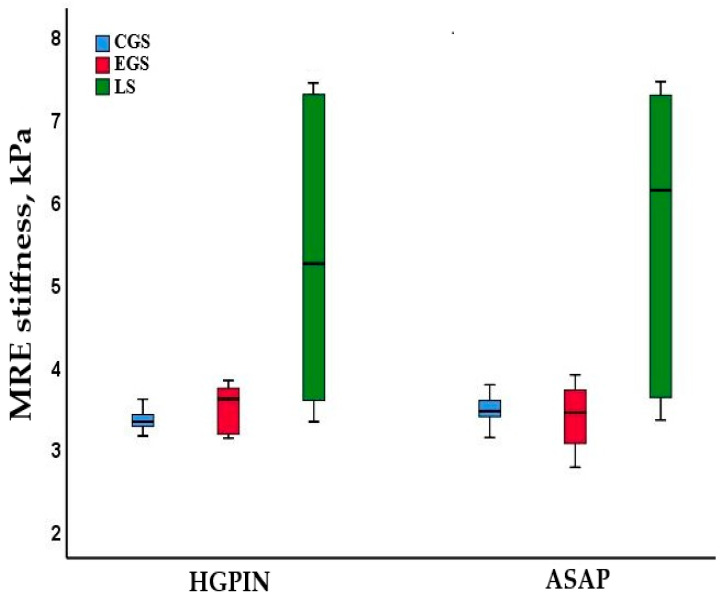 Figure 6
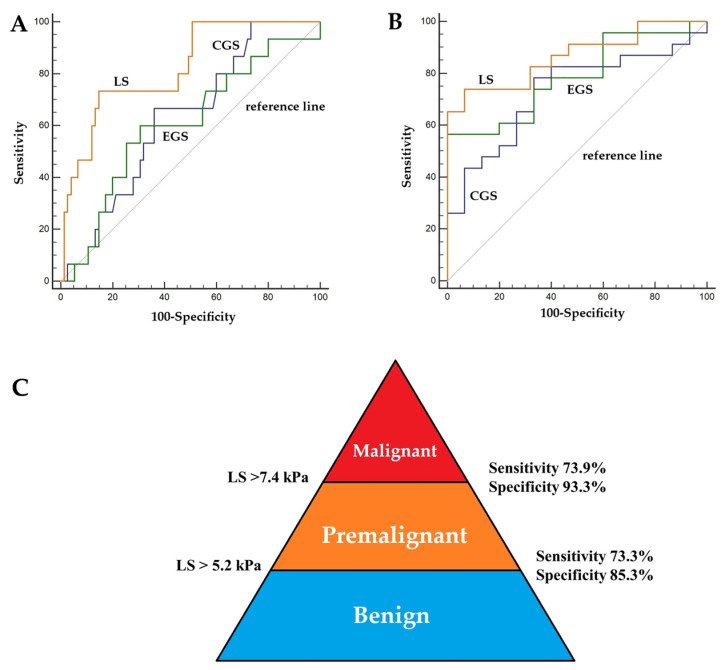 Figure 7
Peer Reviews
No public reviews on file for this paper yet. If you reviewed it on a platform where reviews are public (OpenReview, ICLR, NeurIPS, ICML), you can paste yours below so the community can read it here.
Videos
No videos yet. Explain this paper in a talk, walkthrough, or lecture? Add one.
Taxonomy
TopicsSpectroscopy Techniques in Biomedical and Chemical Research · Ultrasound Imaging and Elastography · Prostate Cancer Diagnosis and Treatment