Feasibility and Acceptability of Assessing Personal Care Product Use and Exposure to Endocrine-Disrupting Chemicals Among Black and Hispanic Breast Cancer Survivors: A Pilot Study
Erin Speiser, Peggy-ita Obeng-Nyarkoh, Wanting Zhai, Adana A. M. Llanos, Jennifer Hicks, Chiranjeev Dash, Lucile L. Adams-Campbell, Gail E. Starr, Traci N. Bethea

TL;DR
This pilot study tested silicone wristbands to measure exposure to harmful chemicals in Black and Hispanic breast cancer survivors, finding the method feasible and acceptable.
Contribution
The study demonstrates the feasibility and acceptability of using silicone wristbands to assess endocrine-disrupting chemical exposure in a diverse breast cancer survivor population.
Findings
Most participants found the wristbands non-intrusive and reported high satisfaction with the passive sampling method.
Sixty distinct chemicals, including potential endocrine-disrupting compounds, were detected across wristbands using untargeted analysis.
Chemical classifications like personal care products and flame retardants were consistently detected in all wristbands.
Abstract
This pilot study explored the feasibility and acceptability of utilizing silicone wristbands to assess exposure to endocrine-disrupting chemicals (EDCs) among 25 Black and Hispanic breast cancer survivors recruited in Washington, DC, and Hackensack, NJ. Over half of participants (58%) were diagnosed with Stage I breast cancer and the mean age was 58 ± 9 years. Most of the 24 survey respondents (95.83%) reported that the wristband did not interfere with daily activities and few (4) removed the wristband during the 7-day data collection period, demonstrating feasibility of use. Acceptability of passive sampling via silicone wristband was high with 73.91% of survivors reporting being “very satisfied” and 21.74% reporting being “satisfied” with their experience. The wristbands were analyzed via gas chromatography mass spectrometry for approximately 1500 semi-volatile organic compounds. This…
Genes, proteins, chemicals, diseases, species, mutations and cell lines named across the full text — each resolved to its canonical identifier and authoritative record.
Click any figure to enlarge with its caption.
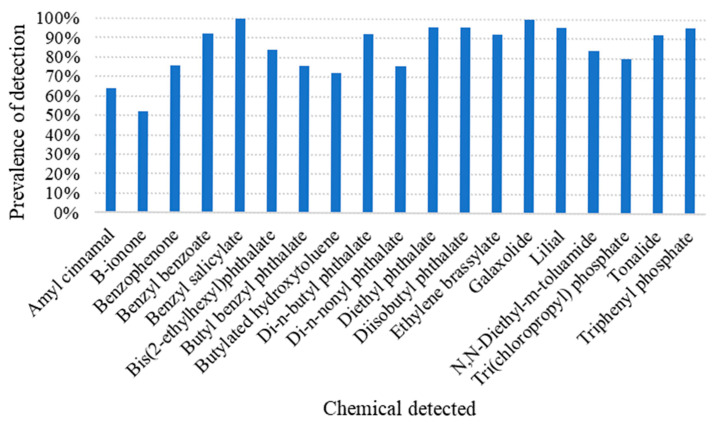 Figure 1
Peer Reviews
No public reviews on file for this paper yet. If you reviewed it on a platform where reviews are public (OpenReview, ICLR, NeurIPS, ICML), you can paste yours below so the community can read it here.
Videos
No videos yet. Explain this paper in a talk, walkthrough, or lecture? Add one.
Taxonomy
TopicsSafe Handling of Antineoplastic Drugs