Taxonomy, Phylogeny, and Size Evolution in the Spider Genus Megaraneus Lawrence, 1968 (Araneae: Araneidae)
Klemen Čandek, Eva Turk, Pedro de Souza Castanheira, Kuang-Ping Yu, Matjaž Gregorič, Volker W. Framenau, Ingi Agnarsson, Matjaž Kuntner

TL;DR
This paper studies the evolution of extreme female size in a spider species from Africa and its placement in the spider family tree.
Contribution
The study provides the first phylogenetic placement of the spider genus Megaraneus and reveals that extreme female size evolved through female gigantism.
Findings
Megaraneus belongs to a spider clade previously known only from Asia and Australia, now found in Africa.
Extreme female size in Megaraneus evolved due to female gigantism, not male size reduction.
The clade's common ancestor already had extreme sexual size dimorphism, with further increases in females.
Abstract
Many spider species show large differences in size between males and females, but biologists still do not fully understand how or why this evolves. In this study, we focused on the systematics and evolution of a little-known African spider, Megaraneus gabonensis, in which females are about four times larger than males. We provided an overdue taxonomic description of the species and examined where the genus Megaraneus fits in the spider tree of life. Our findings show that this spider is a part of a clade that has previously been thought to live only in East Asia and Australia, but we now know it also occurs in Africa. We also found that in Megaraneus, the large size difference between the sexes resulted primarily because females became larger, not because males would become smaller. This research helps us better understand how spider body size evolves differently in males and females…
Genes, proteins, chemicals, diseases, species, mutations and cell lines named across the full text — each resolved to its canonical identifier and authoritative record.
Click any figure to enlarge with its caption.
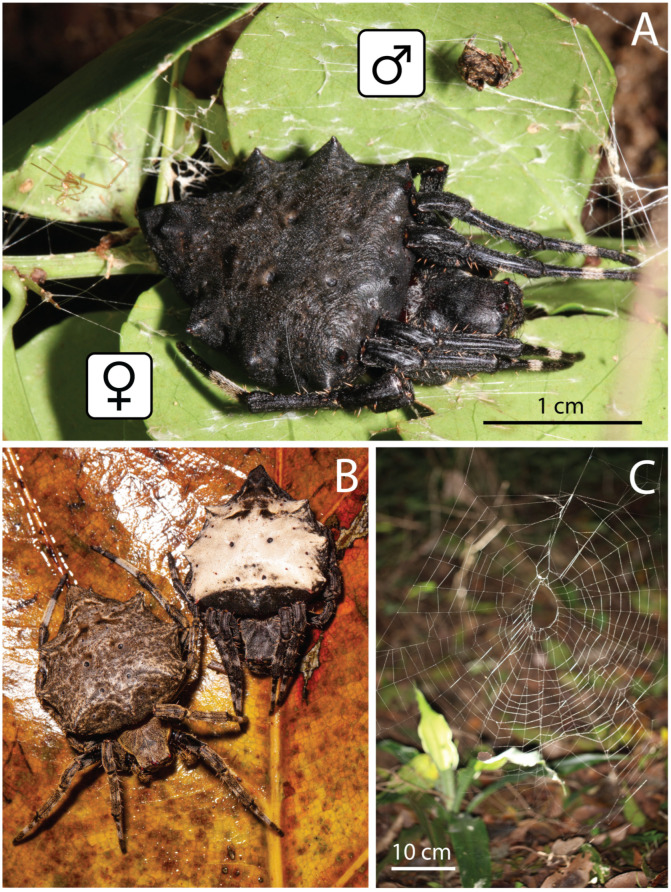 Figure 1
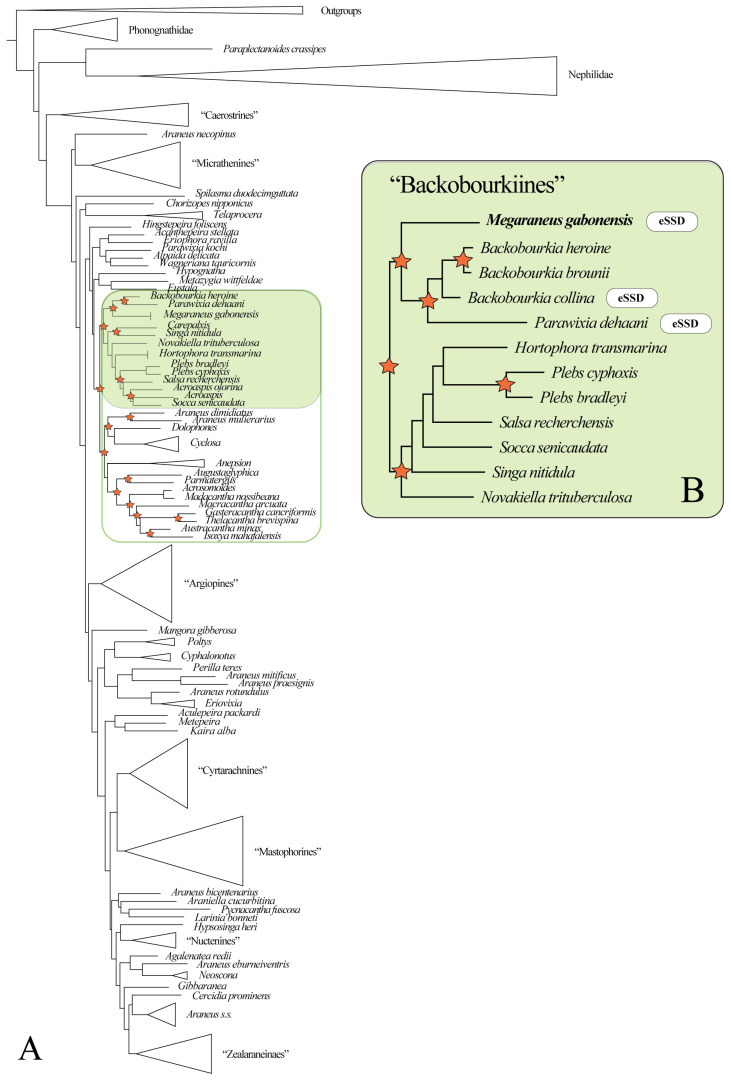 Figure 2
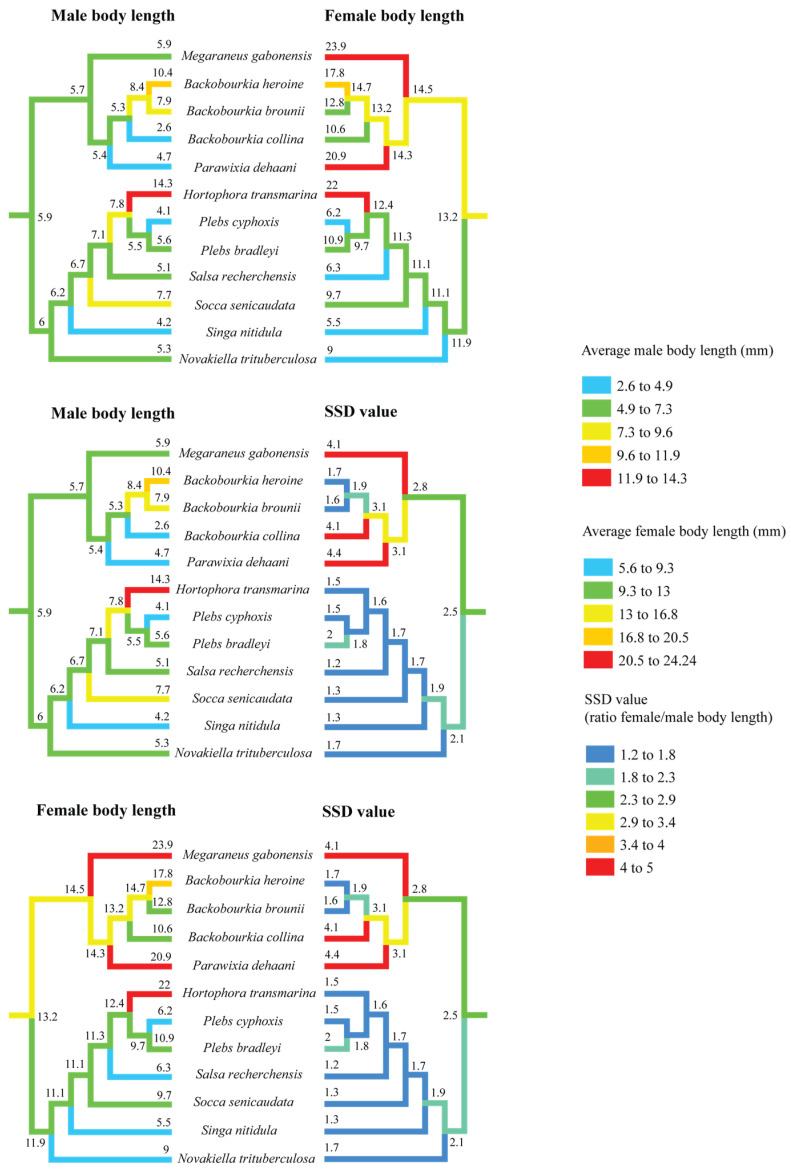 Figure 3
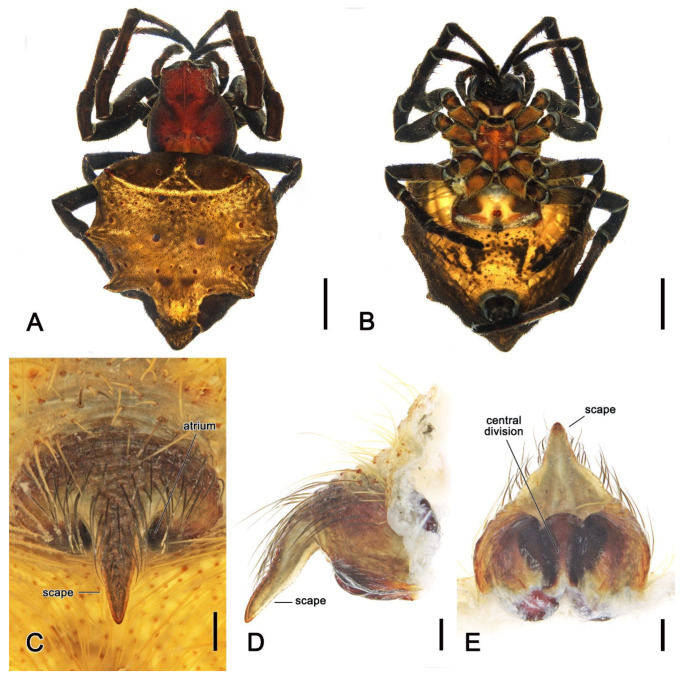 Figure 4
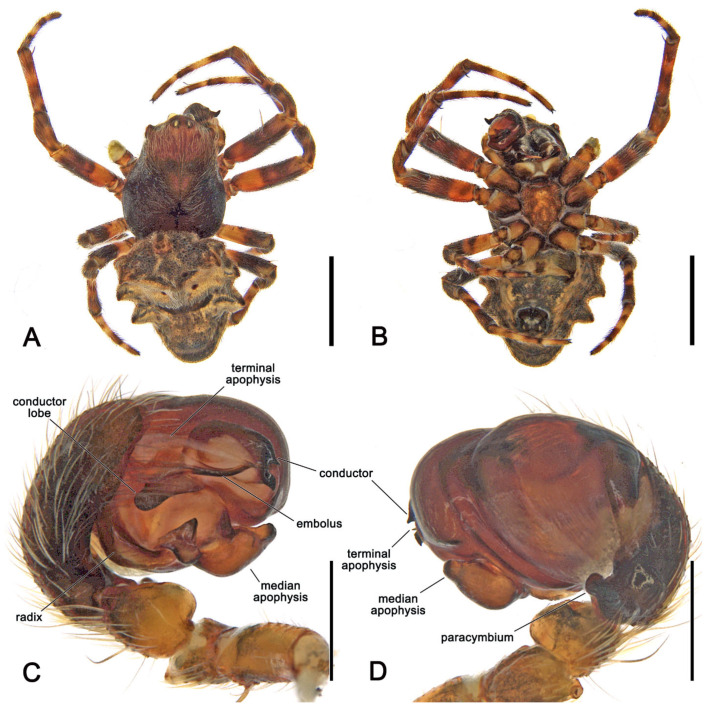 Figure 5
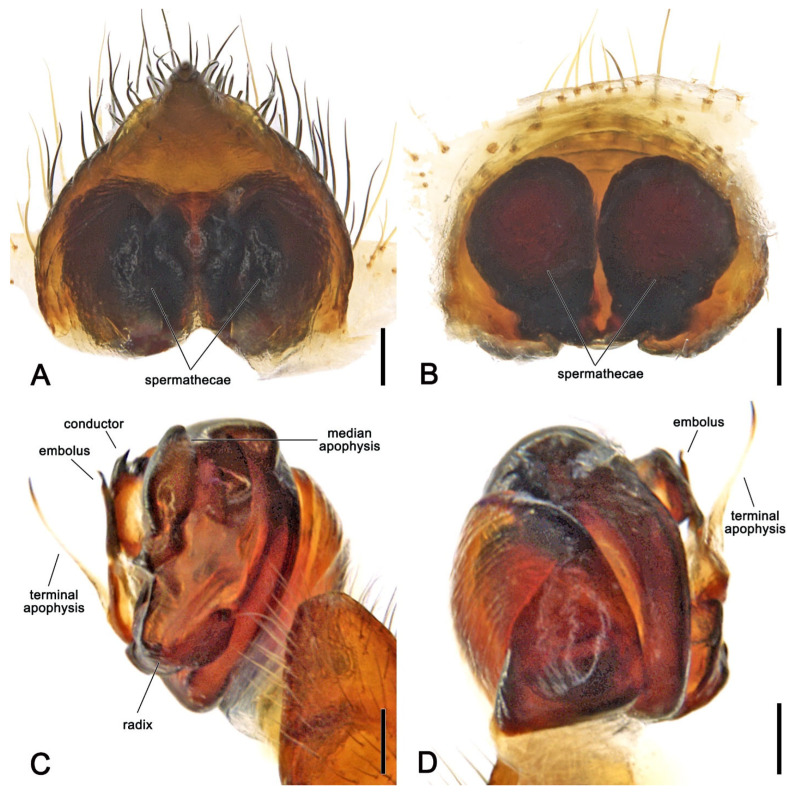 Figure 6
Peer Reviews
No public reviews on file for this paper yet. If you reviewed it on a platform where reviews are public (OpenReview, ICLR, NeurIPS, ICML), you can paste yours below so the community can read it here.
Videos
No videos yet. Explain this paper in a talk, walkthrough, or lecture? Add one.
Taxonomy
TopicsSpider Taxonomy and Behavior Studies · Lepidoptera: Biology and Taxonomy · Scarabaeidae Beetle Taxonomy and Biogeography