Bacillus subtilis Response to Mercury Toxicity: A Defense Mediated by Sulphur-Rich Molecules and Oxidative Prevention Systems
Luis Fernando García-Ortega, Iliana Noemí Quiroz-Serrano, Jesús Guzmán-Moreno, Mario Pedraza-Reyes, Rosa María Ramírez-Santoyo, Luz Elena Vidales-Rodríguez

TL;DR
This study explores how the bacterium Bacillus subtilis defends against mercury toxicity using sulfur-rich molecules and oxidative prevention systems.
Contribution
The study reveals novel defense mechanisms in B. subtilis against mercury-induced oxidative stress and DNA damage.
Findings
Hg(II) exposure increases mutation frequency in B. subtilis, indicating genotoxic effects.
RNA-seq shows upregulation of genes for metal efflux and sulfur molecule synthesis.
Downregulation of iron metabolism genes suggests a link to ROS imbalance.
Abstract
Upon reacting with cellular components, Hg(II) ions elicit the production of reactive oxygen species (ROS). While the ROS-promoted cytotoxic and genotoxic effects induced by Hg(II) have been widely described in eukaryotes, such effects have been less studied in bacteria. In this work, the prokaryotic environmental model Bacillus subtilis was employed to evaluate the cytotoxic and genotoxic impact of Hg(II) over strains proficient or deficient in SOS, general stress and antioxidant responses, as well as the global transcriptional response elicited by this ion. The exposure to HgCl2 significantly increased the mutation frequency to rifampicin resistance (RifR) in WT and mutant strains, suggesting a major contribution of these pathways in counteracting the genotoxic effects of Hg(II). Detection of A → T and C → G transversion mutations in the rpoB gene of Hg(II)-exposed cells suggested the…
Genes, proteins, chemicals, diseases, species, mutations and cell lines named across the full text — each resolved to its canonical identifier and authoritative record.
Click any figure to enlarge with its caption.
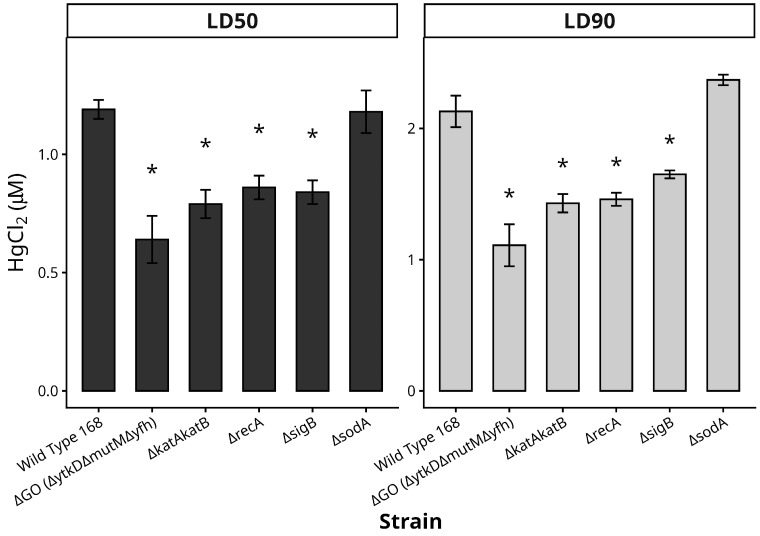 Figure 1
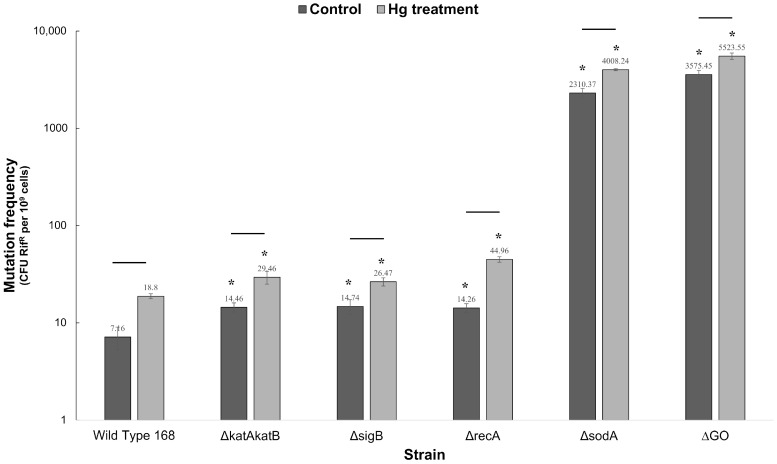 Figure 2
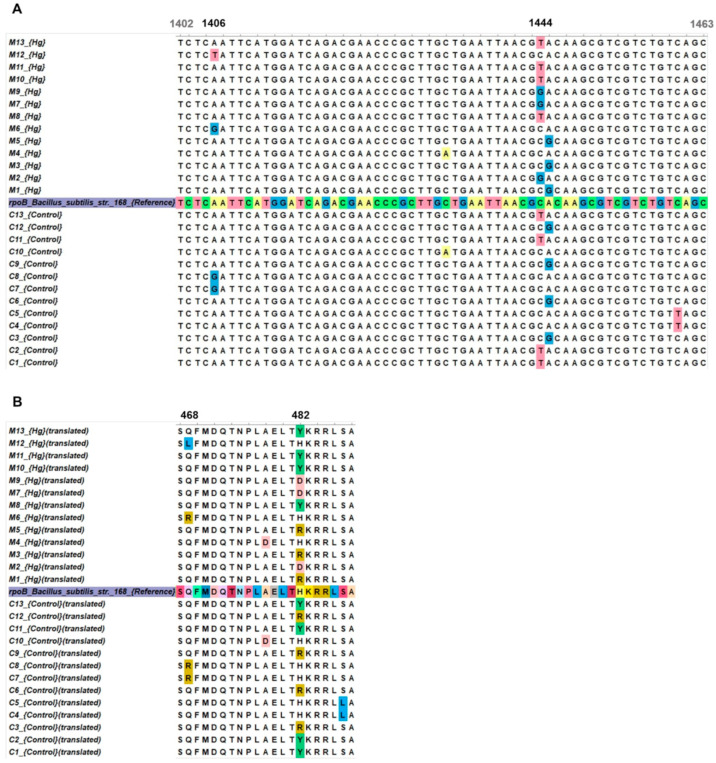 Figure 3
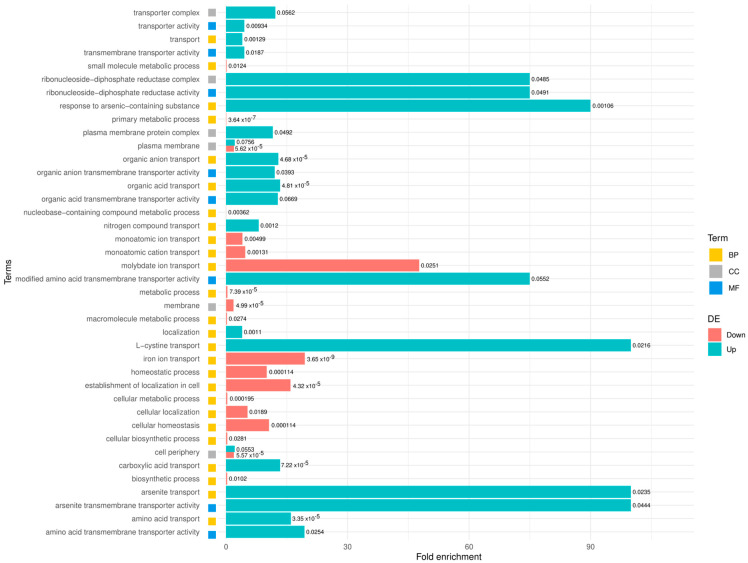 Figure 4
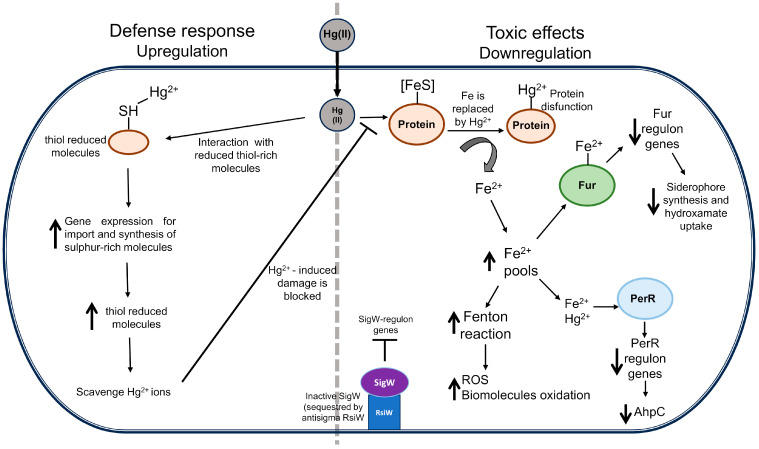 Figure 5
Peer Reviews
No public reviews on file for this paper yet. If you reviewed it on a platform where reviews are public (OpenReview, ICLR, NeurIPS, ICML), you can paste yours below so the community can read it here.
Videos
No videos yet. Explain this paper in a talk, walkthrough, or lecture? Add one.
Taxonomy
TopicsMercury impact and mitigation studies · Chromium effects and bioremediation · Heavy metals in environment