Neoadjuvant 177Lutetium-PSMA-617 Radioligand Therapy for High-Risk Localized Prostate Cancer: Rationale, Early Clinical Evidence, and Future Directions
Whi-An Kwon, Jae Young Joung

TL;DR
Neoadjuvant 177Lu-PSMA-617 radioligand therapy shows promise for high-risk prostate cancer by targeting tumors and micrometastases, but more research is needed to confirm its effectiveness.
Contribution
This paper explores the potential of 177Lu-PSMA-617 as a neoadjuvant therapy and outlines future directions to improve cure rates in high-risk localized prostate cancer.
Findings
Early trials show 177Lu-PSMA-617 is safe and can reduce prostate-specific antigen levels.
A single treatment cycle rarely leads to complete tumor response, prompting research into multi-cycle regimens and combinations with other therapies.
The therapy may sensitize tumors to checkpoint inhibitors by inducing immunogenic cell death.
Abstract
High-risk localized prostate cancer (PCa) often behaves more like an early systemic disease than a confined lesion, frequently rendering local therapy alone insufficient. Neoadjuvant 177Lutetium-PSMA-617 radioligand therapy (RLT) offers a theranostic approach to target both the primary tumor and occult micrometastases before surgery. Early trials, including the LuTectomy study, demonstrate that the therapy is safe and can induce significant prostate-specific antigen declines and partial histologic responses; however, a single cycle rarely achieves a complete pathological response. Ongoing studies are now testing multi-cycle regimens and combinations with checkpoint blockade or androgen deprivation therapy to boost pathological complete response rates. Key hurdles include optimizing patient selection, defining surrogate endpoints such as metastasis-free survival, and balancing cost,…
Genes, proteins, chemicals, diseases, species, mutations and cell lines named across the full text — each resolved to its canonical identifier and authoritative record.
Click any figure to enlarge with its caption.
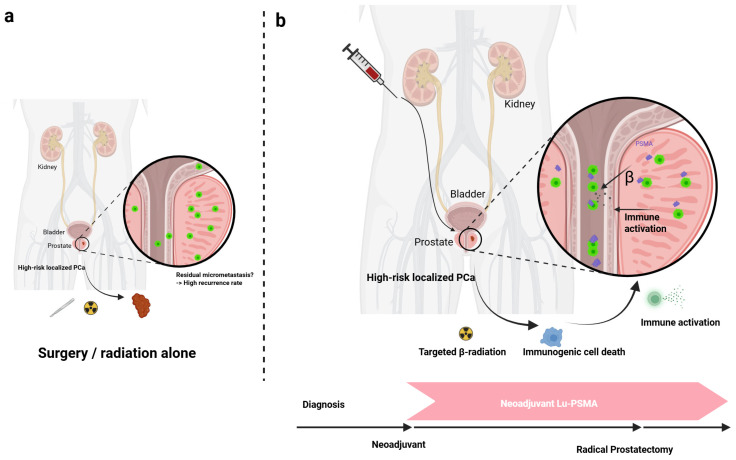 Figure 1
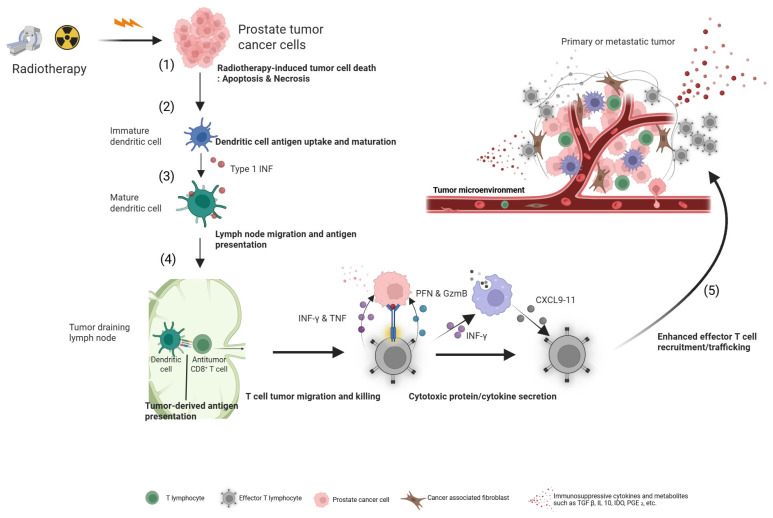 Figure 2
Peer Reviews
No public reviews on file for this paper yet. If you reviewed it on a platform where reviews are public (OpenReview, ICLR, NeurIPS, ICML), you can paste yours below so the community can read it here.
Videos
No videos yet. Explain this paper in a talk, walkthrough, or lecture? Add one.
Taxonomy
TopicsProstate Cancer Treatment and Research · Prostate Cancer Diagnosis and Treatment · Radiopharmaceutical Chemistry and Applications