Antibody-Integrated Solid-to-Gel Microfilm for Protection Against Botulinum Neurotoxin Type A
Ji-Hwan Ha, Sohee Jeon, Yun-Woo Lee, Soon Hyoung Hwang, Byung-Ho Kang, Young Jo Song, Ji-Su Lim, Hyunbeen Kim, Yoosik Yoon, Jun-Ho Jeong

TL;DR
A new solid-to-gel microfilm containing antibodies is developed to protect against botulinum neurotoxin type A, offering advantages over traditional liquid formulations.
Contribution
The development of a solid-to-gel microfilm for antibody delivery that enables rapid, stable, and pain-free administration.
Findings
The microfilm dissolves completely within 5 minutes after intradermal insertion.
Mice treated with the microfilm achieved 100% survival in a lethal BoNT/A challenge.
The solid formulation remained stable at ambient temperatures for 3–6 months.
Abstract
Antibodies are indispensable for protection against biological toxins and pathogens, yet their conventional liquid formulations impose severe constraints, including dosing inaccuracy caused by residual fluid remaining in the syringe and limited user convenience such as pain caused by fluid-induced tissue distension and nerve stimulation as well as instability in ambient temperature, and the requirement for low-temperature storage and logistics. These limitations critically impair rapid deployment during golden hour following acute exposure. Here, we report an antibody-integrated solid-to-gel microfilm—demonstrated with a 100 µg anti-BoNT/A dose—jet-printed and low-temperature dried directly onto metal needles for consistent, on-demand use. Upon intradermal insertion, the microfilm fully dissolves within 5 min, driven by hydration-induced swelling of a hyaluronic acid (HA) support layer…
Genes, proteins, chemicals, diseases, species, mutations and cell lines named across the full text — each resolved to its canonical identifier and authoritative record.
Click any figure to enlarge with its caption.
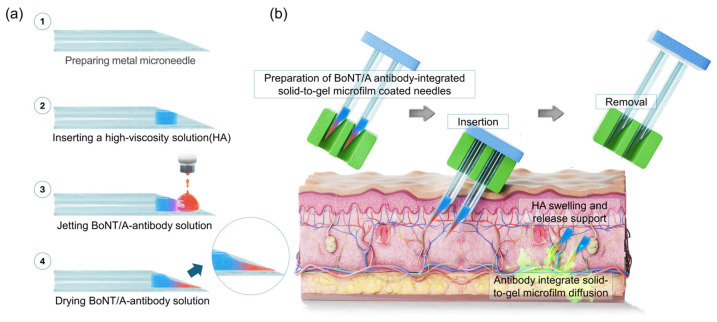 Figure 1
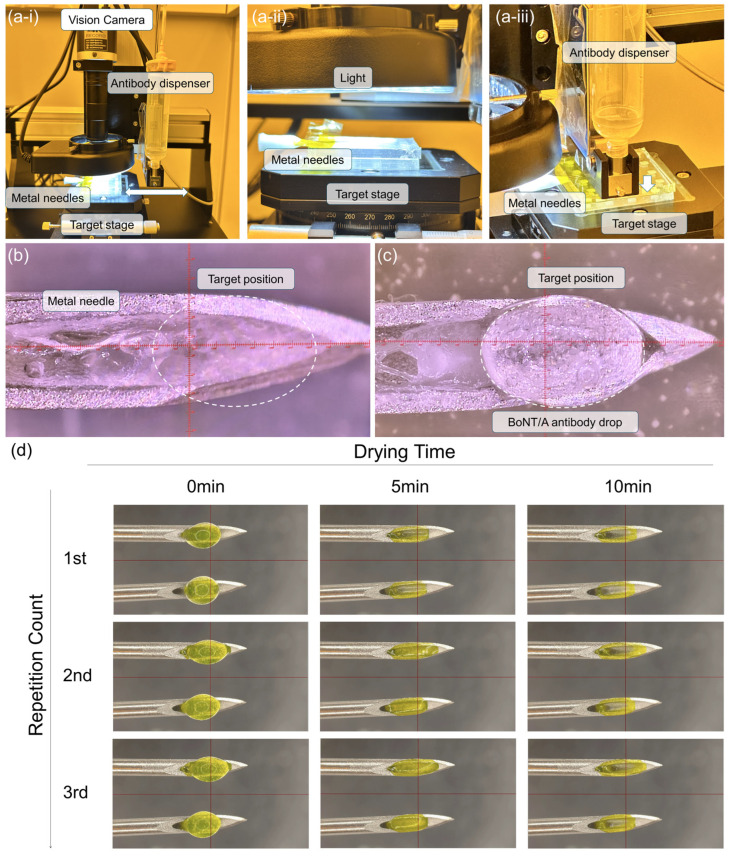 Figure 2
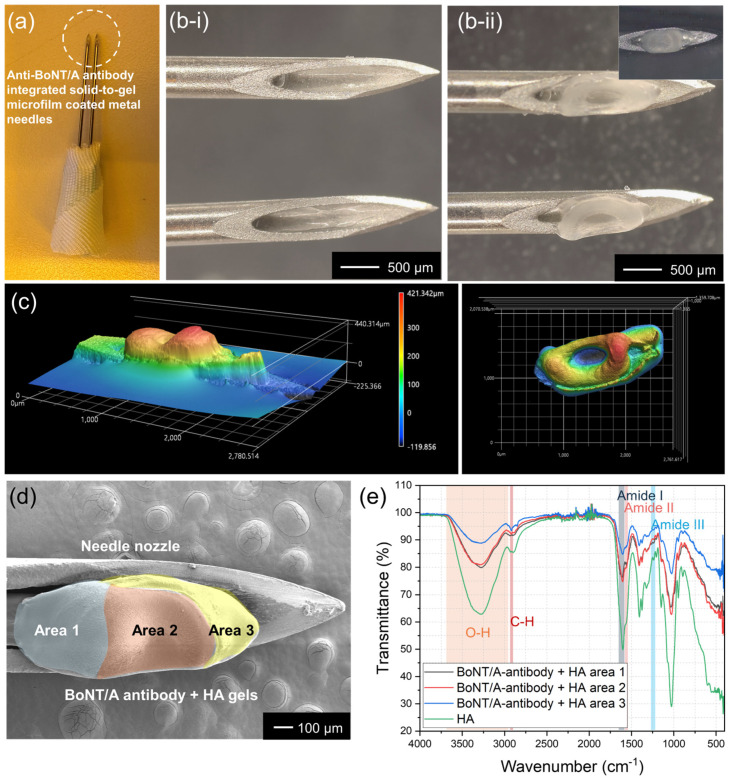 Figure 3
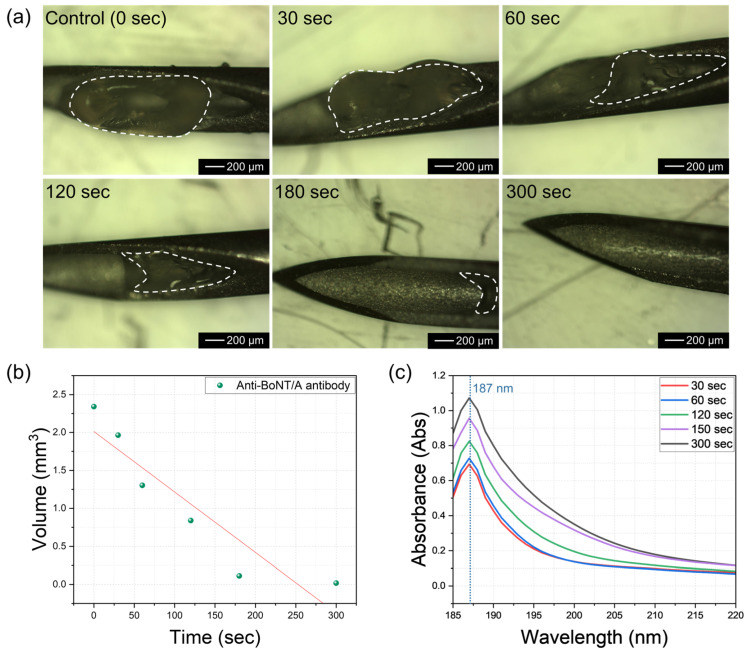 Figure 4
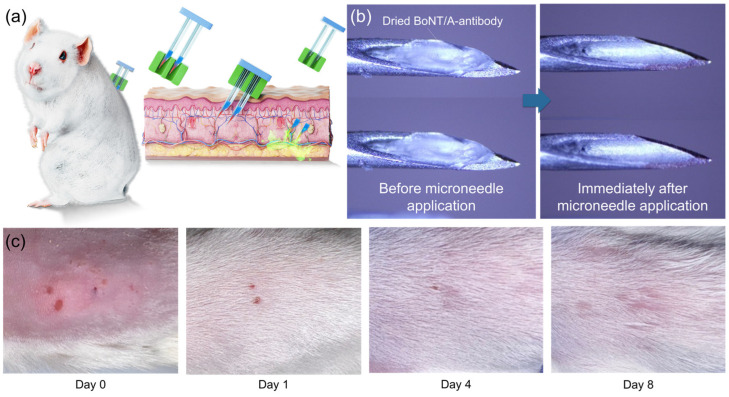 Figure 5
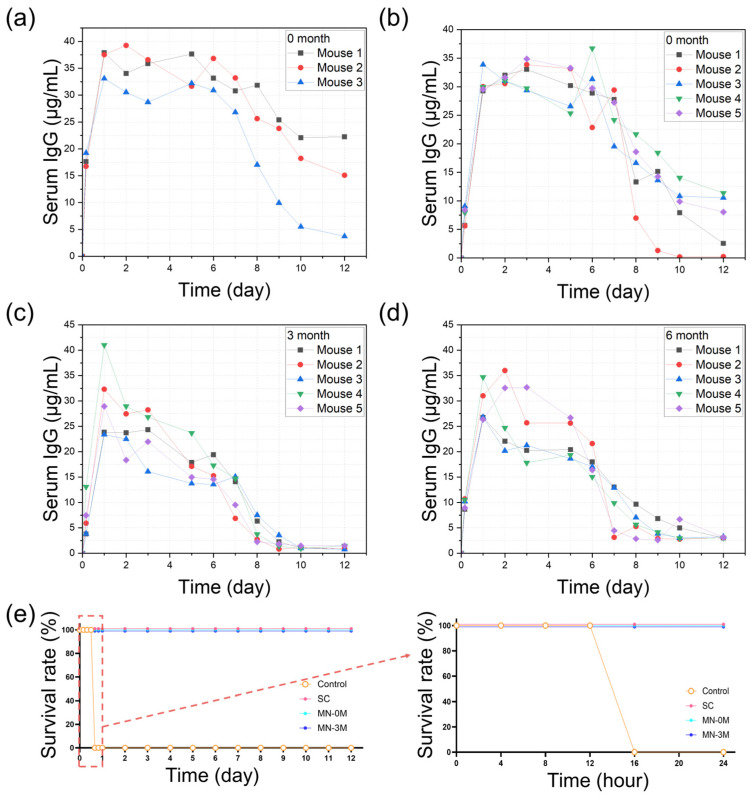 Figure 6
Peer Reviews
No public reviews on file for this paper yet. If you reviewed it on a platform where reviews are public (OpenReview, ICLR, NeurIPS, ICML), you can paste yours below so the community can read it here.
Videos
No videos yet. Explain this paper in a talk, walkthrough, or lecture? Add one.
Taxonomy
TopicsBotulinum Toxin and Related Neurological Disorders · Neurological disorders and treatments · Facial Rejuvenation and Surgery Techniques