Preparation, Stability and In Vitro Antineoplastic Function of Lecithin–Chitosan–Polyethylene Glycol Nanoparticles Loaded with Bioactive Peptides Derived from Phycocyanin
Haozhe Cheng, Binyang Jia, Xinran Li, Yali Li, Boxiong Wu, Qi Yang, Chengtao Wang, Baoguo Sun, Shuai Hao

TL;DR
This study develops nanoparticles to stabilize and enhance the cancer-fighting effects of peptides derived from phycocyanin, a protein from algae.
Contribution
The study introduces a novel nanoparticle formulation to stabilize and improve the anticancer activity of phycocyanin-derived peptides.
Findings
Lecithin-based nanoparticles significantly increased the thermal, pH, and protease resistance of phycocyanin-derived peptides.
PEG and chitosan modifications further enhanced the stability and anticancer activity of the peptides.
The nanoparticles improved the inhibition of non-small cell lung cancer cells compared to non-embedded peptides.
Abstract
Phycocyanin (PC) is a type of alga-derived protein which exerts the role of light harvesting in Spirulina and Cyanophyta cells. Studies have widely proved that phycocyanin exhibits antineoplastic functions, while investigations on its bioactive peptides remain poorly documented. In previous work, three phycocyanin-derived peptides (PCPs: PCP1-3), which exerted anticancer effects in non-small cell lung cancer (NSCLC) cells, were successfully identified. In consideration of the in vitro instability of bioactive peptides, this study firstly investigated the stabilization and function of phycocyanin-derived peptides loaded by nanoparticles (NPs). Herein, Lipid-core NPs (PCPs@LEC–CS–PEG, diameter less than 100 nm) were prepared by interfacial deposition of a polymer using lecithin (LEC, liposome core shell), chitosan (CS, coating material) and polyethylene glycol (PEG, stabilizer). The…
Genes, proteins, chemicals, diseases, species, mutations and cell lines named across the full text — each resolved to its canonical identifier and authoritative record.
Click any figure to enlarge with its caption.
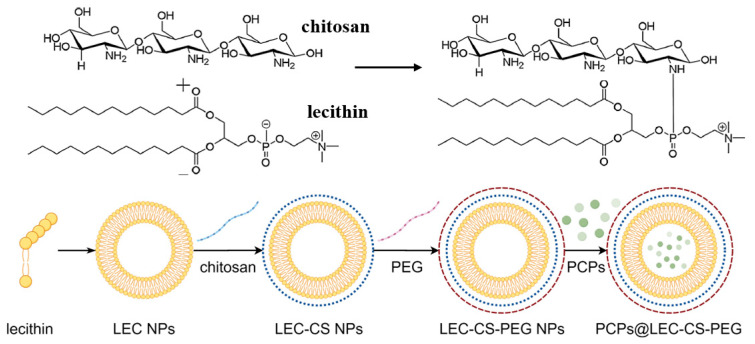 Figure 1
 Figure 2
 Figure 3
 Figure 4
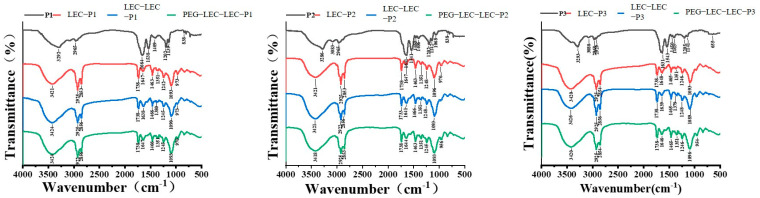 Figure 5
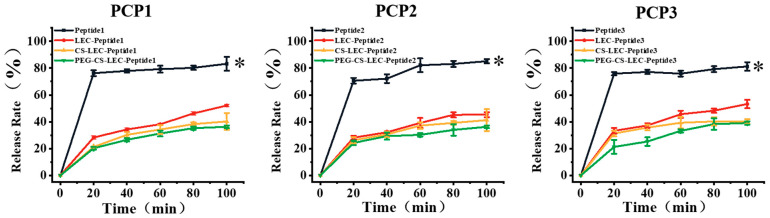 Figure 6
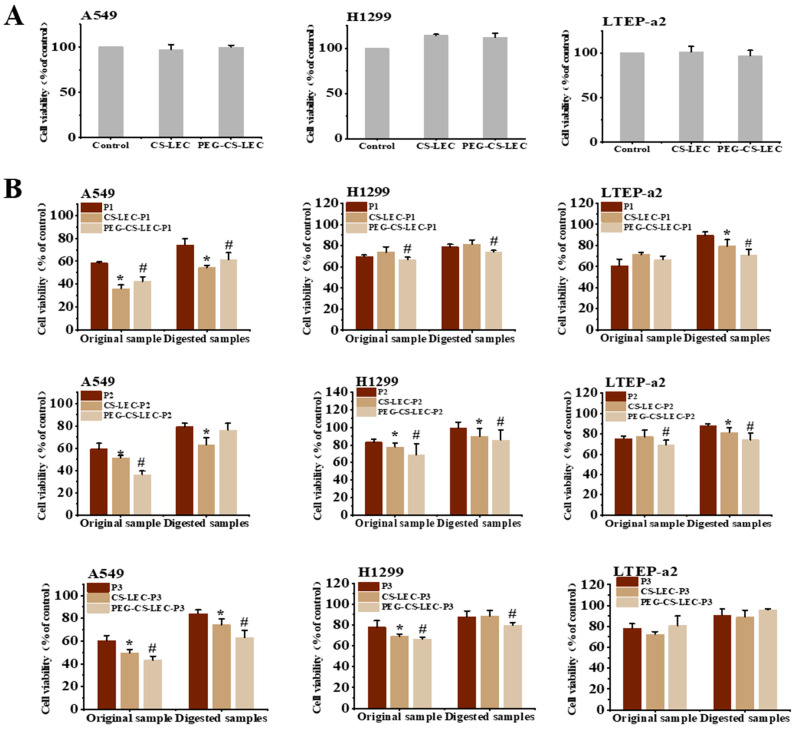 Figure 7
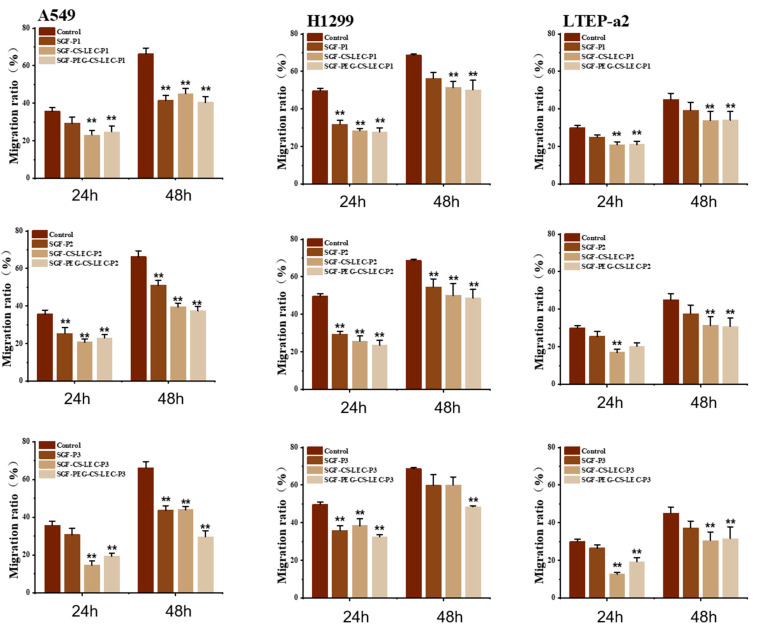 Figure 8
Peer Reviews
No public reviews on file for this paper yet. If you reviewed it on a platform where reviews are public (OpenReview, ICLR, NeurIPS, ICML), you can paste yours below so the community can read it here.
Videos
No videos yet. Explain this paper in a talk, walkthrough, or lecture? Add one.
Taxonomy
TopicsBiochemical and Structural Characterization · Protein Hydrolysis and Bioactive Peptides · Biochemical Analysis and Sensing Techniques