The Zebrafish miR-183 Family Regulates Endoderm Convergence and Heart Development via S1Pr2 Signaling Pathway
Ting Zeng, Ling Liu, Jinrui Lv, Hao Xie, Qingying Shi, Guifang Tao, Xiaoying Zheng, Lin Zhu, Lei Xiong, Huaping Xie

TL;DR
This study shows that the miR-183 family in zebrafish controls early heart development by regulating endoderm cell movement through the S1Pr2 signaling pathway.
Contribution
The study identifies the miR-183 family as a novel regulator of endoderm convergence and heart development via the S1Pr2 pathway in zebrafish.
Findings
Overexpression of miR-183 family members causes defects in endoderm convergence and downregulation of sox32 in zebrafish embryos.
miR-183 family overexpression leads to cardia bifida and reduced expression of heart development-related genes like cmlc2 and gata4.
miR-183 targets the s1pr2 gene, and its overexpression mimics the phenotype of s1pr2 loss, confirming S1Pr2 as a key signaling component.
Abstract
MicroRNA (miRNA), as a key post-transcriptional regulatory factor, plays a crucial role in embryonic development. The coordination of endoderm cell convergence and cardiac precursor cell (CPC) migration is critical for cardiac tube fusion. Defects in endoderm can impair the normal migration of CPCs towards the midline, leading to cardia bifida. Although the role of the microRNA-183 family (miR-183, miR-96 and miR-182) in cardiovascular diseases has been reported, the mechanism by which they regulate early heart development remains unclear. In this study, we used zebrafish as a model to elucidate the roles of the microRNA-183 family in early heart development. miRNA mimics were injected into Tg (cmlc2: eGFP) and Tg (sox17: eGFP) transgenic embryos to overexpress the miR-183 family. The results showed that, at 36 hpf, single or co-injection of miR-183/96/182 mimics caused defects in…
Genes, proteins, chemicals, diseases, species, mutations and cell lines named across the full text — each resolved to its canonical identifier and authoritative record.
Click any figure to enlarge with its caption.
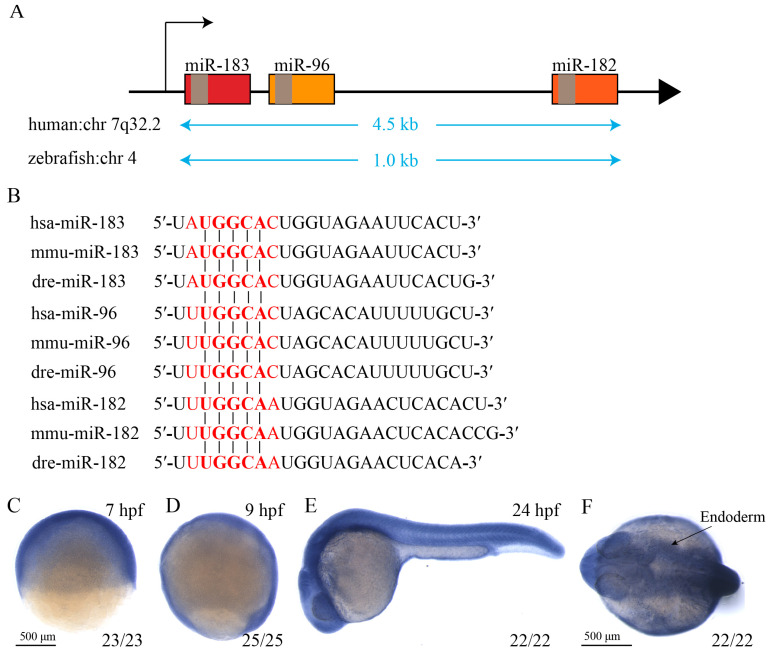 Figure 1
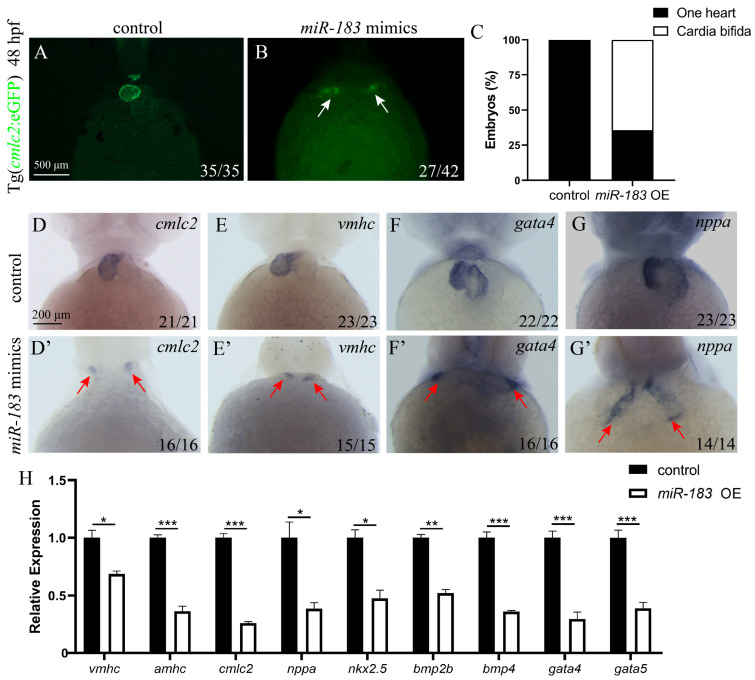 Figure 2
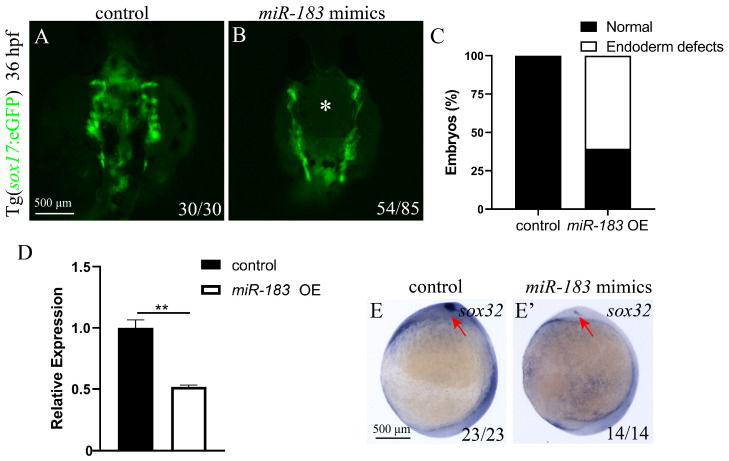 Figure 3
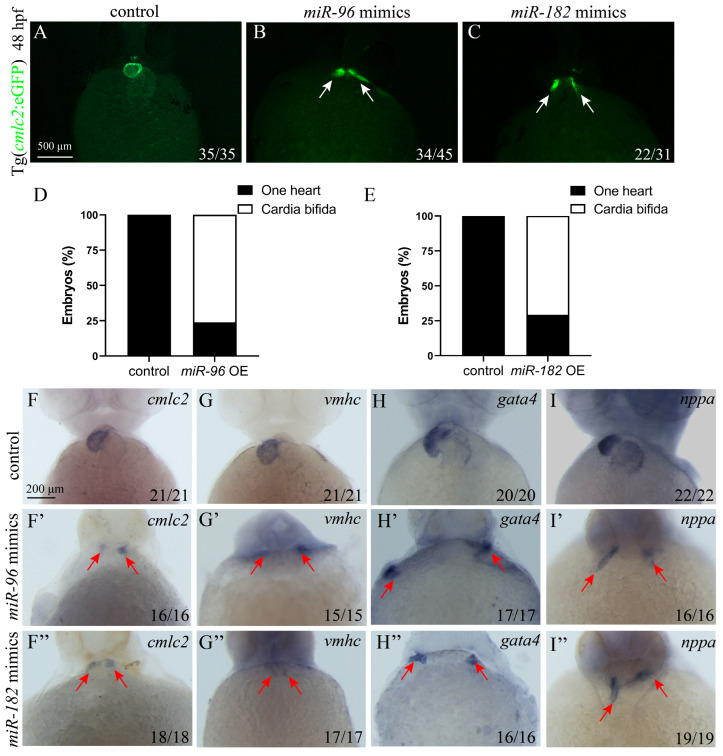 Figure 4
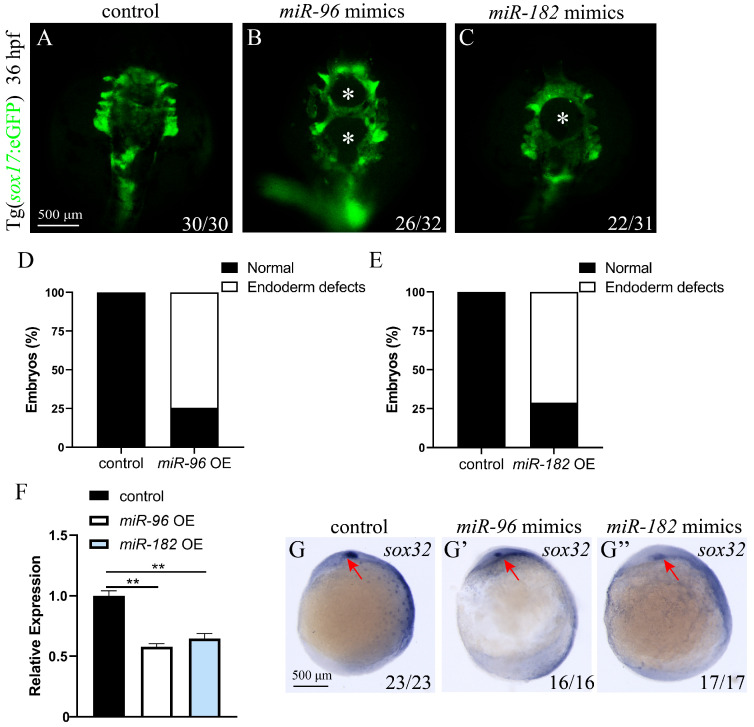 Figure 5
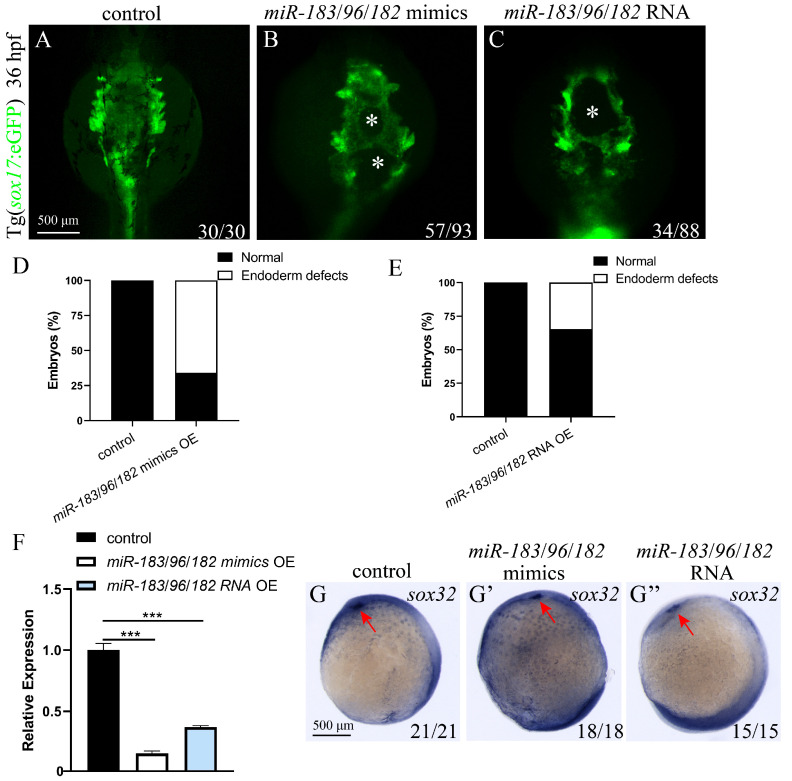 Figure 6
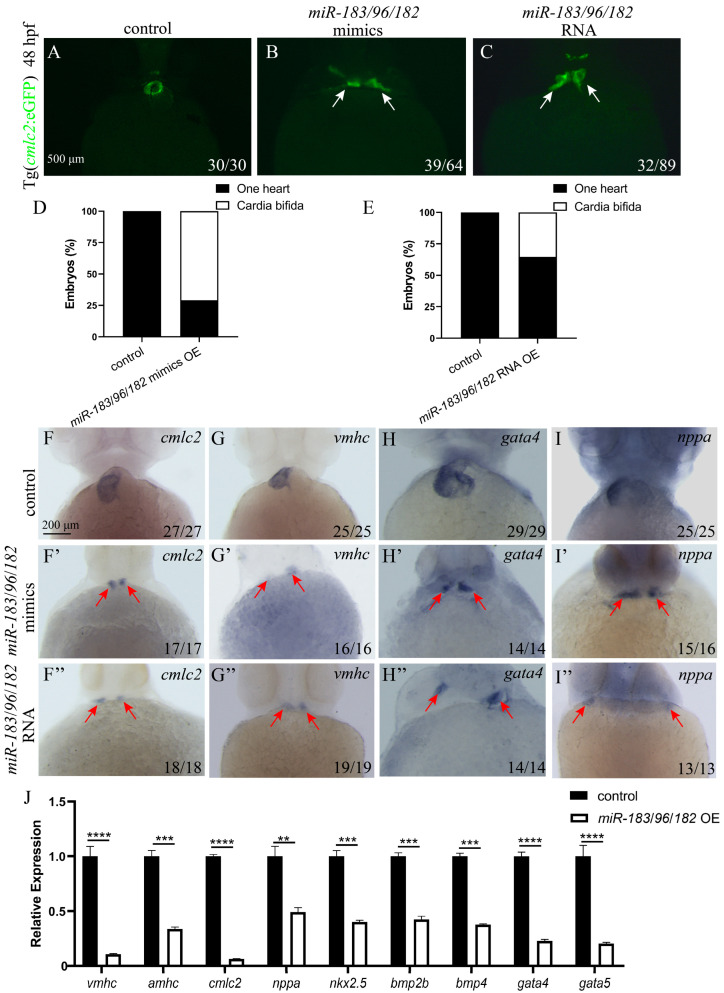 Figure 7
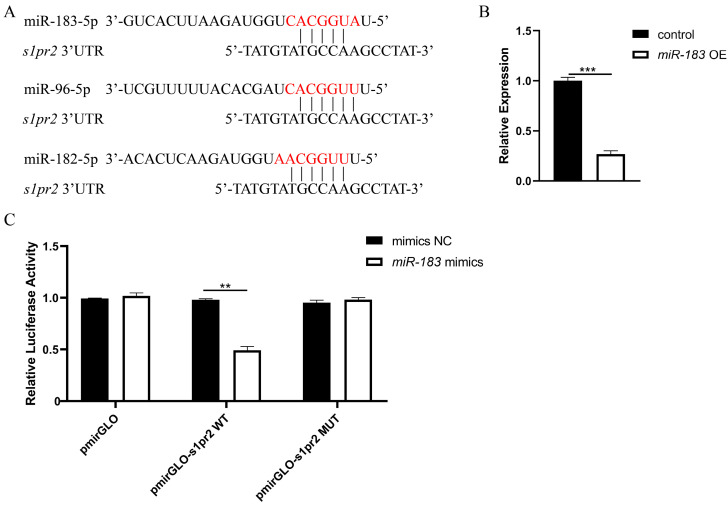 Figure 8
Peer Reviews
No public reviews on file for this paper yet. If you reviewed it on a platform where reviews are public (OpenReview, ICLR, NeurIPS, ICML), you can paste yours below so the community can read it here.
Videos
No videos yet. Explain this paper in a talk, walkthrough, or lecture? Add one.
Taxonomy
TopicsMicroRNA in disease regulation · Circular RNAs in diseases · Cancer-related molecular mechanisms research