Selective Endocytosis-Mediated Omicron S1-RBD Internalization Revealed by Reconstitution of ACE2-S1-RBD Interaction on Micropatterned Membrane Substrates
Angelin M. Philip, S. M. Nasir Uddin, Zeyaul Islam, Prasanna R. Kolatkar, Kabir H. Biswas

TL;DR
The study shows how the Omicron variant of SARS-CoV-2 uses a cell's endocytosis process to enhance infection, which is not seen in earlier variants.
Contribution
The research reveals that Omicron's S1-RBD mutations enable selective internalization via endocytosis, a novel mechanism for enhanced viral infection.
Findings
Omicron S1-RBD is selectively depleted from membrane corrals through endocytosis, unlike wild-type S1-RBD.
Clathrin-mediated endocytosis is involved in Omicron S1-RBD internalization, as shown by inhibition with pitstop 2.
The Omicron Revertant variant shows reduced depletion, suggesting mutations are key to this mechanism.
Abstract
The SARS-CoV-2 spike protein, through its receptor binding domain (S1-RBD), binds to the angiotensin-converting enzyme 2 (ACE2) receptor on the host cell membrane, leading to viral infection. Several mutations in S1-RBD in SARS-CoV-2 variants are known to enhance infection through an increased affinity for ACE2. While many reports are available describing the SARS-CoV-2 infection mechanism, there is a dearth of studies towards understanding the initial interaction of the S1-RBD with ACE2 on living host cells and the role of endocytosis and cytoskeleton in the process. Here, we reconstituted the interaction between S1-RBD- and ACE2-expressing host cells in a hybrid live cell-supported lipid bilayer (SLB) platform enabling live monitoring of the interaction between S1-RBD on SLBs and the ACE2 receptor on living cells and showed that cells depleted Omicron S1-RBD from SLB corrals, likely…
Genes, proteins, chemicals, diseases, species, mutations and cell lines named across the full text — each resolved to its canonical identifier and authoritative record.
Click any figure to enlarge with its caption.
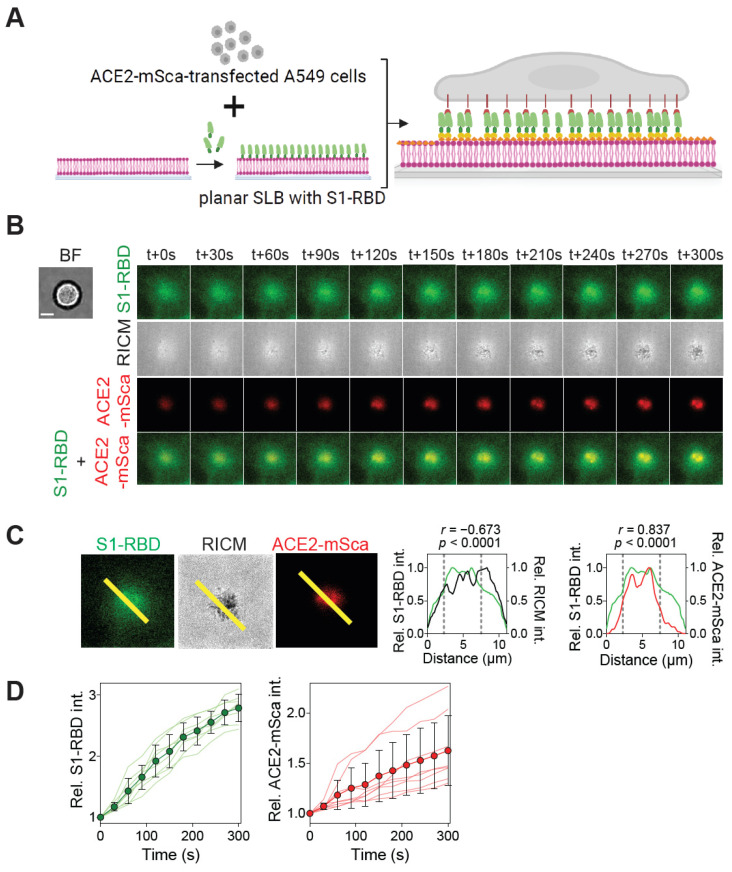 Figure 1
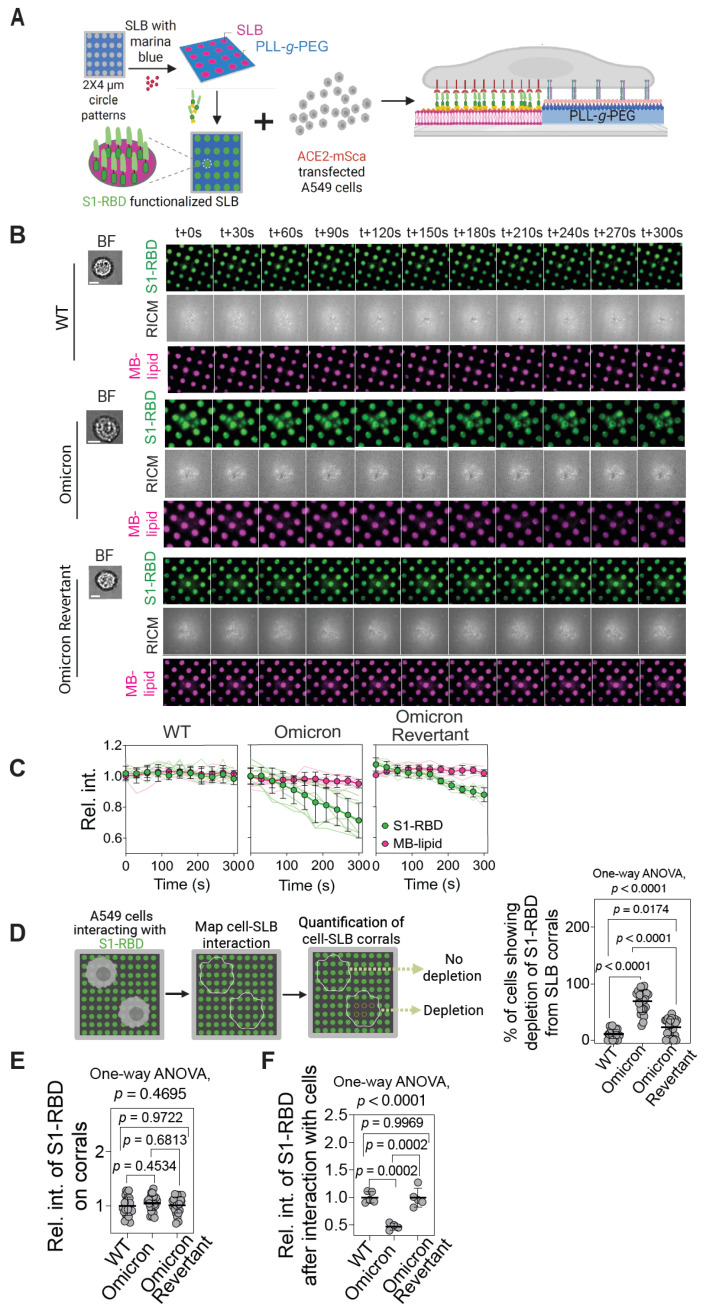 Figure 2
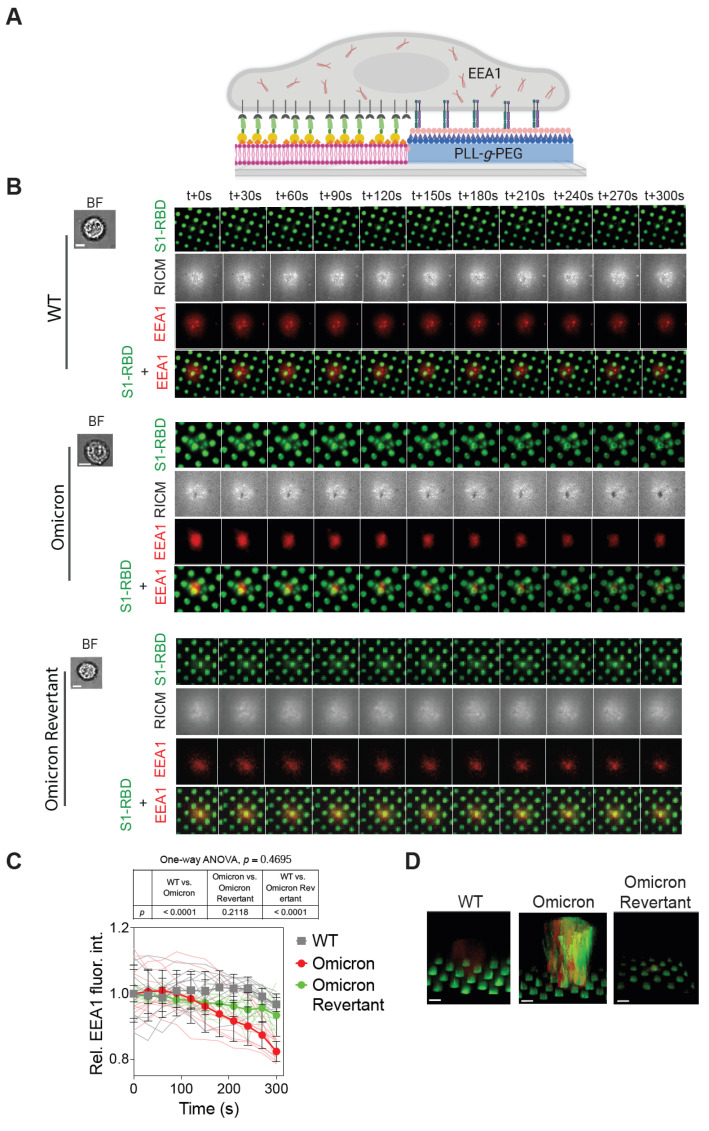 Figure 3
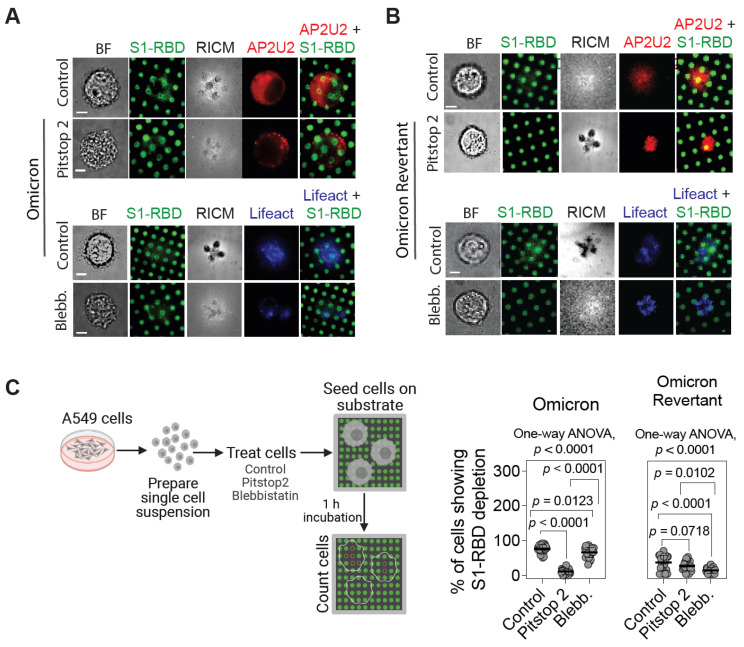 Figure 4
Peer Reviews
No public reviews on file for this paper yet. If you reviewed it on a platform where reviews are public (OpenReview, ICLR, NeurIPS, ICML), you can paste yours below so the community can read it here.
Videos
No videos yet. Explain this paper in a talk, walkthrough, or lecture? Add one.
Taxonomy
TopicsCellular transport and secretion · Receptor Mechanisms and Signaling · Advanced Fluorescence Microscopy Techniques