RNA Interference-Mediated Silencing of HbREF and HbSRPP Genes Reduces Allergenic Protein Content While Maintaining Rubber Production in Hevea brasiliensis
Thanyarat Kuasuwan, Methaporn Meethong, Napassawan Inaek, Panumas Puechpon, Sumalee Obchoei, Phanthipha Runsaeng

TL;DR
Scientists used RNA interference to reduce allergens in rubber latex without significantly affecting rubber production, offering a safer product for people with allergies.
Contribution
RNAi targeting HbREF and HbSRPP genes effectively reduces allergens in Hevea brasiliensis latex while preserving rubber yield.
Findings
RNAi targeting HbREF and HbSRPP genes reduced allergens Hev b1 and Hev b3 by up to 64.04% and 71.54%, respectively.
Direct injection of dsRNA achieved over 90% gene silencing within 12 hours.
Allergen reduction caused only an 11–13% decrease in dry rubber content.
Abstract
Allergenic proteins in natural rubber latex (NRL) pose significant health risks, particularly in rubber gloves. This study evaluated RNA interference (RNAi) technology for silencing HbREF (rubber elongation factor) and HbSRPP (small rubber particle protein) genes in Hevea brasiliensis to reduce latex allergen content. Double-stranded RNA (dsRNA) targeting these genes demonstrated high stability at 25–37 °C for 6 h and under UV/outdoor conditions for 72 h, but degraded rapidly above 50 °C. Among the three delivery methods tested, direct injection achieved the highest efficiency (>90% gene silencing within 12 h), followed by root drenching (54–84%) and foliar spray (46–70%). HbREF silencing achieved 98–99% expression reduction within 3 h, while HbSRPP showed dose-dependent responses (70–90% silencing) without off-target effects. Gene silencing affected downstream rubber synthesis genes…
Genes, proteins, chemicals, diseases, species, mutations and cell lines named across the full text — each resolved to its canonical identifier and authoritative record.
Click any figure to enlarge with its caption.
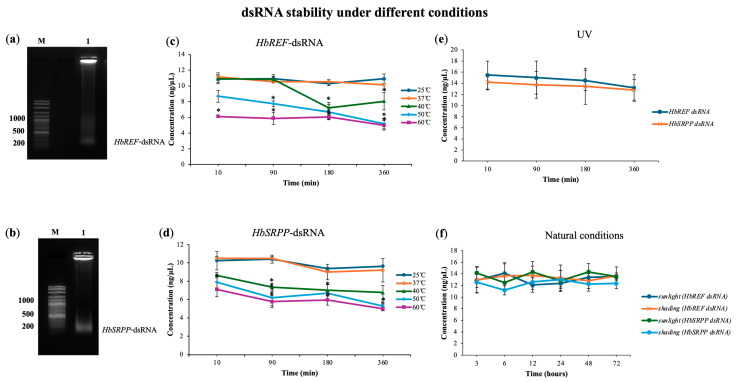 Figure 1
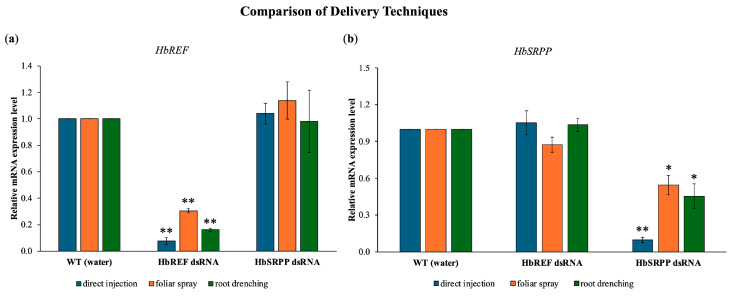 Figure 2
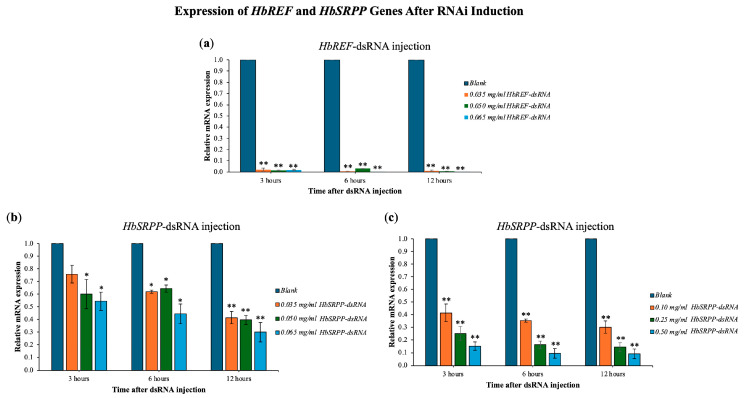 Figure 3
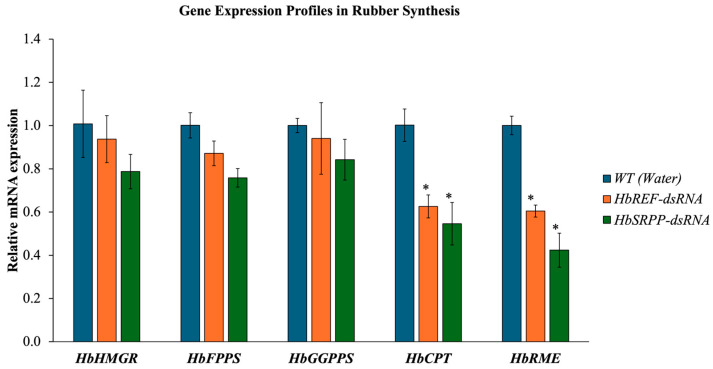 Figure 4
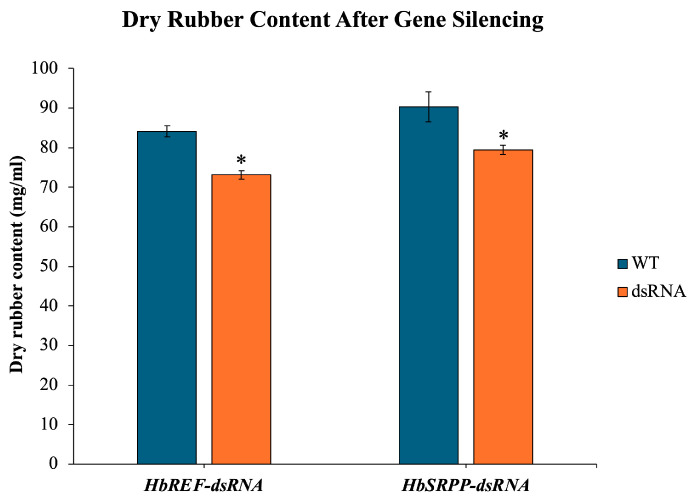 Figure 5
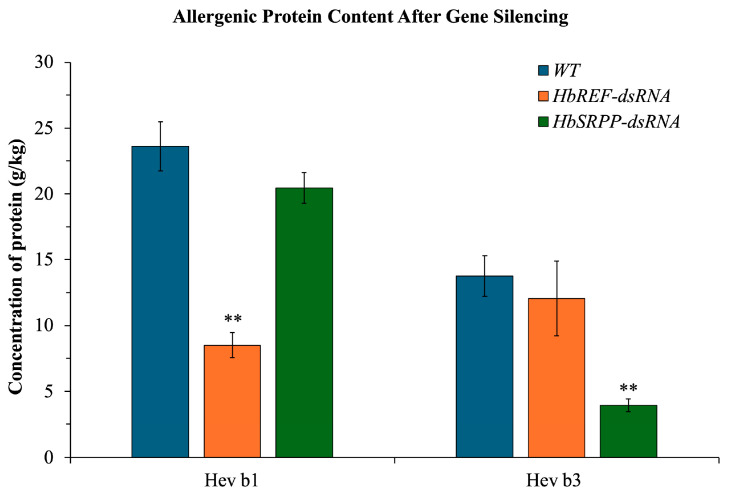 Figure 6
Peer Reviews
No public reviews on file for this paper yet. If you reviewed it on a platform where reviews are public (OpenReview, ICLR, NeurIPS, ICML), you can paste yours below so the community can read it here.
Videos
No videos yet. Explain this paper in a talk, walkthrough, or lecture? Add one.
Taxonomy
TopicsInsect Resistance and Genetics · Genetically Modified Organisms Research · Viral Infectious Diseases and Gene Expression in Insects