Craniotomy Complexity and Outcomes in Exoscope-Assisted Cranial Surgery: A Single-Center Retrospective Analysis
Salvatore Cardali, Alfredo Conti, Domenicantonio Collufio, Domenico Matalone, Antonio Morabito, Francesco Messineo, Giuseppe Ricciardo, Giovanni Raffa, Giada Garufi

TL;DR
This study examines the use of an exoscope in brain tumor surgery, finding it safe and effective for resecting both shallow and deep tumors with outcomes similar to traditional microscopes.
Contribution
The paper provides a novel single-center retrospective analysis of exoscope use in cranial surgery, comparing outcomes across surgical complexities.
Findings
Exoscope enabled gross total or subtotal resection in all 26 patients with complication rates comparable to traditional microscopes.
Gross total resection rates were higher for superficial lesions compared to deep ones, though complication rates did not differ significantly.
Postoperative neurological outcomes and survival were consistent with pathological findings, with no device-related adverse events observed.
Abstract
Objective: The exoscope is an emerging digital visualization technology in neurosurgery that provides high-definition 3D 4k magnified views of the surgical field on external monitors, promoting improved ergonomics and enhanced team involvement. This study presents a single center experience of 26 patients undergoing brain tumor resection using the Olympus Orbeye exoscope with surgical approaches of different complexities and provides a review of the current literature on exoscopic adoption in neurosurgical oncology. Methods: We retrospectively reviewed clinical, surgical, and outcome data from a consecutive series of 26 patients who underwent brain tumor resection with the ORBEYE exoscope. Metrics analyzed included extent of resection, surgical technique, and complications in two different complex scenarios: superficial and deep lesions. Results: In our institutional case series, use of…
Genes, proteins, chemicals, diseases, species, mutations and cell lines named across the full text — each resolved to its canonical identifier and authoritative record.
Click any figure to enlarge with its caption.
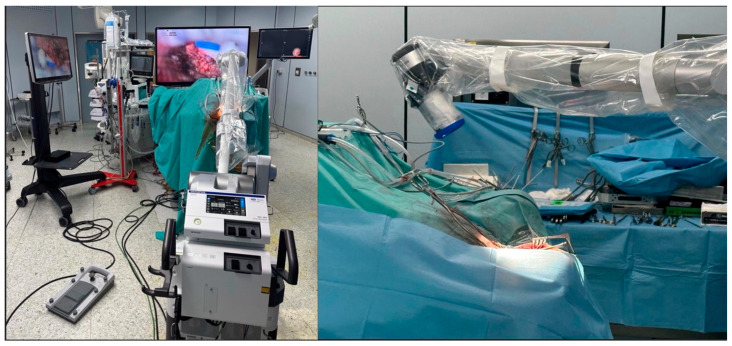 Figure 1
Peer Reviews
No public reviews on file for this paper yet. If you reviewed it on a platform where reviews are public (OpenReview, ICLR, NeurIPS, ICML), you can paste yours below so the community can read it here.
Videos
No videos yet. Explain this paper in a talk, walkthrough, or lecture? Add one.
Taxonomy
TopicsHead and Neck Surgical Oncology · Cerebrospinal fluid and hydrocephalus · Craniofacial Disorders and Treatments