A New Variant in the NALCN Channel Is Responsible for Cerebellar Ataxia and Cognitive Impairment
Rute Luísa Cabrita Pinto, Roberto Fancellu, Tiziana Benzi Markushi, Silvia Viaggi, Barbara Testa, Giuseppina Conteduca, Lane Fitzsimmons, Domenico Coviello, Angela Elvira Covone

TL;DR
A new mutation in the NALCN gene is linked to a milder, later-onset form of a rare neurodevelopmental disorder.
Contribution
A novel NALCN variant is identified, expanding the known clinical spectrum of CLIFAHDD syndrome.
Findings
A de novo missense variant c.1514A>T; p.(Lys505Met) in NALCN was found to be likely pathogenic.
The variant affects a critical residue in the NALCN channel, possibly altering its function and regulation.
The patient's milder and later-onset symptoms suggest a broader clinical spectrum for CLIFAHDD syndrome.
Abstract
Background/Objectives: CLIFAHDD syndrome (OMIM # 616266) is a rare neurodevelopmental disorder caused by mutations in the NALCN gene. It is characterized by hypotonia, developmental delay, and congenital contractures of the limbs and face. We report a 33-year-old Italian woman with a mild form of CLIFAHDD who exhibited early-onset language difficulties and mild intellectual disability and later developed gait and balance impairments in adulthood. Methods and Results: Whole Exome Sequencing (WES) identified a novel missense variant c.1514A>T; p.(Lys505Met) in the NALCN gene. The allele frequency of this variant is not detected (MAF = 0.0), the variant is classified as likely pathogenic according to ACMG criteria, and predicted to be probably damaging by PolyPhen-2. It affects a critical residue within the second pore-forming domain of the NALCN channel, potentially altering lipid…
Genes, proteins, chemicals, diseases, species, mutations and cell lines named across the full text — each resolved to its canonical identifier and authoritative record.
Click any figure to enlarge with its caption.
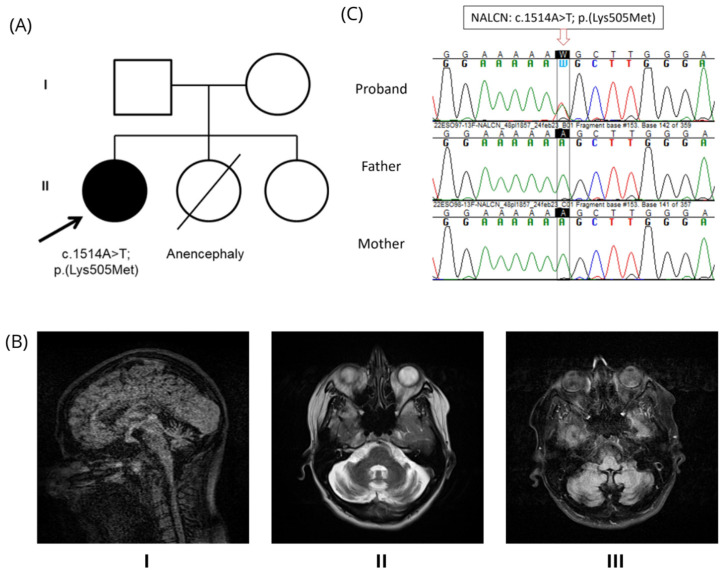 Figure 1
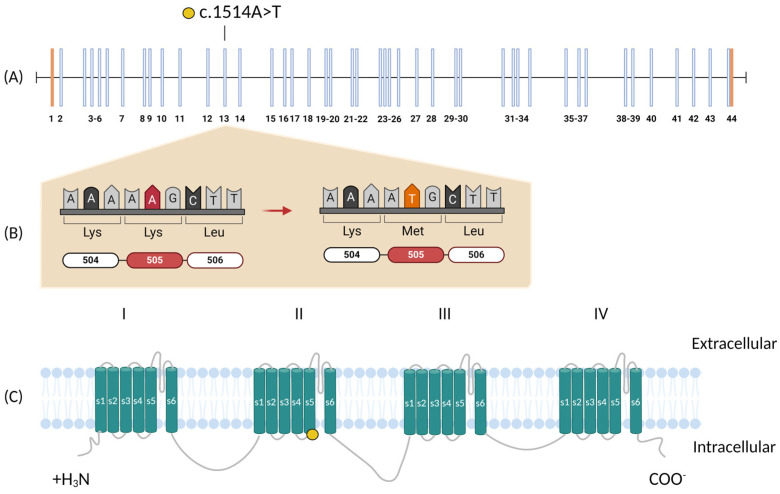 Figure 2
Peer Reviews
No public reviews on file for this paper yet. If you reviewed it on a platform where reviews are public (OpenReview, ICLR, NeurIPS, ICML), you can paste yours below so the community can read it here.
Videos
No videos yet. Explain this paper in a talk, walkthrough, or lecture? Add one.
Taxonomy
TopicsGenetic Neurodegenerative Diseases · Mitochondrial Function and Pathology · Neurological disorders and treatments