Next-Generation Sequencing in Congenital Eye Malformations: Identification of Genetic Causes and Comparison of Different Panel-Based Diagnostic Strategies
Lukas Neuhann, Andreas Laner, Elke Holinski-Feder, Teresa Neuhann

TL;DR
This study uses next-generation sequencing to identify genetic causes of congenital eye malformations and compares different testing strategies to improve diagnosis.
Contribution
The study introduces a stepwise genetic testing approach using broad multigene panels and exome sequencing for higher diagnostic yield in eye malformations.
Findings
Causative variants were identified in 43% of patients using a stepwise NGS approach.
Diagnostic rates were highest in patients with complex ocular phenotypes and positive family history.
Eight novel (likely) pathogenic variants in six genes were discovered.
Abstract
Congenital eye malformations like microphthalmia–anophthalmia–coloboma (MAC), anterior segment dysgenesis (ASD), primary congenital glaucoma (PCG) and congenital cataracts (CC) are significant causes of childhood visual impairment. Phenotypic heterogeneity often complicates diagnosis. The goal of this study was to optimize the diagnostic strategy for next-generation sequencing (NGS)-based procedures, thereby aiming to identify genetic causes of congenital eye malformations. Forty patients with congenital eye malformations were included. A primary diagnostic testing (PD) of a limited number of genes was followed by multigene panel (MGP) testing, including 186 eye-related genes, and exome sequencing. Causative variants were identified in 17 patients (43%) and clinically relevant variants of uncertain significance (VUS) in 6 patients (15%). PD had a diagnostic yield (DY) of 15%, MGP of 29%…
Genes, proteins, chemicals, diseases, species, mutations and cell lines named across the full text — each resolved to its canonical identifier and authoritative record.
Click any figure to enlarge with its caption.
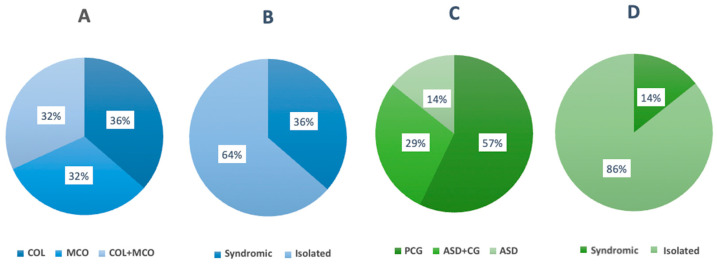 Figure 1
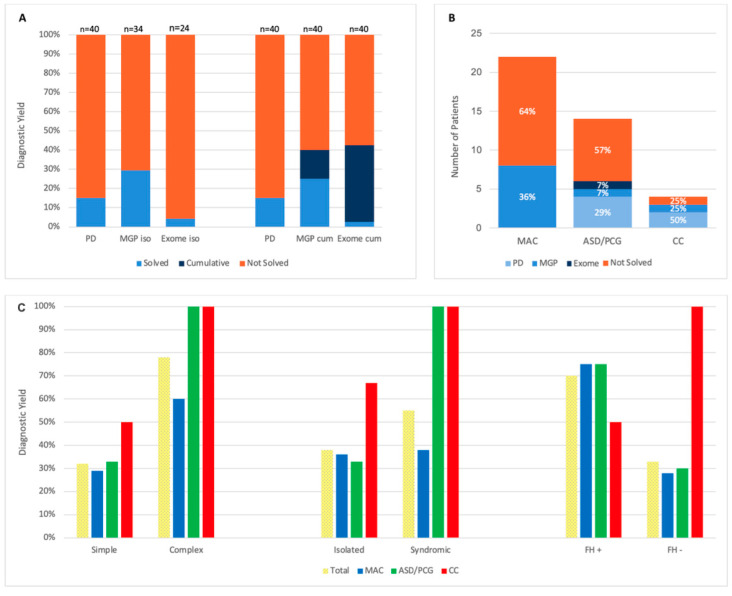 Figure 2
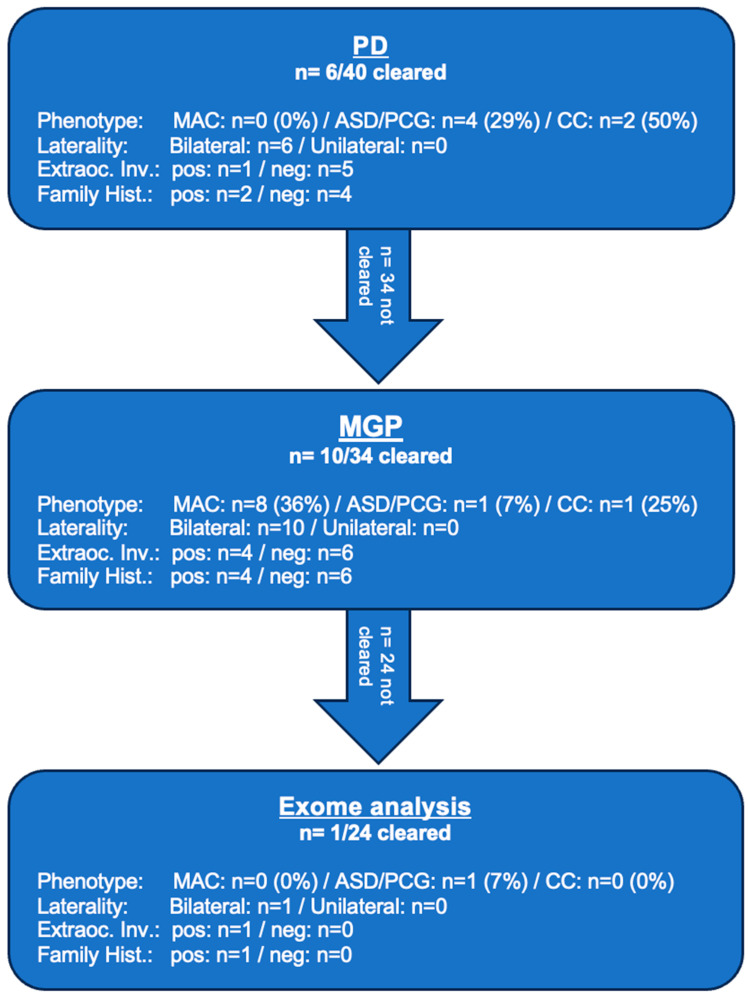 Figure 3
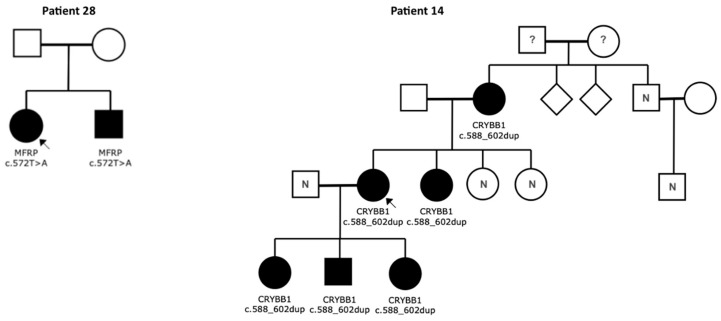 Figure 4
Peer Reviews
No public reviews on file for this paper yet. If you reviewed it on a platform where reviews are public (OpenReview, ICLR, NeurIPS, ICML), you can paste yours below so the community can read it here.
Videos
No videos yet. Explain this paper in a talk, walkthrough, or lecture? Add one.
Taxonomy
TopicsOcular Disorders and Treatments · Congenital Ear and Nasal Anomalies · Connexins and lens biology