Jumping Translocation Breakpoint Expression in Midgestation Mouse Embryos
Carley McGrath, Taniya M Jayaweera, Thomas Lufkin, Costel C. Darie, Anca-Narcisa Neagu, Petra Kraus

TL;DR
This study shows that the JTB gene, linked to chromosome abnormalities in cancer, is expressed in multiple tissues during mouse embryo development and is not located in the Epidermal Differentiation Complex as previously thought.
Contribution
The study refines the genomic location of JTB and reveals its expression pattern in mouse embryos, challenging prior assumptions about its role.
Findings
Human JTB and murine Jtb are located outside the Epidermal Differentiation Complex.
Jtb is expressed in multiple tissues of midgestational mouse embryos, including the heart and vertebral column.
Jtb expression partially overlaps with early markers of the neural crest cell lineage.
Abstract
Jumping translocations (JTs) can lead to partial trisomies. A breakpoint within the gene known as Jumping Translocation Breakpoint (JTB) has previously been associated with JTs involving the long arm of human chromosome 1 (1q). These 1q+ amplifications are frequently observed in cancer. JTB was initially mapped to the Epidermal Differentiation Complex (EDC) at 1q21, and earlier studies primarily focused on its role in malignant or adult tissues. Using updated genomic data, we refined the mapping of JTB. We employed RNA in situ hybridization (RISH) to visualize Jtb expression with organ, tissue, and cell-level resolution. We demonstrate that human JTB and murine Jtb are located outside the EDC. In midgestational wild-type mouse embryos, Jtb is expressed in multiple tissues, including the developing heart and vertebral column, and shows partial overlap with the expression of early markers…
Genes, proteins, chemicals, diseases, species, mutations and cell lines named across the full text — each resolved to its canonical identifier and authoritative record.
Click any figure to enlarge with its caption.
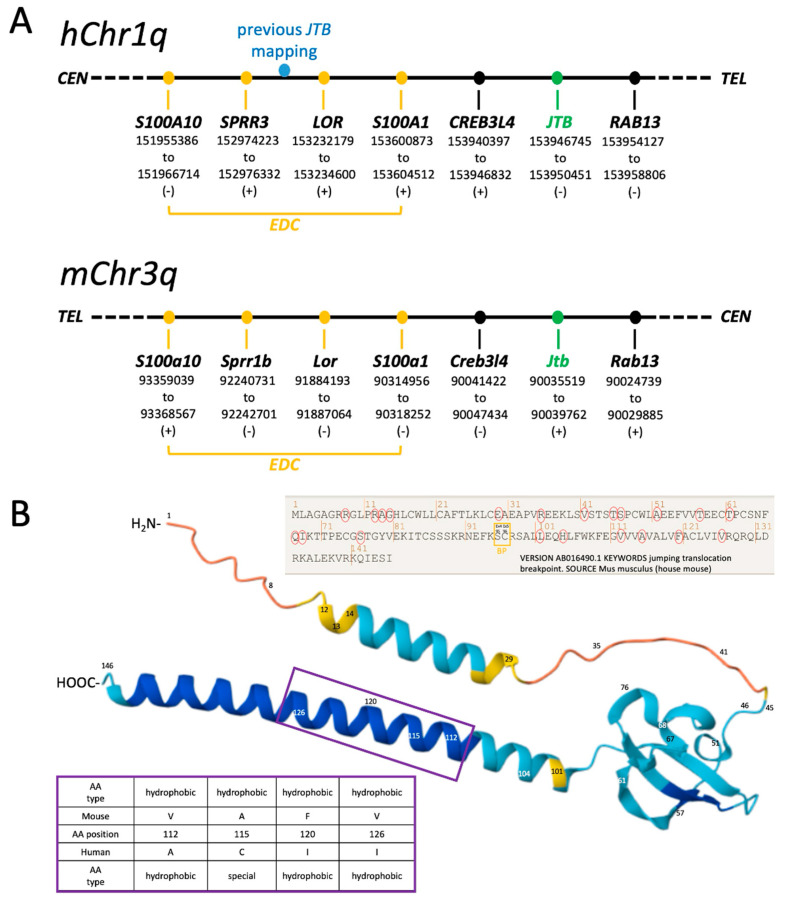 Figure 1
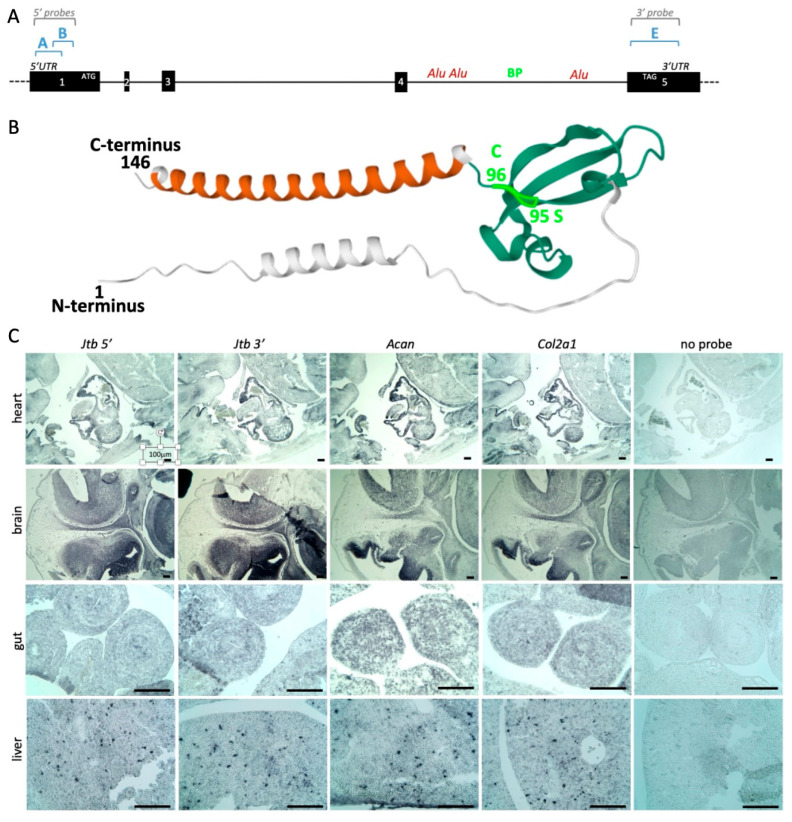 Figure 2
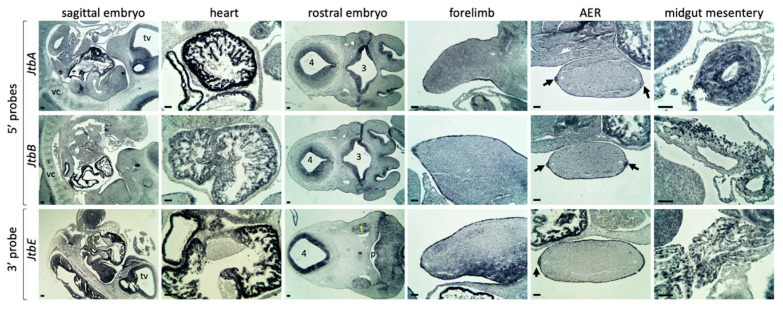 Figure 3
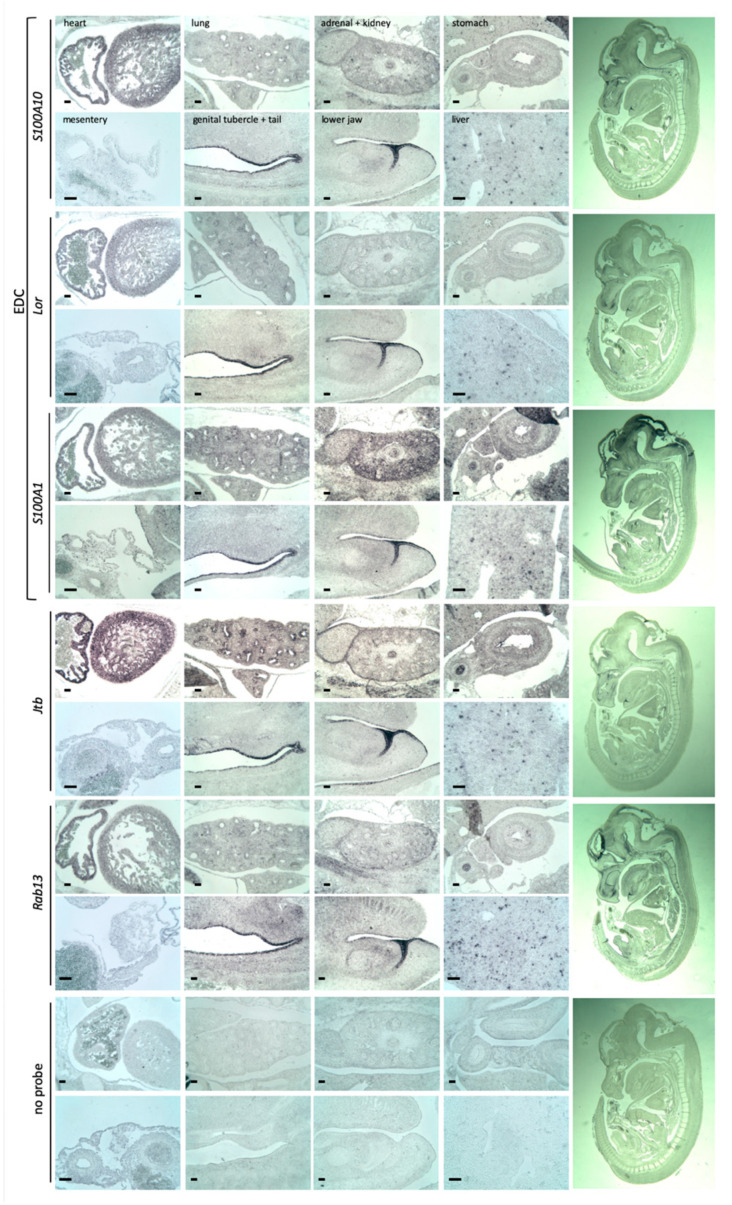 Figure 4
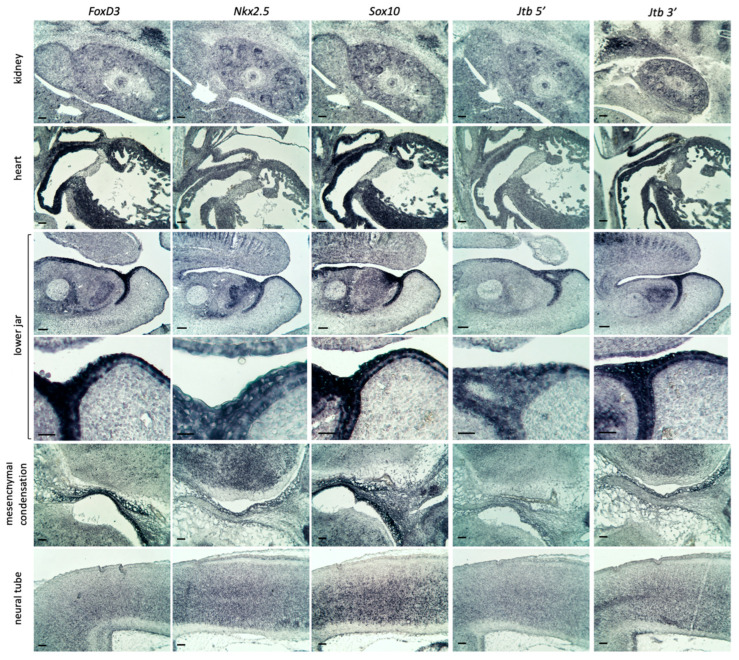 Figure 5
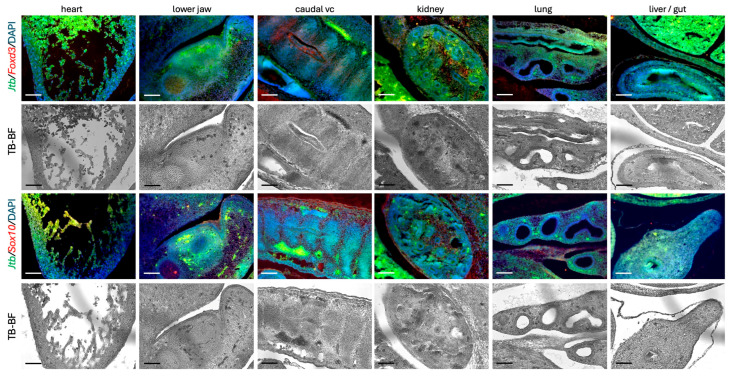 Figure 6
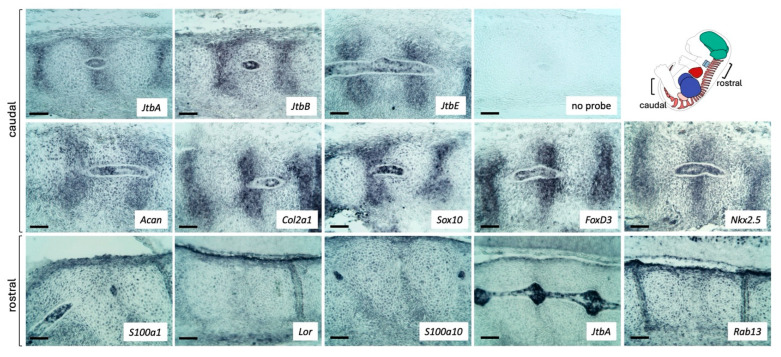 Figure 7
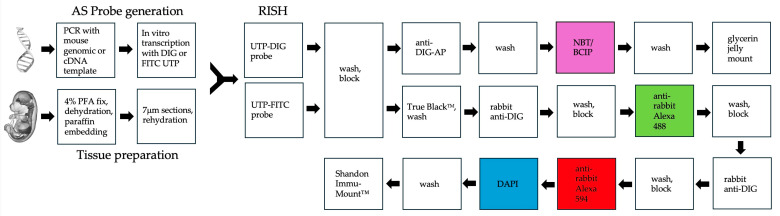 Figure 8
Peer Reviews
No public reviews on file for this paper yet. If you reviewed it on a platform where reviews are public (OpenReview, ICLR, NeurIPS, ICML), you can paste yours below so the community can read it here.
Videos
No videos yet. Explain this paper in a talk, walkthrough, or lecture? Add one.
Taxonomy
TopicsRNA Research and Splicing · MicroRNA in disease regulation · RNA modifications and cancer