Robot-Assisted Radical Prostatectomy for Locally Advanced Prostate Cancer: Oncological Potential and Limitations as the Primary Treatment
Noriyoshi Miura, Masaki Shimbo, Kensuke Shishido, Shota Nobumori, Naoya Sugihara, Takatora Sawada, Shunsuke Haga, Haruna Arai, Keigo Nishida, Osuke Arai, Tomoya Onishi, Ryuta Watanabe, Kenichi Nishimura, Tetsuya Fukumoto, Yuki Miyauchi, Tadahiko Kikugawa, Takato Nishino

TL;DR
This study examines the effectiveness of robot-assisted surgery alone for advanced prostate cancer, finding it can work for some patients but not all.
Contribution
The study evaluates robot-assisted radical prostatectomy as a standalone treatment for locally advanced prostate cancer, identifying key patient characteristics for success.
Findings
Five-year survival rates were 36.6% for biochemical recurrence-free survival and 88.9% for metastasis-free survival.
Patients with high PSA, advanced stage, or multiple high-grade biopsy cores had worse outcomes.
Surgery alone provided durable cancer control for selected patients, but others needed additional therapies.
Abstract
Prostate cancer is one of the most common cancers in men, and those with locally advanced disease are often treated with a combination of surgery, radiation, and systemic therapy. However, the long-term benefits of surgery alone are less clear. This study aimed to assess the safety and outcomes of robot-assisted radical prostatectomy (RARP) performed without additional systemic treatment. We analyzed 258 men with high-risk features—such as advanced clinical stage, high PSA levels, or aggressive biopsy results—who underwent RARP between 2012 and 2022. After a median follow-up of approximately 5 years, the 5-year survival rates were 36.6% for biochemical recurrence-free survival, 88.9% for metastasis-free survival, and 98.3% for cancer-specific survival. Factors linked to poorer outcomes included very high PSA, advanced stage, multiple high-grade biopsy cores, lymphovascular invasion, and…
Genes, proteins, chemicals, diseases, species, mutations and cell lines named across the full text — each resolved to its canonical identifier and authoritative record.
Click any figure to enlarge with its caption.
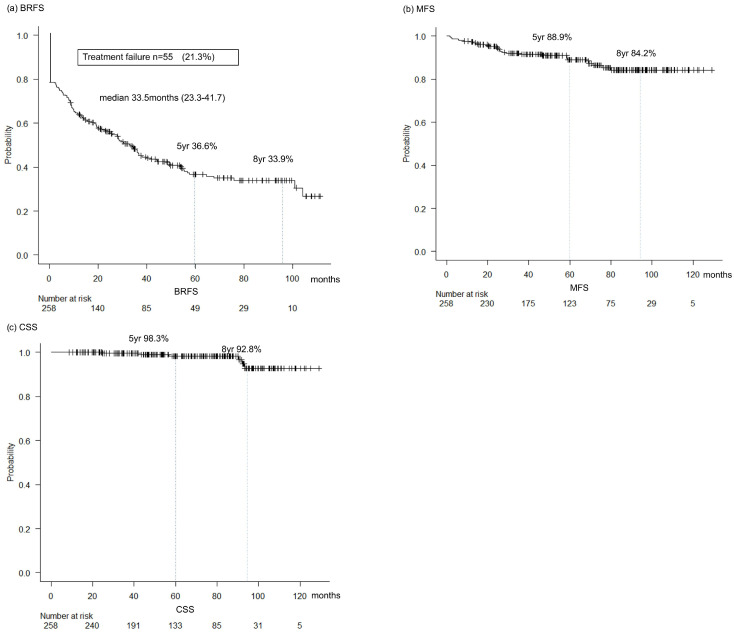 Figure 1
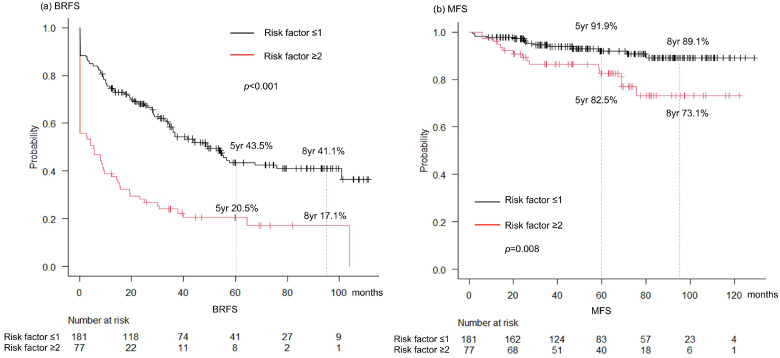 Figure 2
 Figure 3
Peer Reviews
No public reviews on file for this paper yet. If you reviewed it on a platform where reviews are public (OpenReview, ICLR, NeurIPS, ICML), you can paste yours below so the community can read it here.
Videos
No videos yet. Explain this paper in a talk, walkthrough, or lecture? Add one.
Taxonomy
TopicsProstate Cancer Diagnosis and Treatment · Prostate Cancer Treatment and Research · Urologic and reproductive health conditions