Charge Neutralization During Peptide Transport in the Bacterial SecYEG Translocon
Laura Nübl, Ekaterina Sobakinskaya, Frank Müh

TL;DR
This study explores how charged amino acids in a bacterial protein channel lose their charge during transport, using computational methods.
Contribution
The novel contribution is the observation that both positive and negative amino acid residues neutralize during transport through the SecYEG channel.
Findings
Lysine and glutamate residues neutralize as they move deeper into the SecYEG channel.
Dielectric properties and interactions with non-titrating charges determine protonation states.
Electrostatic interactions between SecYEG and the peptide cancel out.
Abstract
The driving force behind protein translocation across the cell membrane is not yet fully understood. In bacteria, there is an electrochemical potential across the cell membrane, which can interact with charged residues in the translocation substrate. In this study, the protonation states of lysine and glutamate, serving as test residues in a peptide translocating across the bacterial channel SecYEG, are investigated by applying Poisson–Boltzmann continuum electrostatic free energy calculations and Monte Carlo titrations to snapshots of molecular dynamics (MD) simulations. A clear shift in protonation probability towards the uncharged state is found for both test residues as they move deeper into the channel. Thus, charge neutralization occurs irrespective of whether the original charge of the test residue is positive (lysine) or negative (glutamate). Electrostatic interactions of acidic…
Genes, proteins, chemicals, diseases, species, mutations and cell lines named across the full text — each resolved to its canonical identifier and authoritative record.
Click any figure to enlarge with its caption.
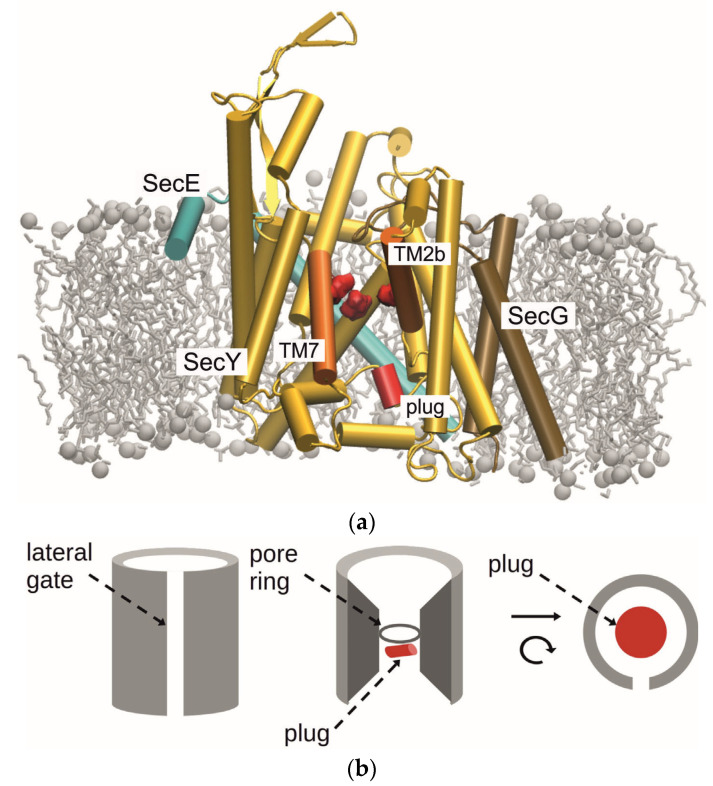 Figure 1
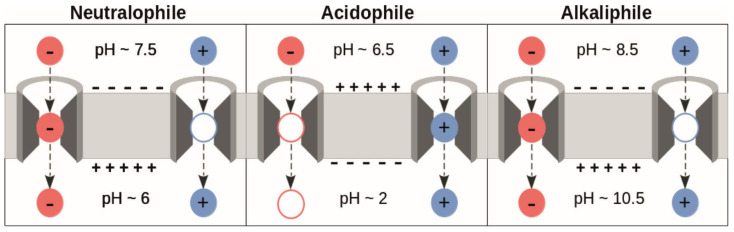 Figure 2
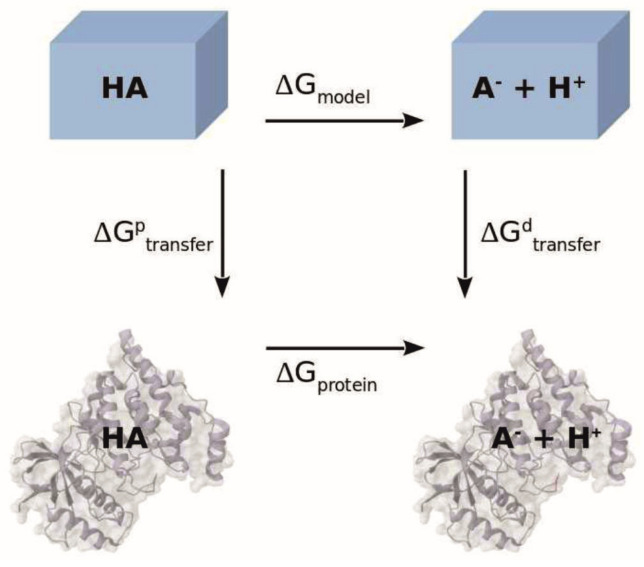 Figure 3
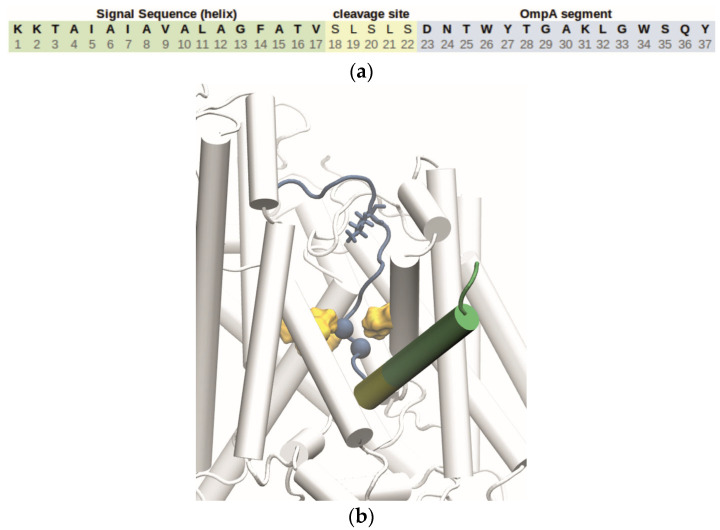 Figure 4
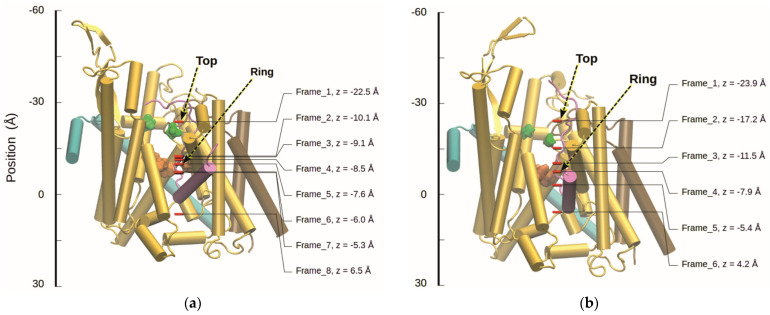 Figure 5
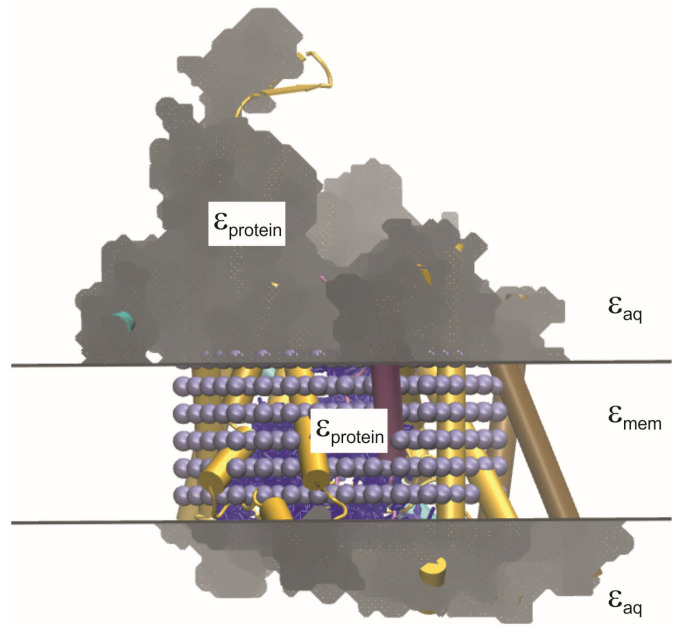 Figure 6
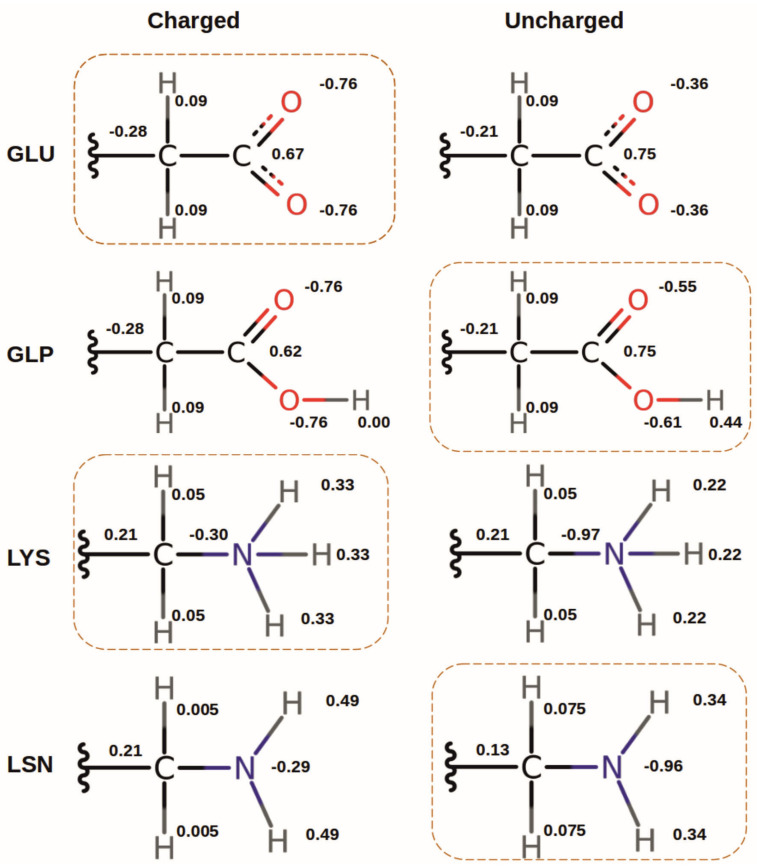 Figure 7
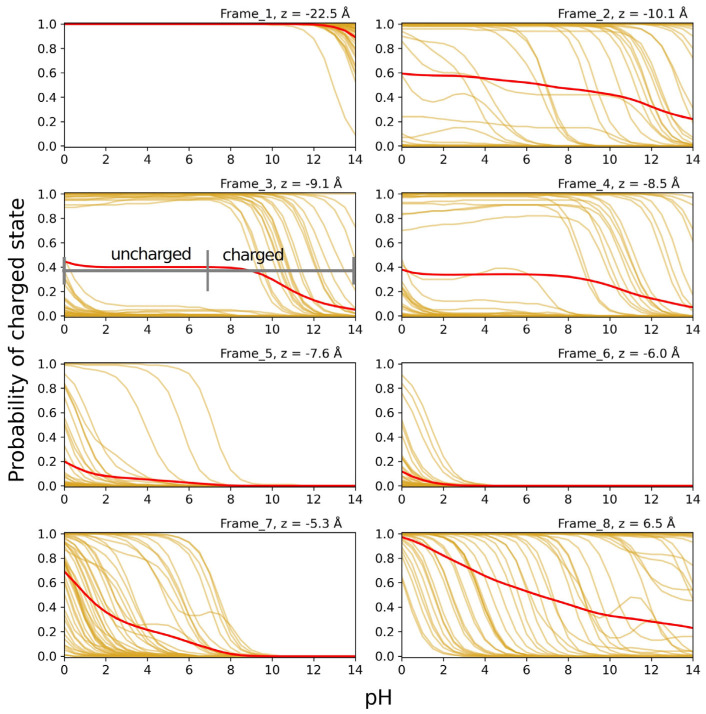 Figure 8
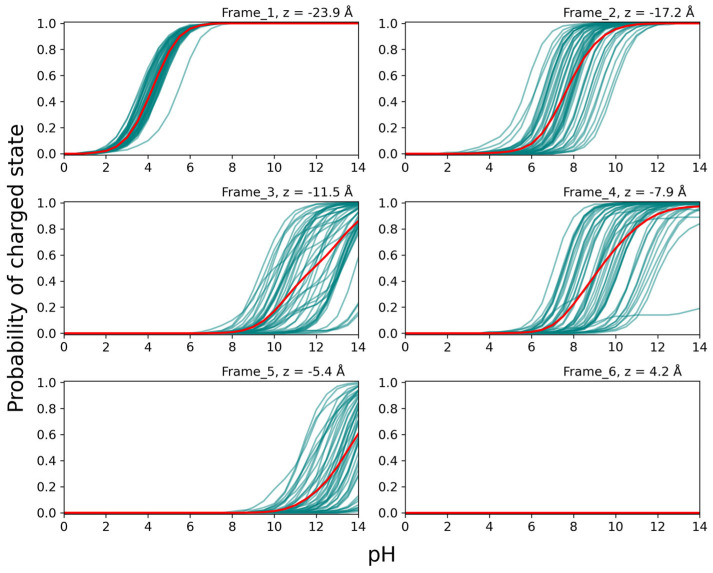 Figure 9
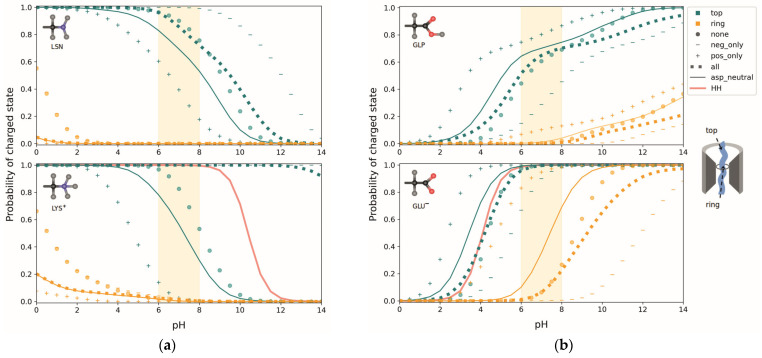 Figure 10
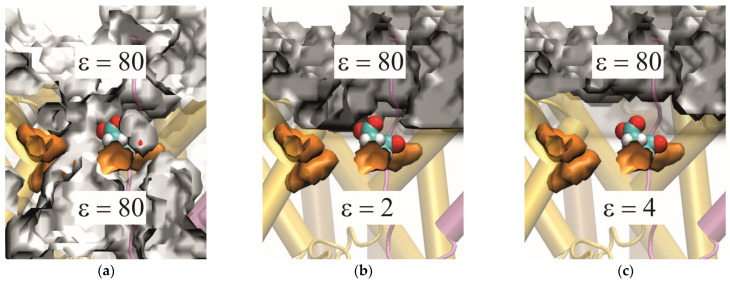 Figure 11
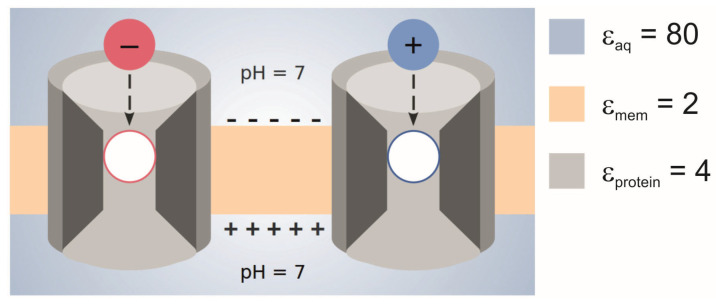 Figure 12
Peer Reviews
No public reviews on file for this paper yet. If you reviewed it on a platform where reviews are public (OpenReview, ICLR, NeurIPS, ICML), you can paste yours below so the community can read it here.
Videos
No videos yet. Explain this paper in a talk, walkthrough, or lecture? Add one.
Taxonomy
TopicsBacterial Genetics and Biotechnology · Lipid Membrane Structure and Behavior · RNA and protein synthesis mechanisms