PRC2 Diversity in Neuronal Differentiation and Developmental Disorders
Jasmine Akoto, Thomas Roule, Naiara Akizu

TL;DR
This paper reviews how PRC2, an epigenetic complex, influences neuronal diversity and is linked to human developmental disorders.
Contribution
The paper highlights recent discoveries on the evolutionary complexity of PRC2 subcomplexes and their role in neurodevelopment.
Findings
PRC2 is crucial for epigenetic regulation in neuronal differentiation.
Variations in PRC2 subcomplexes contribute to human developmental disorders.
Evolutionary complexity of PRC2 is increasingly understood in neurodevelopmental contexts.
Abstract
Advances in genetic studies have not only improved the diagnosis and treatment of neurodevelopmental disorders but also uncovered human-specific aspects of nervous system development. The generation of neuronal diversity in the human brain relies on tightly regulated epigenetic mechanisms, with Polycomb Repressive Complex 2 (PRC2) emerging as a key player. In this review, we first summarize foundational studies that established the role of PRC2 in the epigenetic maintenance of transcriptional silencing. We then highlight recent insights into the increasing evolutionary complexity of PRC2 subcomplexes, their roles in neurodevelopment, and their contribution to human developmental disorders.
Genes, proteins, chemicals, diseases, species, mutations and cell lines named across the full text — each resolved to its canonical identifier and authoritative record.
Click any figure to enlarge with its caption.
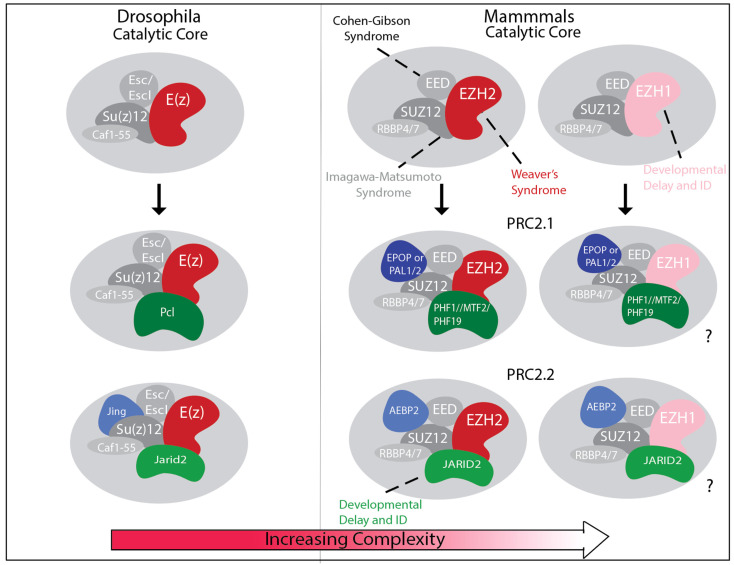 Figure 1
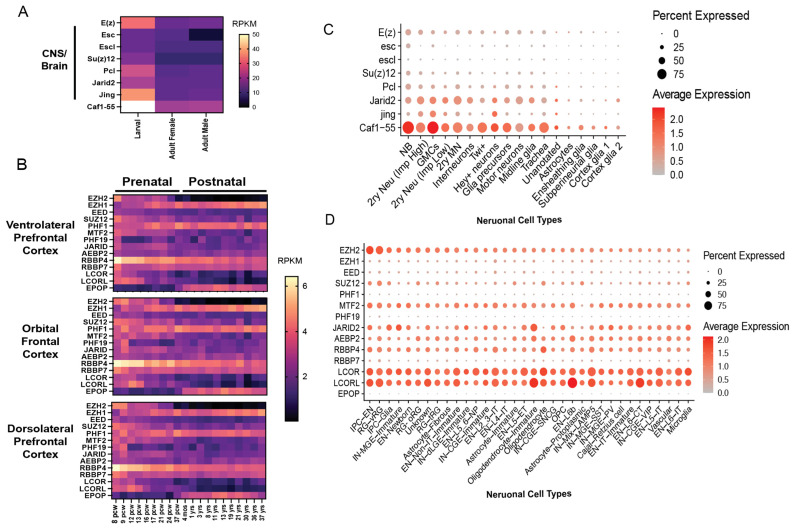 Figure 2
Peer Reviews
No public reviews on file for this paper yet. If you reviewed it on a platform where reviews are public (OpenReview, ICLR, NeurIPS, ICML), you can paste yours below so the community can read it here.
Videos
No videos yet. Explain this paper in a talk, walkthrough, or lecture? Add one.
Taxonomy
TopicsEpigenetics and DNA Methylation · Genetic Syndromes and Imprinting · Renal and related cancers