Evaluation of the Effect of Alpha2-Adrenergic Receptor Stimulation on Prolactin Secretion Using the Clonidine Test in the Diagnosis of Children with Short Stature
Angelika Pakuła, Anna Fedorczak, Marzena Kolasa-Kicińska, Anna Łupińska, Maciej Hilczer, Arkadiusz Zygmunt, Renata Stawerska

TL;DR
This study examines how clonidine affects prolactin levels in children with short stature, finding differences between those with growth hormone deficiency and those with idiopathic short stature.
Contribution
The study reveals that clonidine suppresses prolactin in both groups but recovery occurs only in idiopathic short stature, suggesting GH signaling may regulate prolactin.
Findings
Clonidine suppresses prolactin in both ISS and GHD children.
Prolactin recovers in ISS but remains suppressed in GHD.
GH and PRL levels correlate at 90 and 120 minutes post-clonidine.
Abstract
Prolactin (PRL) and growth hormone (GH) originate from somatomammotropic cells and share regulatory mechanisms. Alpha2-adrenergic receptor stimulation with clonidine is routinely used in diagnosing GH deficiency (GHD), yet its effect on PRL secretion remains unclear. This study aimed to assess the impact of clonidine-induced α2-adrenergic receptor stimulation on PRL secretion and compare PRL dynamics between children with idiopathic short stature (ISS) and GHD. Forty-nine children with height < −2.0 SD (29 ISS, 20 GHD) underwent clonidine stimulation (0.15 mg/m2 administered orally). Serum GH and PRL were measured at 0, 30, 60, 90, and 120 min. Groups did not differ in chronological age, bone age, height SDS, or BMI SDS. Both groups exhibited a significant decrease in PRL at 30, 60, and 90 min compared to baseline. In ISS, PRL concentrations increased from 60 min onward, returning near…
Genes, proteins, chemicals, diseases, species, mutations and cell lines named across the full text — each resolved to its canonical identifier and authoritative record.
Click any figure to enlarge with its caption.
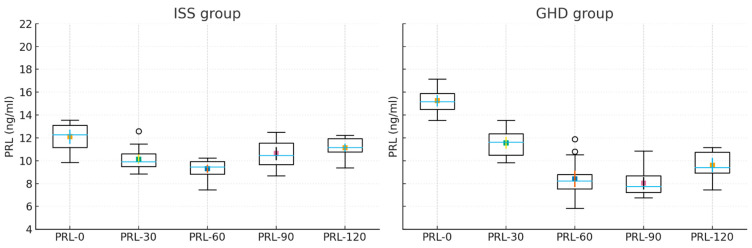 Figure 1
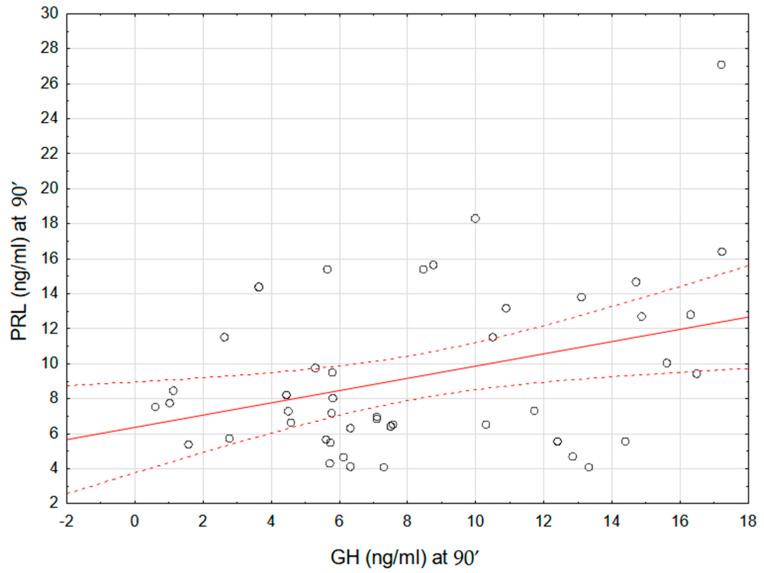 Figure 2
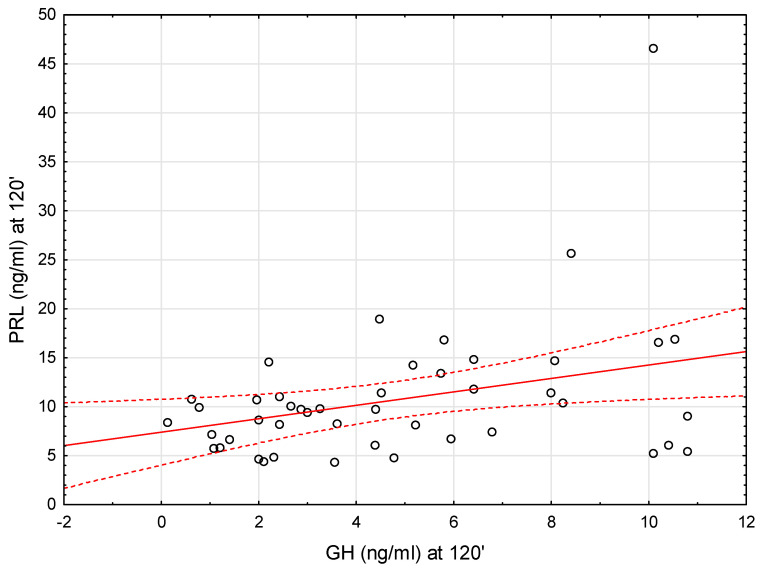 Figure 3
Peer Reviews
No public reviews on file for this paper yet. If you reviewed it on a platform where reviews are public (OpenReview, ICLR, NeurIPS, ICML), you can paste yours below so the community can read it here.
Videos
No videos yet. Explain this paper in a talk, walkthrough, or lecture? Add one.
Taxonomy
TopicsGrowth Hormone and Insulin-like Growth Factors · Thyroid Disorders and Treatments · Pituitary Gland Disorders and Treatments