Deep Learning-Based Segmentation of Geographic Atrophy: A Multi-Center, Multi-Device Validation in a Real-World Clinical Cohort
Hasenin Al-khersan, Simrat K. Sodhi, Jessica A. Cao, Stanley M. Saju, Niveditha Pattathil, Avery W. Zhou, Netan Choudhry, Daniel B. Russakoff, Jonathan D. Oakley, David Boyer, Charles C. Wykoff

TL;DR
A deep learning algorithm accurately segments geographic atrophy in OCT images from real-world AMD patients across multiple devices and conditions.
Contribution
A validated deep learning model for GA segmentation in clinical OCT data from multiple devices and patient subgroups.
Findings
The model achieved a mean DSC score of 0.83 for Spectralis and 0.82 for Cirrus OCT data.
It showed strong correlation (r2 of 0.91 and 0.88) with manual grading across both devices.
The algorithm performed well in patients with GA and concurrent nAMD.
Abstract
Background: To report a deep learning-based algorithm for automated segmentation of geographic atrophy (GA) among patients with age-related macular degeneration (AMD). Methods: Validation of a deep learning algorithm was performed using optical coherence tomography (OCT) images from patients in routine clinical care diagnosed with GA, with and without concurrent nAMD. For model construction, a 3D U-Net architecture was used with the output modified to generate a 2D mask. Accuracy of the model was assessed relative to the manual labeling of GA with the Dice similarity coefficient (DSC) and correlation r2 scores. Results: The OCT data set included 367 scans from the Spectralis (Heidelberg, Germany) from 55 eyes in 33 subjects; 267 (73%) scans had concurrent nAMD. In parallel, 348 scans were collected using the Cirrus (Zeiss), from 348 eyes in 326 subjects; 101 (29%) scans had concurrent…
Genes, proteins, chemicals, diseases, species, mutations and cell lines named across the full text — each resolved to its canonical identifier and authoritative record.
Click any figure to enlarge with its caption.
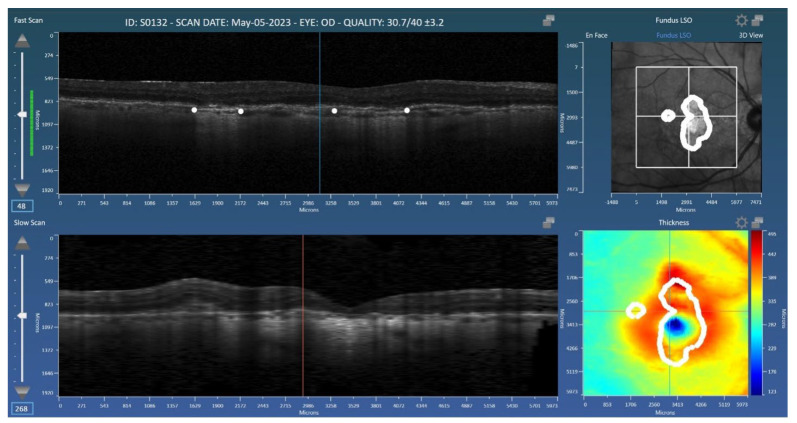 Figure 1
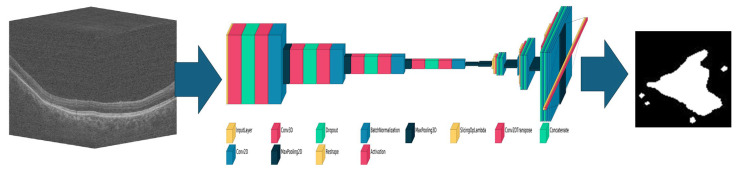 Figure 2
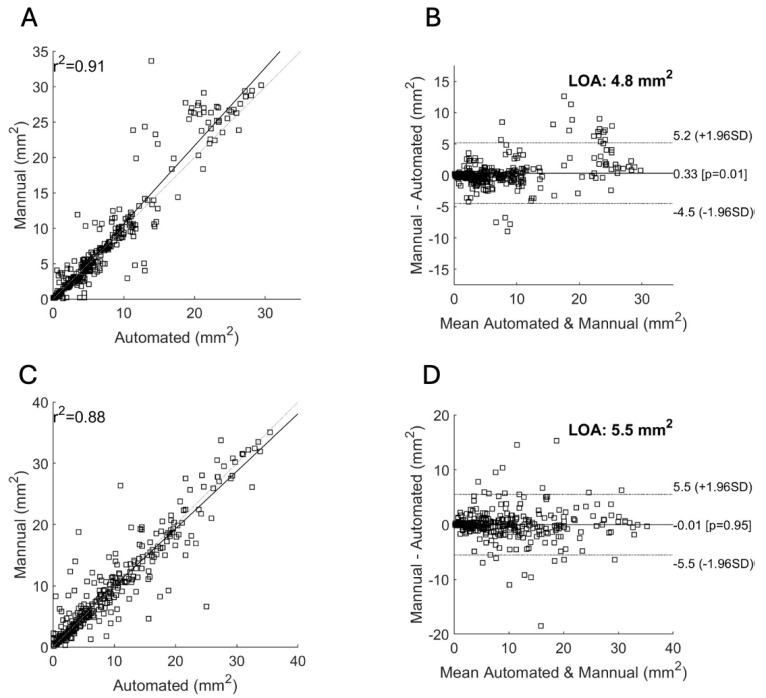 Figure 3
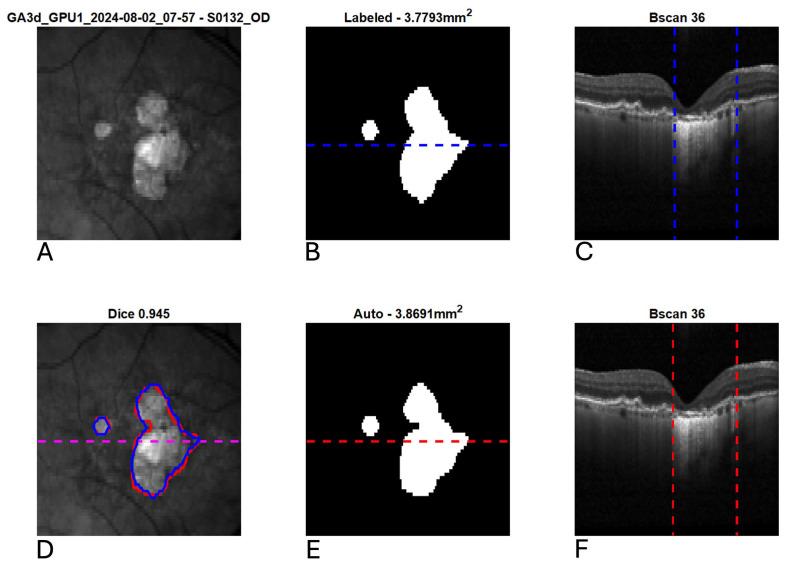 Figure 4
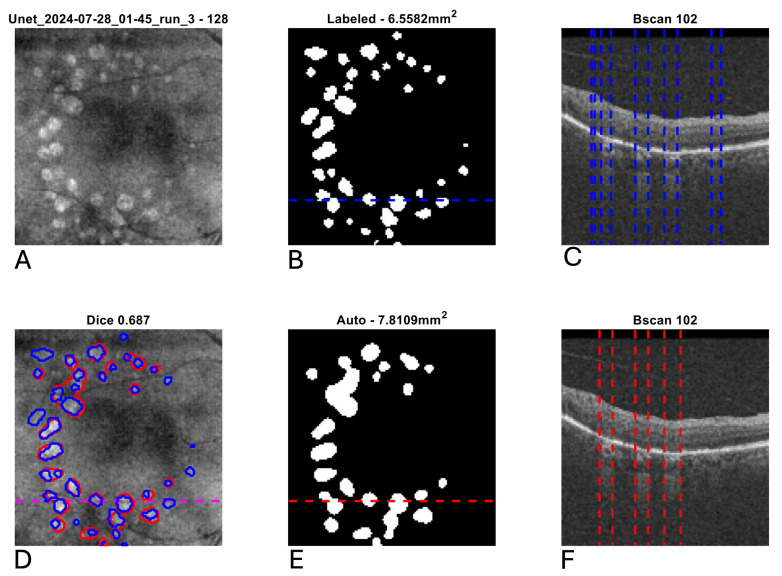 Figure 5
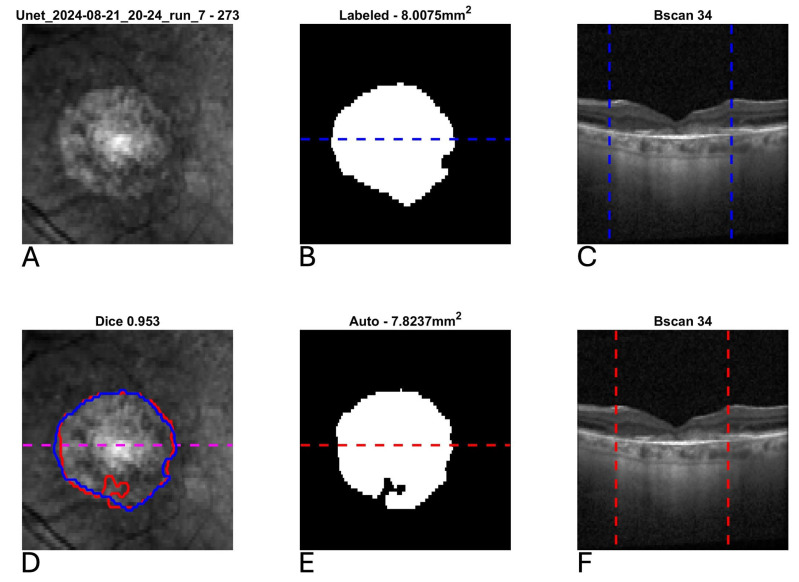 Figure 6
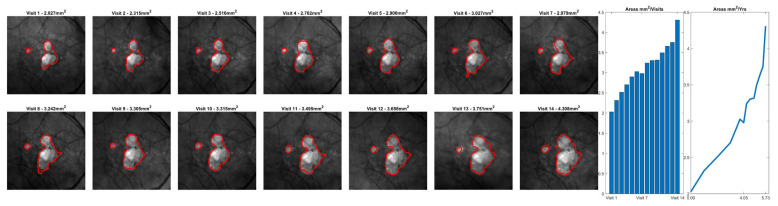 Figure 7
Peer Reviews
No public reviews on file for this paper yet. If you reviewed it on a platform where reviews are public (OpenReview, ICLR, NeurIPS, ICML), you can paste yours below so the community can read it here.
Videos
No videos yet. Explain this paper in a talk, walkthrough, or lecture? Add one.
Taxonomy
TopicsAcute Ischemic Stroke Management · Parkinson's Disease Mechanisms and Treatments