Regional Conservation and Transcriptional Regulation of Tumor-Associated Genes by macroH2A1 Deposition in Mammalian Cells
Yongzhuo Deng, Zeqian Xu, Le Zhang, Bishan Ye, Zhifeng Shao, Xinhui Li

TL;DR
This study shows that mH2A1, a histone variant, is dynamically deposited in human cells and may play a role in cancer.
Contribution
The study is the first to demonstrate dynamic mH2A1 domains in human cells and their conservation across species.
Findings
Dynamic mH2A1 domains are present in both normal and cancerous human cells.
mH2A1 enrichment patterns are conserved across species.
mH2A1 may influence malignant proliferation through epigenetic regulation.
Abstract
Histone variant macroH2A1 (mH2A1) has been widely recognized as a suppressor of gene expression. Recently, a cell cycle-dependent deposition of mH2A1 was discovered in mouse cells, but whether this process exists in human chromatin is unclear, which might be crucial for related diseases, particularly cancer. In this study, with native chromatin immunoprecipitation (nChIP-seq), we firstly demonstrate that dynamic mH2A1 domains occur in both normal and cancerous human cells and have conserved enrichment patterns across species. Our findings further provide new epigenetic insights into the role of mH2A1 in malignant proliferation, offering a novel perspective for future cancer research.
Genes, proteins, chemicals, diseases, species, mutations and cell lines named across the full text — each resolved to its canonical identifier and authoritative record.
Click any figure to enlarge with its caption.
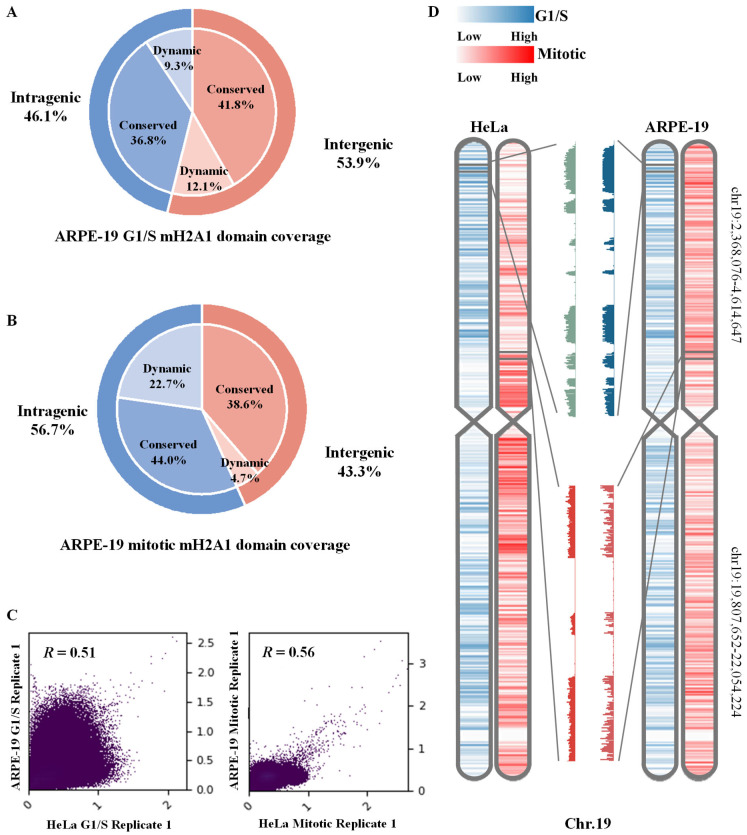 Figure 1
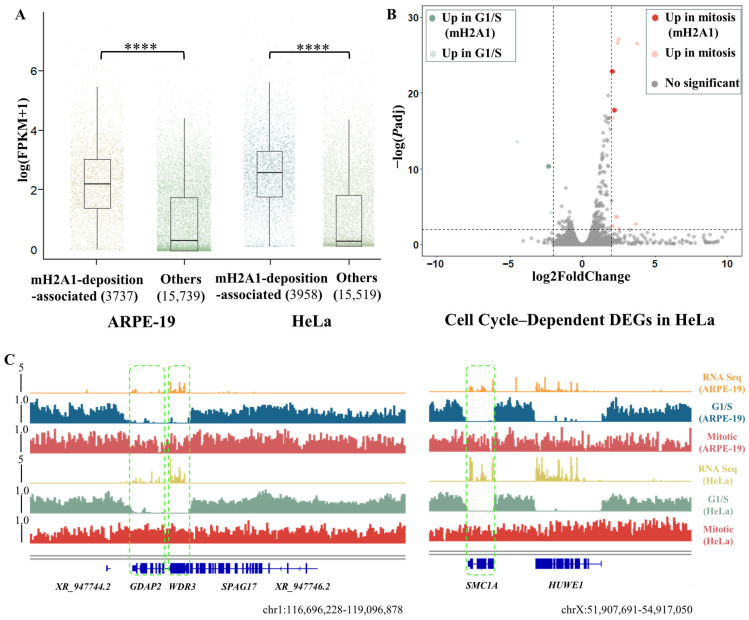 Figure 2
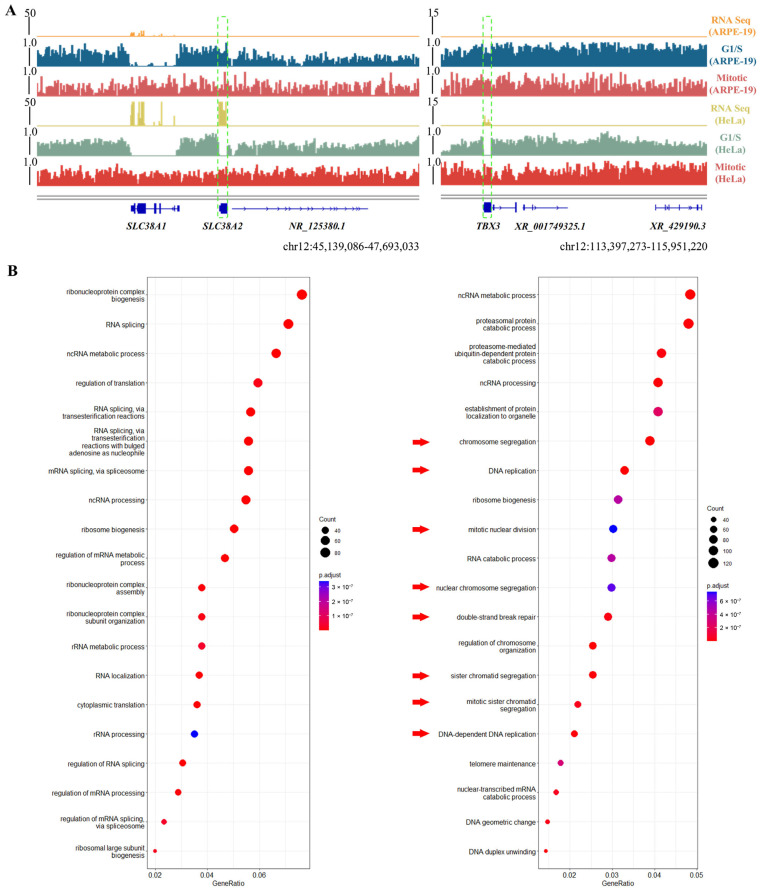 Figure 3
Peer Reviews
No public reviews on file for this paper yet. If you reviewed it on a platform where reviews are public (OpenReview, ICLR, NeurIPS, ICML), you can paste yours below so the community can read it here.
Videos
No videos yet. Explain this paper in a talk, walkthrough, or lecture? Add one.
Taxonomy
TopicsRNA modifications and cancer · Genomics and Chromatin Dynamics · Epigenetics and DNA Methylation