Covalent and Site-Specific Immobilization of a Fluorogenic Sensor Protein on Cellulose-Based Paper for Detection of Lactate in Cell Culture Media
Ingo Bork, Viktoria Höfling, Janine Becker, Markus Biesalski, Tobias Meckel, Harald Kolmar

TL;DR
This paper presents a paper-based sensor using fluorescent proteins to detect lactate in cell culture media, offering a new method for monitoring metabolic states.
Contribution
The study introduces a novel covalent and site-specific immobilization method for fluorogenic sensor proteins on cellulose-based paper.
Findings
Immobilizing the proteins on paper does not hinder their lactate binding ability.
The sensor successfully detects lactate in cell culture supernatant under various conditions.
The fluorescent readout provides a reliable and visual method for lactate detection.
Abstract
Lactate is a key metabolite with applications ranging from monitoring training efficiency to early sepsis detection and monitoring the metabolic state of cell cultures. In this study, a paper-based lactate sensor utilizing a fluorescent readout was developed. Unlike common lactate dehydrogenase (LDH)-based methods, these sensors use a green fluorescent protein (GFP) or mApple-coupled lactate binding domain, which provides a fluorescent readout upon lactate binding. We demonstrate that immobilizing these proteins on paper does not affect their ability to bind lactate and produce a fluorescent readout, by monitoring lactate levels in the cell culture supernatant applying different cell culture conditions.
Genes, proteins, chemicals, diseases, species, mutations and cell lines named across the full text — each resolved to its canonical identifier and authoritative record.
Click any figure to enlarge with its caption.
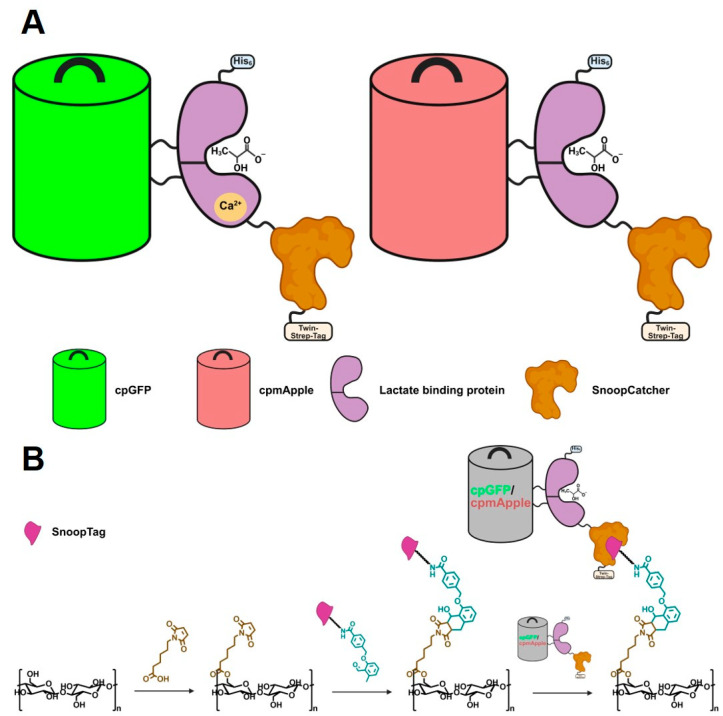 Figure 1
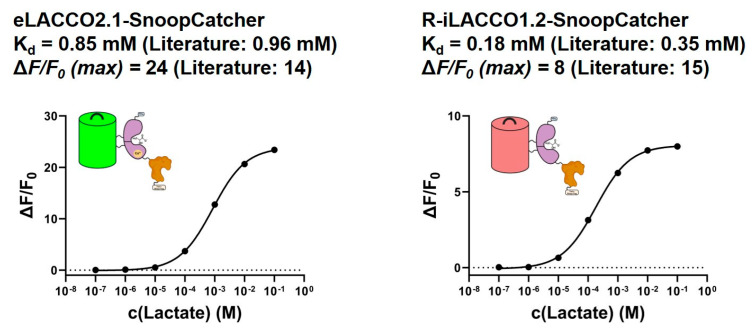 Figure 2
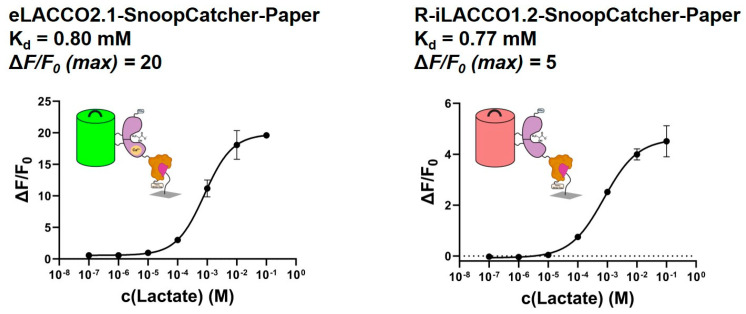 Figure 3
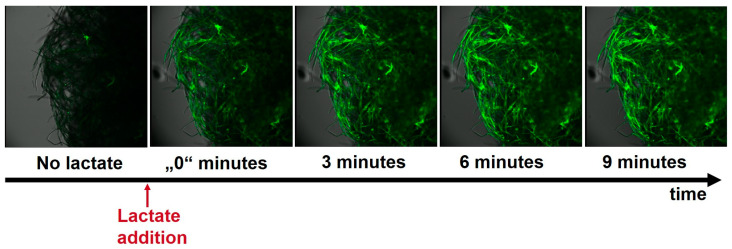 Figure 4
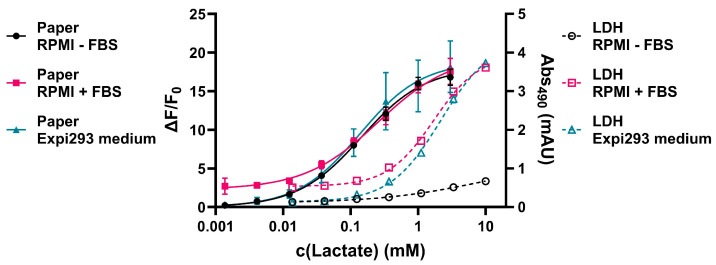 Figure 5
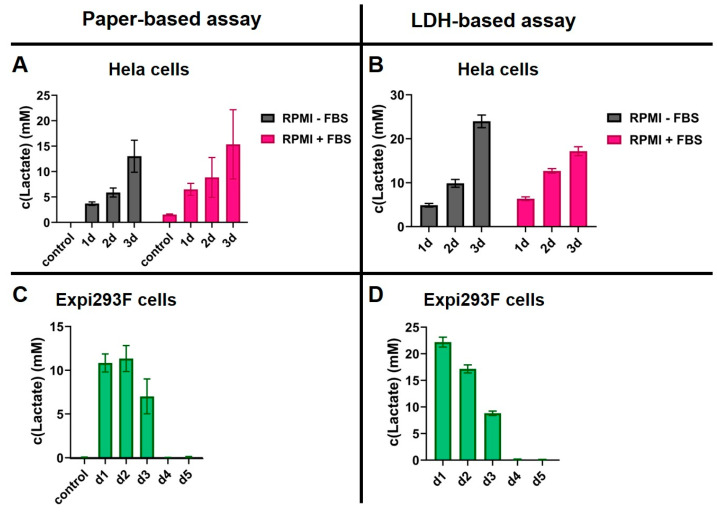 Figure 6
Peer Reviews
No public reviews on file for this paper yet. If you reviewed it on a platform where reviews are public (OpenReview, ICLR, NeurIPS, ICML), you can paste yours below so the community can read it here.
Videos
No videos yet. Explain this paper in a talk, walkthrough, or lecture? Add one.
Taxonomy
TopicsBiosensors and Analytical Detection · Advanced biosensing and bioanalysis techniques · Advanced Biosensing Techniques and Applications