Investigating Amphoteric 3,4′-Biscoumarin-Based ortho-[(Dialkylamino)methyl]phenols as Dual MAO and ChE Inhibitors
Anthi Petrou, Caterina Deruvo, Rosa Purgatorio, Boris Lichitsky, Andrey N. Komogortsev, Victor G. Kartsev, Modesto de Candia, Marco Catto, Cosimo D. Altomare, Athina Geronikaki

TL;DR
This paper investigates new amphoteric compounds that can inhibit enzymes linked to neurodegenerative diseases, showing potential for drug development.
Contribution
The study identifies new phenolic Mannich bases with dual inhibition of MAO-A and AChE, offering potential for neurodegenerative disease treatment.
Findings
Five compounds showed moderate inhibition of human MAO-A with IC50s in the single-digit micromolar range.
Compound 3c also inhibited human AChE with an IC50 of 4.27 µM.
Molecular docking and chemoinformatic analysis confirmed binding modes and drug-likeness properties.
Abstract
Nineteen previously and newly synthesized amphoteric 8-[(dialkylamino)methyl]-7-hydroxy-4-(2-oxo-2H-chromen-3-yl)-2H-chromen-2-ones were assayed as inhibitors of monoamine oxidases (MAO-A and B) and cholinesterases (AChE and BChE). Five of the tested compounds (2b, 2c, 3c, 5b, and 5c), namely those bearing the less bulky alkyls in the Mannich base 8-CH2NR2 (R = Me, Et) and the halogens (Cl, Br) at C6 of the 4-coumarin-3-yl moiety, showed moderate inhibitory potencies toward human MAO-A in the single-digit micromolar range (IC50s from 1.49 to 3.04 µM). In particular, the 6′-Cl derivatives 2b and 5b proved to be reversible competitive inhibitors of human MAO-A with Ki values of 0.272 and 0.326 µM. Among the tested compounds, 3c proved to also be a moderate inhibitor of human AChE (IC50 4.27 µM). Molecular docking calculations suggested binding modes of the most active compounds to MAO-A…
Genes, proteins, chemicals, diseases, species, mutations and cell lines named across the full text — each resolved to its canonical identifier and authoritative record.
Click any figure to enlarge with its caption.
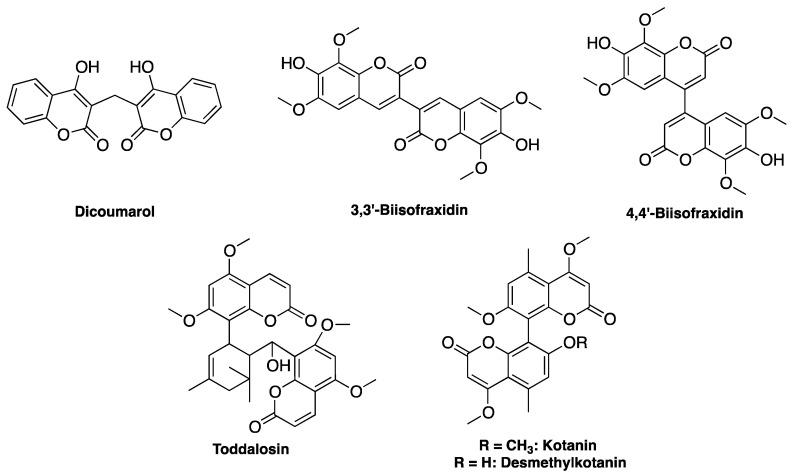 Figure 1
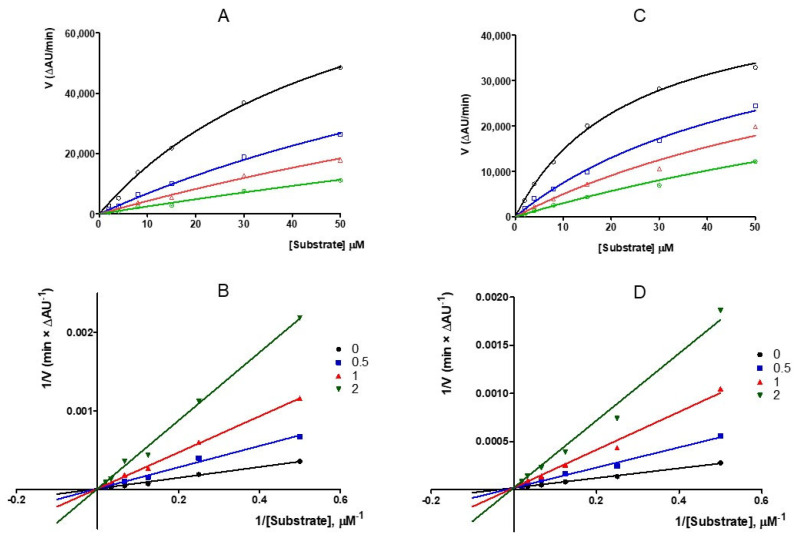 Figure 2
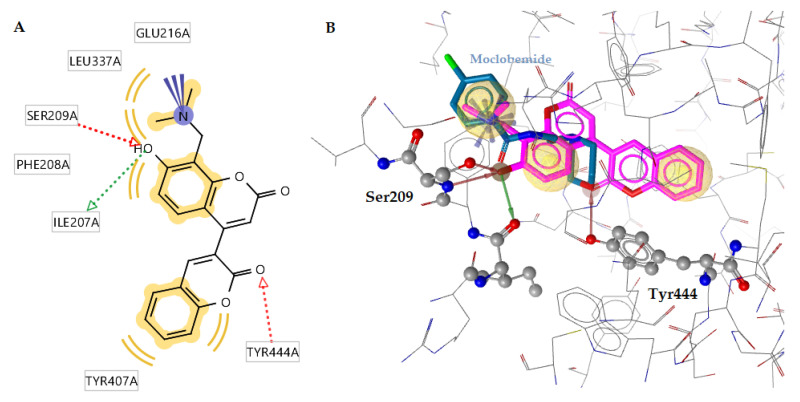 Figure 3
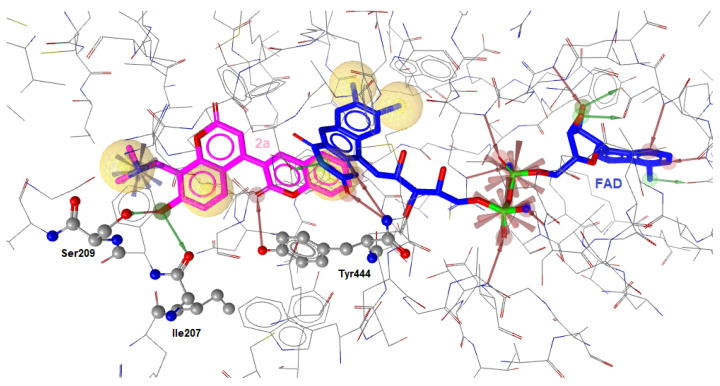 Figure 4
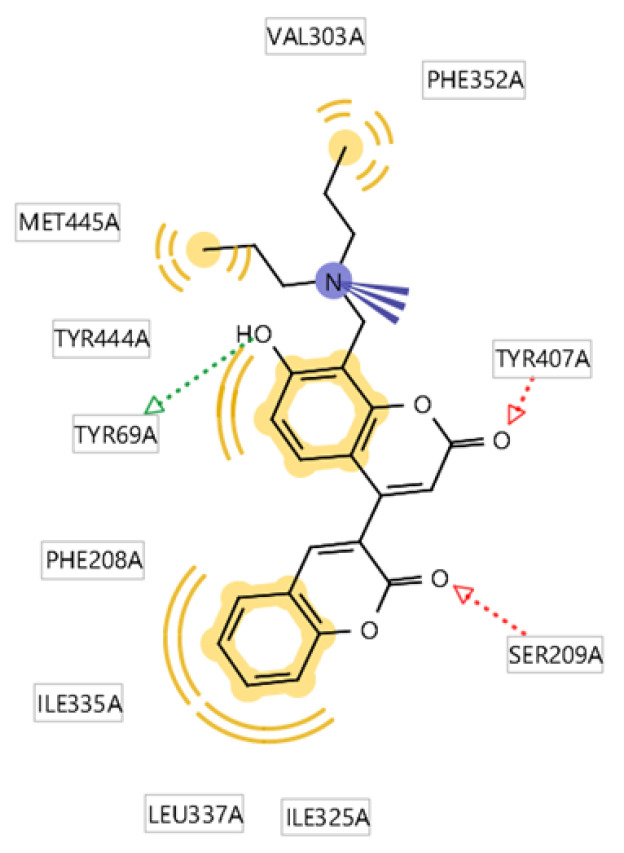 Figure 5
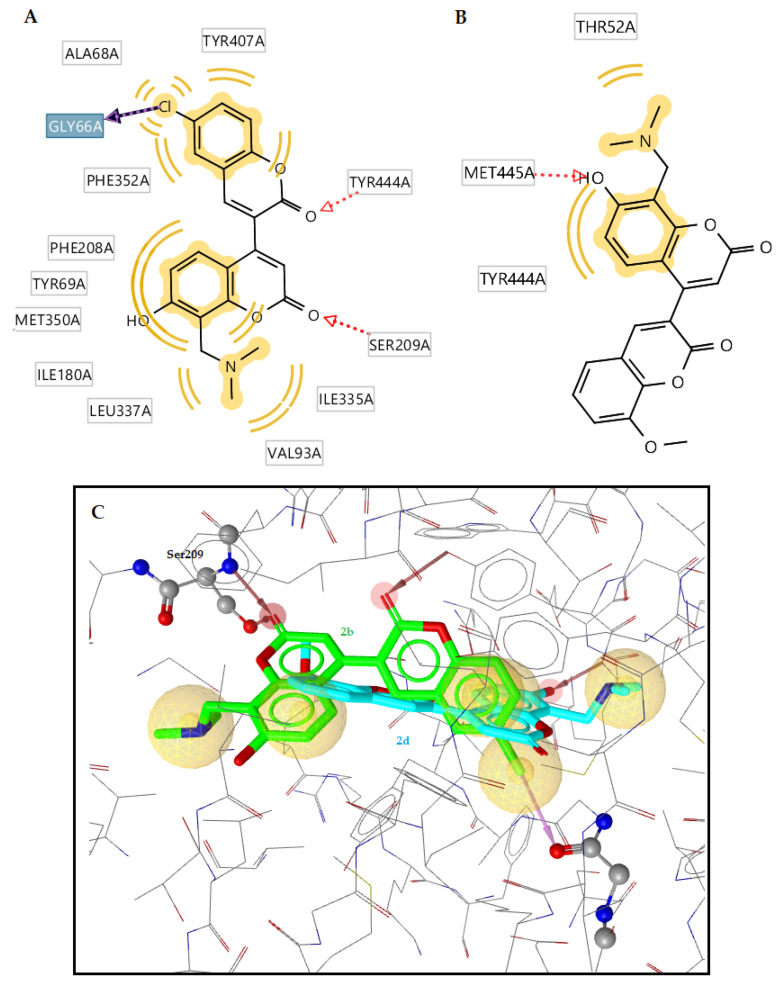 Figure 6
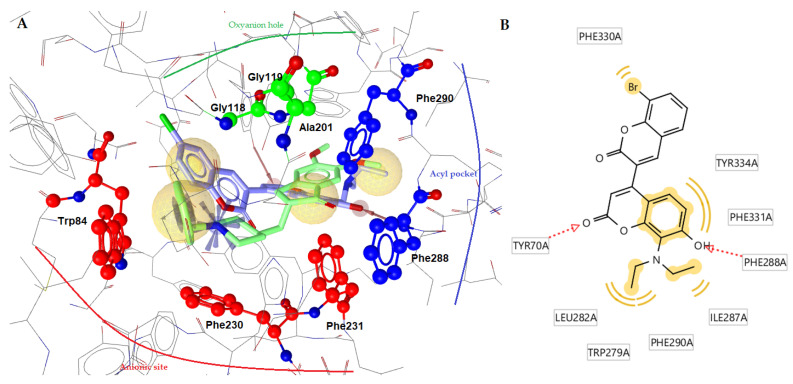 Figure 7
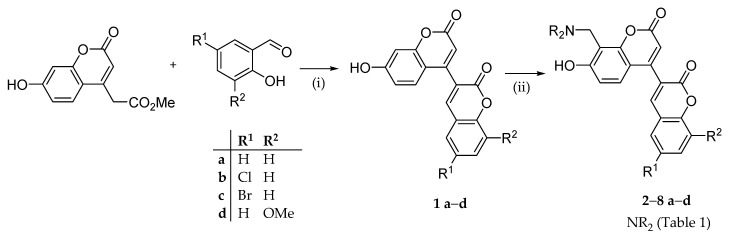 Figure 8
Peer Reviews
No public reviews on file for this paper yet. If you reviewed it on a platform where reviews are public (OpenReview, ICLR, NeurIPS, ICML), you can paste yours below so the community can read it here.
Videos
No videos yet. Explain this paper in a talk, walkthrough, or lecture? Add one.
Taxonomy
TopicsSynthesis and biological activity · Synthesis of Organic Compounds · Synthesis and Biological Evaluation