Triglycerides, Cholesterol, and Depressive Symptoms Among Undergraduate Medical Students: A Cross-Sectional Study
Maximiliano Olguín-Montiel, Alejandro Álvarez-Flores, Dulce Milagros Razo-Blanco-Hernández, María Alicia Mejía-Blanquel, Verónica Fernández-Sánchez, Gledy Manuela Olmos-Rivera, Ana Cristina Castañeda-Márquez, Edith Araceli Cano-Estrada, Mónica Alethia Cureño-Díaz

TL;DR
This study found that higher triglyceride and cholesterol levels in medical students are linked to more depressive symptoms, suggesting metabolic factors may influence mental health.
Contribution
The study is among the first to explore the link between lipid levels and depression in medical students, a high-stress population.
Findings
Each 10 mg/dL increase in triglycerides was associated with a 4% higher prevalence of depressive symptoms.
Each 10 mg/dL increase in total cholesterol was linked to a 13% higher prevalence of depressive symptoms.
Triglycerides ≥ 150 mg/dL and cholesterol ≥ 200 mg/dL were significantly associated with depressive symptoms.
Abstract
Background: Depression is one of the most common mental disorders among undergraduate students, particularly those in medical training, who face high academic demands and emotional burdens. Biological factors such as lipid abnormalities have been proposed as contributors to depressive symptoms, although evidence in this group is scarce. Therefore, we aimed to evaluate the association between triglyceride and total cholesterol levels and depressive symptoms in medical students. Methods: We conducted a cross-sectional study including 219 medical students from a public university in Mexico. Depressive symptoms were assessed using the CESD-7 scale, validated in the Mexican population. Fasting triglyceride and total cholesterol concentrations were measured with the Accutrend Plus analyzer. Prevalence ratios (PRs) and 95% confidence intervals (CIs) were estimated using robust Poisson…
Genes, proteins, chemicals, diseases, species, mutations and cell lines named across the full text — each resolved to its canonical identifier and authoritative record.
Click any figure to enlarge with its caption.
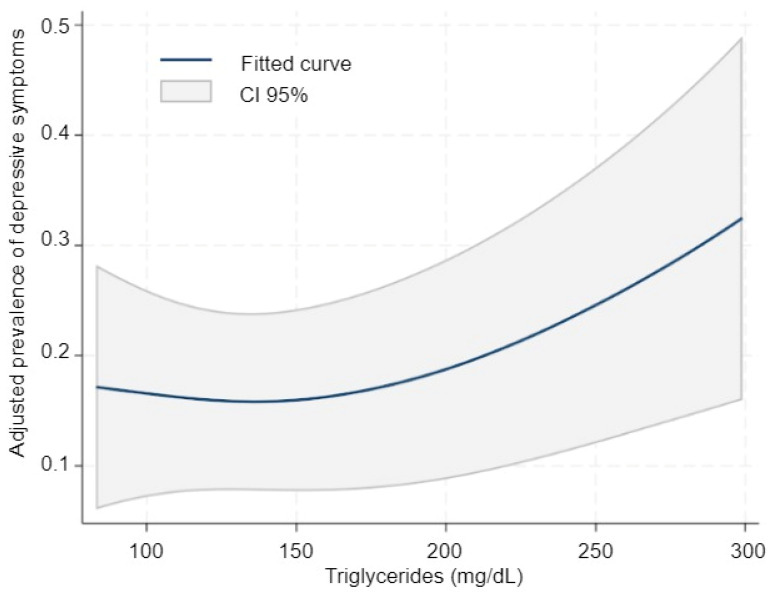 Figure 1
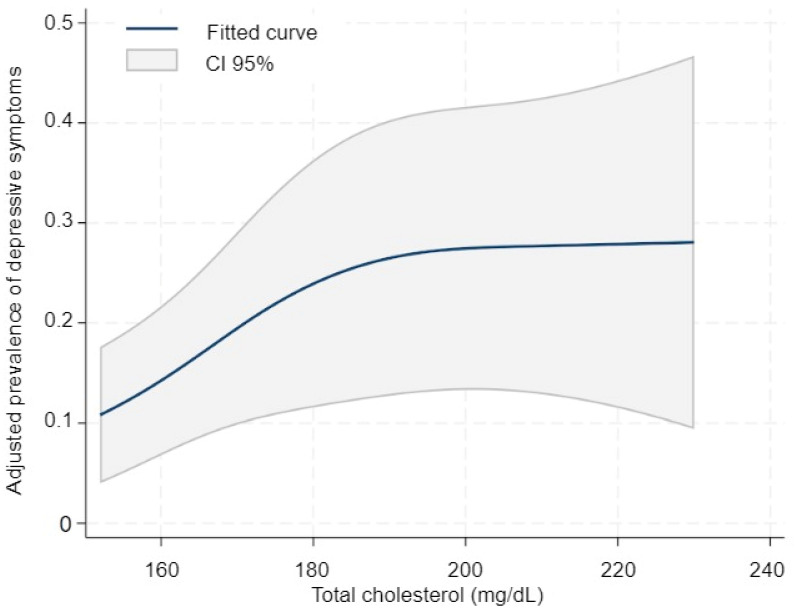 Figure 2
Peer Reviews
No public reviews on file for this paper yet. If you reviewed it on a platform where reviews are public (OpenReview, ICLR, NeurIPS, ICML), you can paste yours below so the community can read it here.
Videos
No videos yet. Explain this paper in a talk, walkthrough, or lecture? Add one.
Taxonomy
TopicsCardiac Health and Mental Health · Healthcare professionals’ stress and burnout · Health, psychology, and well-being