Implications of the training of simulated skills and scenarios on the motivation for learning medical students: experimental study
Barbara Casarin Henrique-Sanches, Raphael Raniere de Oliveira Costa, Rodrigo Guimarães dos Santos Almeida, Rodrigo Magri Bernardes, Alessandra Mazzo, Barbara Casarin Henrique-Sanches, Raphael Raniere de Oliveira Costa, Rodrigo Guimarães dos Santos Almeida

TL;DR
This study shows that simulated training and scenarios boost medical students' motivation, especially when spaced further apart.
Contribution
It reveals that longer time intervals between training activities enhance intrinsic motivation more effectively.
Findings
Simulated practices significantly increase students’ intrinsic motivation.
Larger time intervals between activities result in greater motivation.
Temporal optimization of activities can improve student engagement.
Abstract
to verify the effect of skills training and simulated scenarios performed subsequently or belatedly on the motivation for learning of medical students. experimental pre- and post-test study with control and intervention groups. Fifty second-year medical students participated and were randomized into two groups: control group (dialogical exposure, skills training and simulated scenarios after 12 hours) and intervention group (dialogical exposure, skills training and simulated scenarios after 21 days). The Situational Motivation Scale was used for analysis. all students showed increased motivation. In the control group, intrinsic motivation increased before and after the simulated scenario (p=0.011). In the intervention group, intrinsic motivation increased before and after skills training (p=0.013), before and after the simulated scenario (p=0.024) and after skills training compared to…
Genes, proteins, chemicals, diseases, species, mutations and cell lines named across the full text — each resolved to its canonical identifier and authoritative record.
Click any figure to enlarge with its caption.
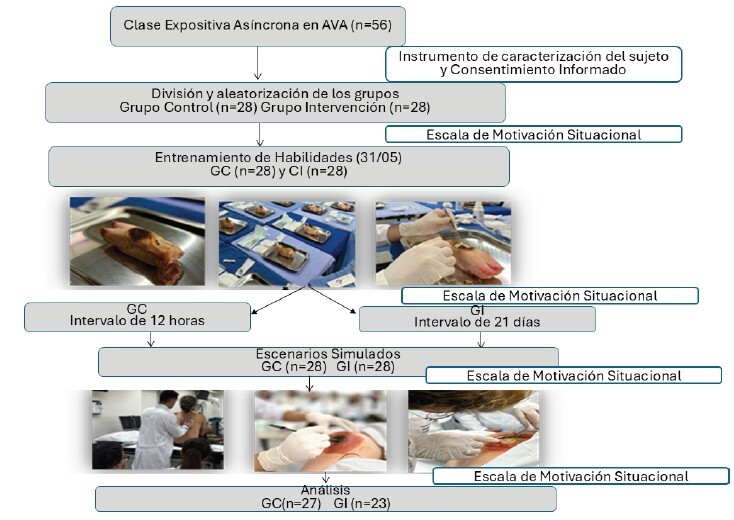 Figure 1
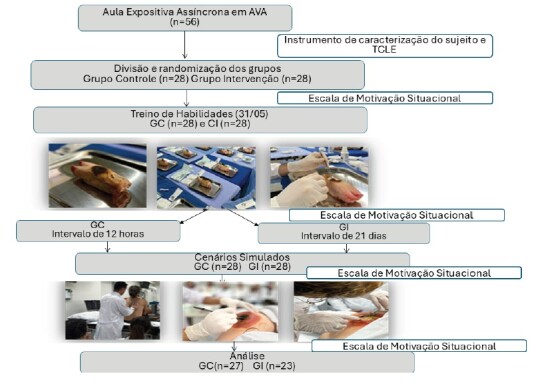 Figure 2
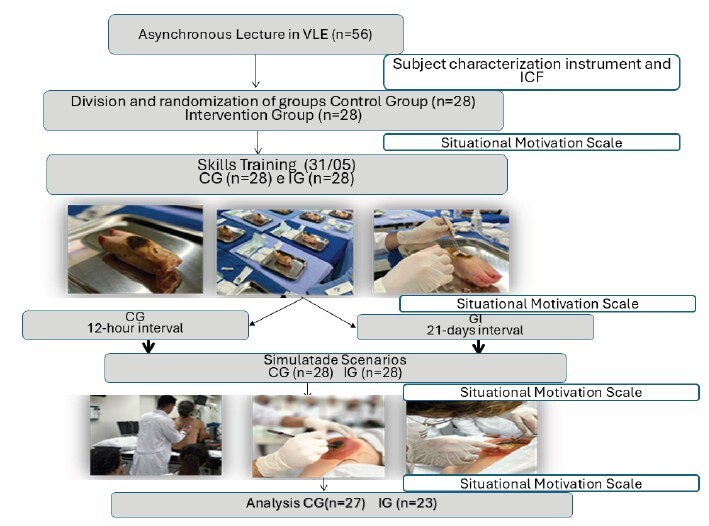 Figure 3
Peer Reviews
No public reviews on file for this paper yet. If you reviewed it on a platform where reviews are public (OpenReview, ICLR, NeurIPS, ICML), you can paste yours below so the community can read it here.
Videos
No videos yet. Explain this paper in a talk, walkthrough, or lecture? Add one.
Taxonomy
TopicsInnovations in Medical Education · Simulation-Based Education in Healthcare · Problem and Project Based Learning