Molecular Characterization of Seminoma Utilizing the AACR Project GENIE: A Retrospective Observational Study
Suchit R. Geereddy, Amber Chang, Alma Gallegos, Jonathan Lin, Akaash Surendra, Suraj Puvvadi, Beau Hsia, Abubakar Tauseef, Joseph Thirumalareddy, Akshat Sood

TL;DR
This study uses genomic data to explore the molecular features of seminoma, a type of testicular cancer, and identifies key mutations and pathways that could lead to new treatment strategies.
Contribution
The study provides a comprehensive molecular profiling of seminoma and identifies novel mutations and pathways specific to different patient populations and tumor stages.
Findings
KIT, KRAS, and MTOR were the most frequently mutated genes in seminoma.
Copy number alterations were significant in CDKN1B, KRAS, CCND2, and H3F3C.
BRD4 mutations were found only in metastatic samples, while KMT2C, STAG2, ALK, AXL, and EGFR were found only in primary samples.
Abstract
Around 50–60% of testicular cancer cases consist of seminoma: a malignant germ cell tumor primarily diagnosed in middle-aged adults. This study explores the genomic landscape of seminoma by utilizing a de-identified publicly available dataset through the American Association for Cancer Research (AACR) Project Genomics Evidence Neoplasia Information Exchange (GENIE). The goal of this study was to further the understanding behind the biological implications of seminoma through analysis of somatic alterations, copy number alterations, therapeutic strategies, and signal cascade pathways. The findings in this study propose alternative therapeutic strategies and additional biomarkers through the investigation of various pathways. Background: Seminoma is a malignant germ cell tumor that most commonly involves the testicles but may involve the mediastinum, the retroperitoneum, and other…
Genes, proteins, chemicals, diseases, species, mutations and cell lines named across the full text — each resolved to its canonical identifier and authoritative record.
Click any figure to enlarge with its caption.
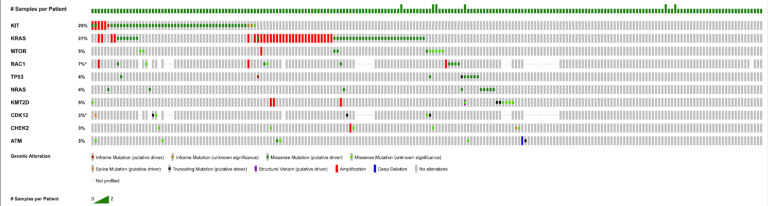 Figure 1
Peer Reviews
No public reviews on file for this paper yet. If you reviewed it on a platform where reviews are public (OpenReview, ICLR, NeurIPS, ICML), you can paste yours below so the community can read it here.
Videos
No videos yet. Explain this paper in a talk, walkthrough, or lecture? Add one.
Taxonomy
TopicsTesticular diseases and treatments · Protein Degradation and Inhibitors · PARP inhibition in cancer therapy