Beyond the Curtains: Identification of the Genetic Cause of Foetal Developmental Abnormalities Through the Application of Molecular Autopsy
Beatrice Spedicati, Giulia Pianigiani, Aurora Santin, Vanessa Rebecca Gasparini, Ilaria Falcomer, Agnese Feresin, Maria Teresa Bonati, Daniela Mazzà, Elisa Paccagnella, Domizia Pasquetti, Elisa Rubinato, Claudio Granata, Flora Maria Murru, Maurizio Pinamonti, Rossana Bussani

TL;DR
This study uses molecular autopsy to identify genetic causes of fetal developmental issues, helping families understand risks and make informed decisions about future pregnancies.
Contribution
The study introduces an integrated approach combining dysmorphology, radiology, and WES to improve genetic diagnosis in fetal abnormalities.
Findings
WES achieved a 26.7% diagnostic yield in identifying genetic causes of fetal malformations.
Splicing variants in INPPL1 and RHOA were functionally characterized, aiding in pathogenicity evaluation.
A novel ZNF292 variant was identified in a fetus with corpus callosum hypoplasia, marking the first prenatal detection of CNS anomalies linked to this gene.
Abstract
Background: Foetal structural abnormalities can be detected in approximately 3% of all pregnancies and frequently remain without a genetic diagnosis. This study aims to apply an integrated approach with the final goal of providing a molecular diagnosis in the challenging Italian setting of early termination of pregnancy. Methods: In a cohort of 86 foetuses, post-mortem dysmorphological examination, radiological assessments, and molecular autopsy through Whole-Exome Sequencing—WES—analysis were performed. Results: Forty-two foetuses were phenotypically classified as presenting a single major malformation (i.e., central nervous system, skeletal, urogenital, or cardiac anomalies, or fluid accumulation), while 44 foetuses presented multiple malformations and/or dysmorphic features. Overall, WES provided a diagnostic yield of 26.7%; additionally, seven Variants of Uncertain Significance…
Genes, proteins, chemicals, diseases, species, mutations and cell lines named across the full text — each resolved to its canonical identifier and authoritative record.
Click any figure to enlarge with its caption.
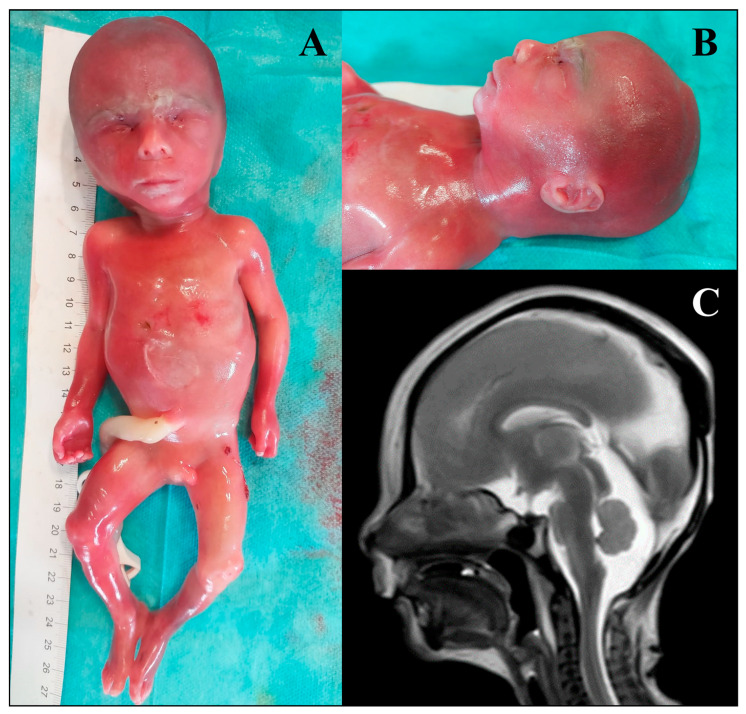 Figure 1
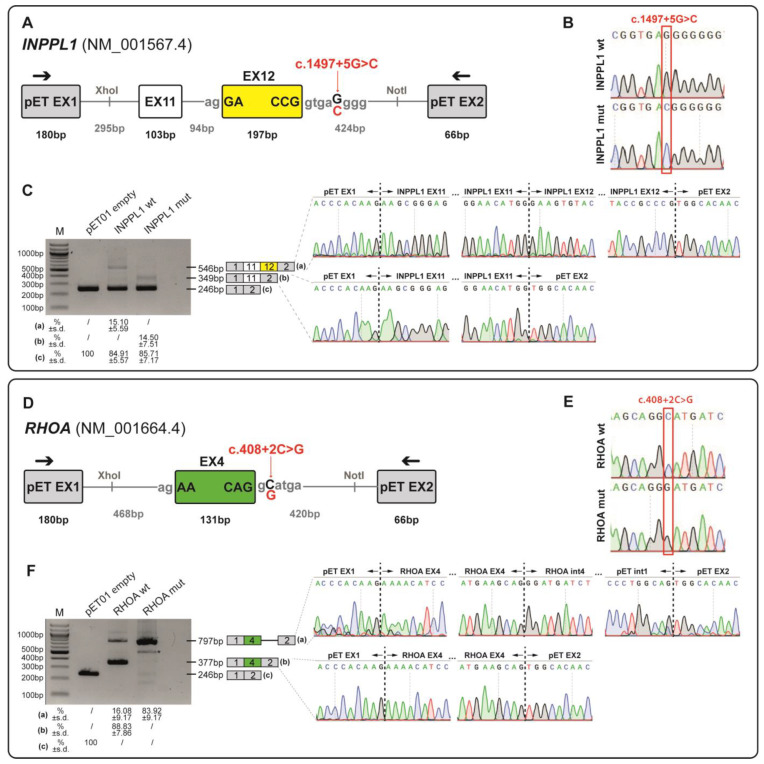 Figure 2
Peer Reviews
No public reviews on file for this paper yet. If you reviewed it on a platform where reviews are public (OpenReview, ICLR, NeurIPS, ICML), you can paste yours below so the community can read it here.
Videos
No videos yet. Explain this paper in a talk, walkthrough, or lecture? Add one.
Taxonomy
TopicsGenomics and Rare Diseases · Autopsy Techniques and Outcomes · Fetal and Pediatric Neurological Disorders