Lumbosacral Endoscopic Ventral–Dorsal Rhizotomy: A Novel Approach for Tone Reduction
Lucinda T. Chiu, Benjamin E. Weiss, Nathan Pertsch, Olivia Rogers, Benjamin Katholi, Jeffrey S. Raskin

TL;DR
This paper introduces a new minimally invasive surgical technique for reducing muscle tone in patients with severe, treatment-resistant hypertonia.
Contribution
The first reported case series of lumbosacral endoscopic ventral–dorsal rhizotomy (eVDR) for medically refractory hypertonia.
Findings
eVDR was safely performed in four patients with severe rotatory scoliosis and fusion hardware.
Significant reductions in muscle tone and dystonia scores were observed post-surgery.
Patients experienced short hospital stays and minor perioperative events without additional surgeries.
Abstract
Objective: Neurosurgical interventions for medically refractory hypertonia (MRH) benefit both patients and their caregivers. Concurrent severe rotatory scoliosis and fusion constructs can make traditional microsurgical rhizotomy and navigated radiofrequency ablation (RFA) peripheral rhizotomy technically infeasible. We report the first case series of lumbosacral endoscopic ventral–dorsal rhizotomy (eVDR) in patients with MRH, and highlight this novel, minimally invasive, safe, and effective technique. Material and Methods: We retrospectively reviewed our single institution series of four patients with advanced hypertonia, gross motor function classification scale (GMFCS) 5, and severe rotatory scoliosis who underwent an eVDR using a flexible endoscope. We report demographics, operative characteristics, and outcomes. Results: Four patients underwent bilateral L1-S1 eVDR. Two patients had…
Genes, proteins, chemicals, diseases, species, mutations and cell lines named across the full text — each resolved to its canonical identifier and authoritative record.
Click any figure to enlarge with its caption.
 Figure 1
 Figure 2
 Figure 3
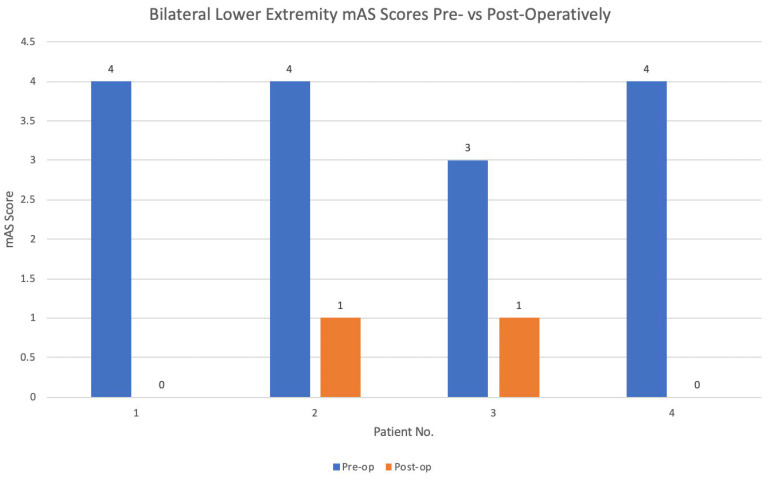 Figure 4
Peer Reviews
No public reviews on file for this paper yet. If you reviewed it on a platform where reviews are public (OpenReview, ICLR, NeurIPS, ICML), you can paste yours below so the community can read it here.
Videos
No videos yet. Explain this paper in a talk, walkthrough, or lecture? Add one.
Taxonomy
TopicsSpinal Dysraphism and Malformations · Cerebral Palsy and Movement Disorders · Scoliosis diagnosis and treatment