Imaging Modalities in Craniosynostosis: A Systematic Review and Proposal of the ARCANA Protocol for Multimodal Radiation-Free Assessment
Mirko Micovic, Bojana Zivkovic, Ivan Vukasinovic, Drago Jelovac, Milan Stojicic, Vladimir Bascarevic

TL;DR
This paper reviews imaging techniques for craniosynostosis and proposes a new radiation-free protocol called ARCANA to improve patient safety and diagnostic accuracy.
Contribution
The novel contribution is the proposal of the ARCANA Protocol, a radiation-free multimodal imaging framework for craniosynostosis assessment.
Findings
3DCT remains the gold standard but carries radiation risks, while alternatives like US, 3DSPG, and advanced MRI offer comparable accuracy without radiation.
The ARCANA Protocol combines clinical assessment with radiation-free imaging to ensure comprehensive evaluation of cranial and intracranial anatomy.
Advanced MRI techniques such as GA-VIBE show high sensitivity and specificity for detecting suture closure.
Abstract
Background/Objective: Craniosynostosis, the premature fusion of one or more cranial sutures, is the second most common craniofacial defect and poses significant diagnostic and therapeutic challenges. Our objective was to systematically evaluate current diagnostic imaging modalities for craniosynostosis and to propose a novel radiation-free ARCANA Protocol as an alternative to conventional screening. Methods: Following PRISMA guidelines, we conducted a systematic review of the literature using PubMed and Cochrane databases from 2015 onwards, restricted to English-language and full-text articles. Inclusion criteria encompassed studies evaluating diagnostic accuracy, radiation exposure, and neurocranial outcomes associated with imaging modalities in craniosynostosis. Quality assessment was performed using QUADAS-2. To evaluate the certainty of evidence supporting each imaging modality, we…
Genes, proteins, chemicals, diseases, species, mutations and cell lines named across the full text — each resolved to its canonical identifier and authoritative record.
Click any figure to enlarge with its caption.
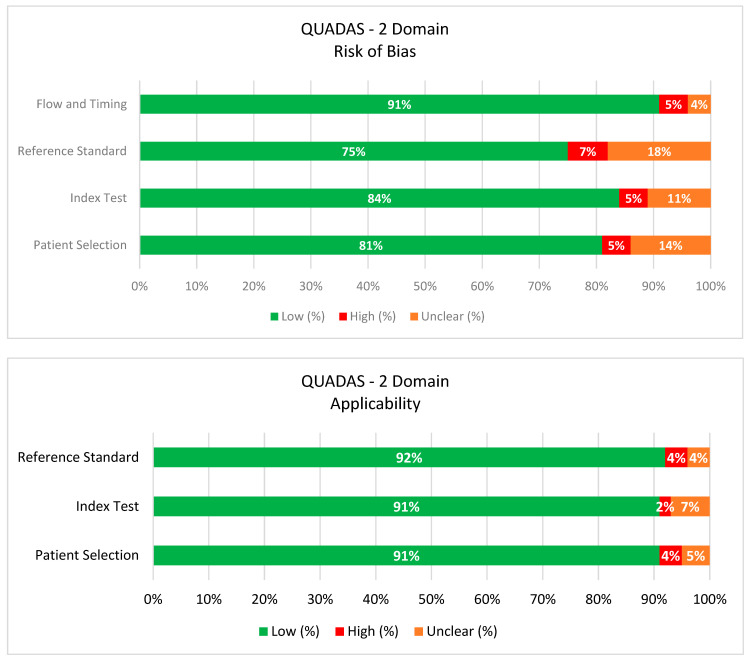 Figure 1
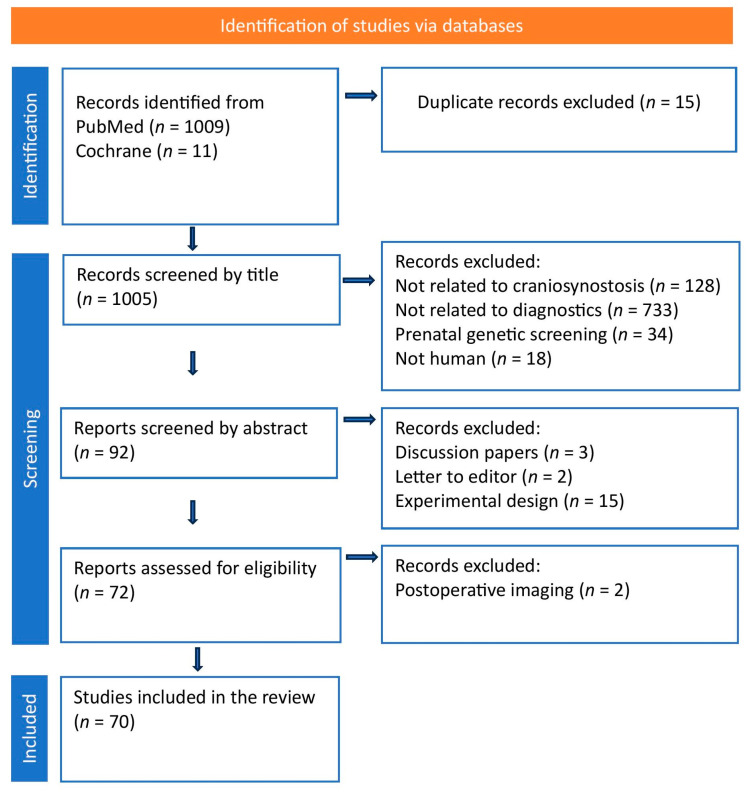 Figure 2
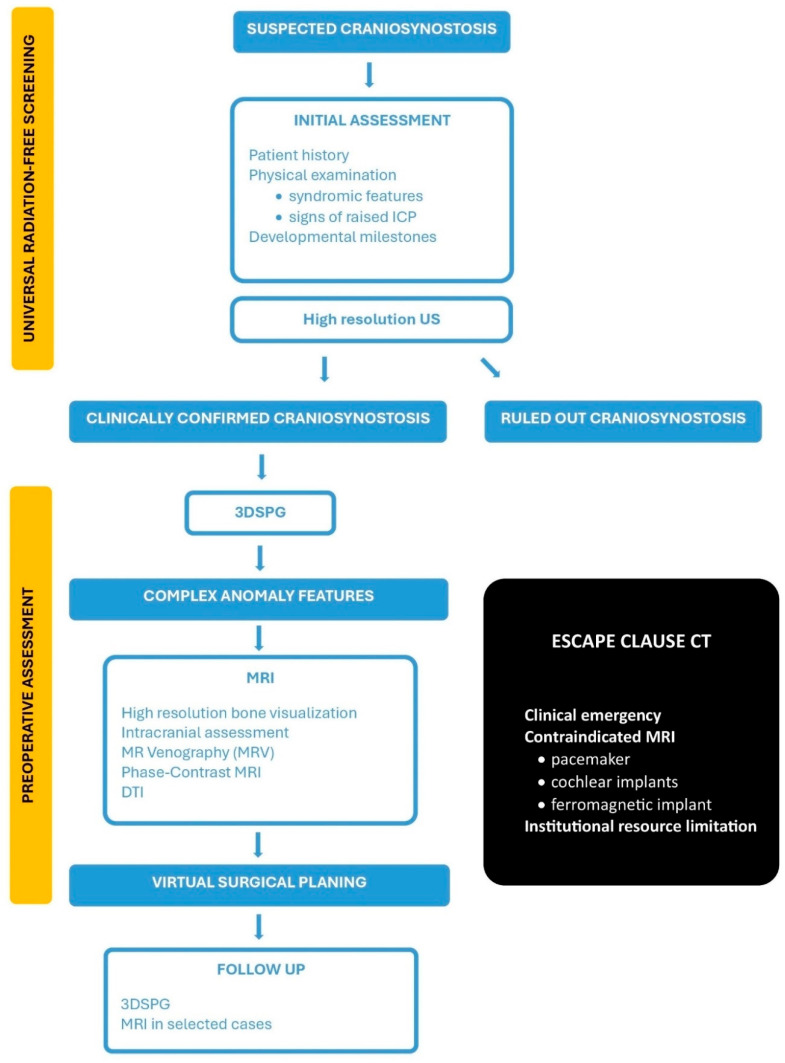 Figure 3
Peer Reviews
No public reviews on file for this paper yet. If you reviewed it on a platform where reviews are public (OpenReview, ICLR, NeurIPS, ICML), you can paste yours below so the community can read it here.
Videos
No videos yet. Explain this paper in a talk, walkthrough, or lecture? Add one.
Taxonomy
TopicsCraniofacial Disorders and Treatments · Radiation Dose and Imaging · Facial Trauma and Fracture Management