HDL May Improve Ocular Tear Film Stability in Patients with Gastric Bypass: A Pilot Study
Anabel Sanchez-Sanchez, Ma Guadalupe Leon-Verdin, Alberto Hidalgo-Bravo, Claudia Martinez-Cordero

TL;DR
This study suggests that high HDL levels may improve tear film stability in gastric bypass patients, potentially reducing evaporative dry eye symptoms.
Contribution
The study introduces a novel correlation between blood lipid levels and tear film stability in post-gastric bypass patients.
Findings
HDL positively correlates with tear break-up time (BUT) in gastric bypass patients.
Triglycerides and cholesterol negatively correlate with Schirmer test results, indicating effects on aqueous tear production.
Findings support the hypothesis that post-gastric bypass dry eye is primarily evaporative, not aqueous-deficient.
Abstract
Most people with obesity who have undergone gastric bypass surgery have dyslipidemia. Because tear film layers play a major role in the pathogenesis of evaporative dry eye, some studies suggest that dry eye syndrome (DES) and dyslipidemia could cooperate in the ocular system. This study aimed to investigate whether tear film conditions are correlated with blood lipid levels. We calculated a sample of 29 patients in this study. We measured the characteristics of the tear film via the Schirmer test and tear break-up time (BUT) test; three measurements were made, and the average value was subsequently recorded. High-density lipoprotein (HDL) correlated positively with BUT (p < 0.05), but cholesterol and triglycerides correlated negatively with Schirmer (p < 0.05 and p < 0.001, respectively). Our findings suggest that HDL levels significantly influence ocular tear film stability and that…
Genes, proteins, chemicals, diseases, species, mutations and cell lines named across the full text — each resolved to its canonical identifier and authoritative record.
Click any figure to enlarge with its caption.
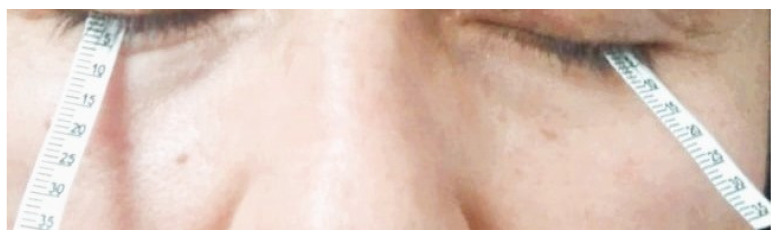 Figure 1
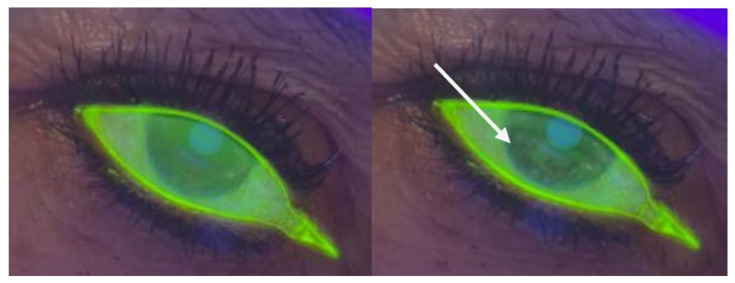 Figure 2
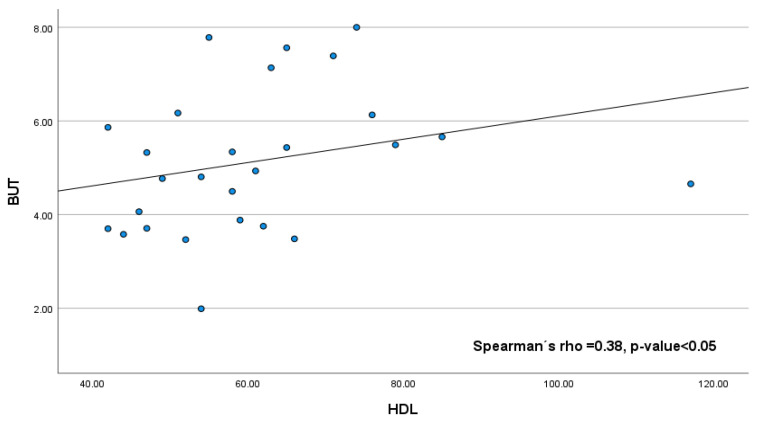 Figure 3
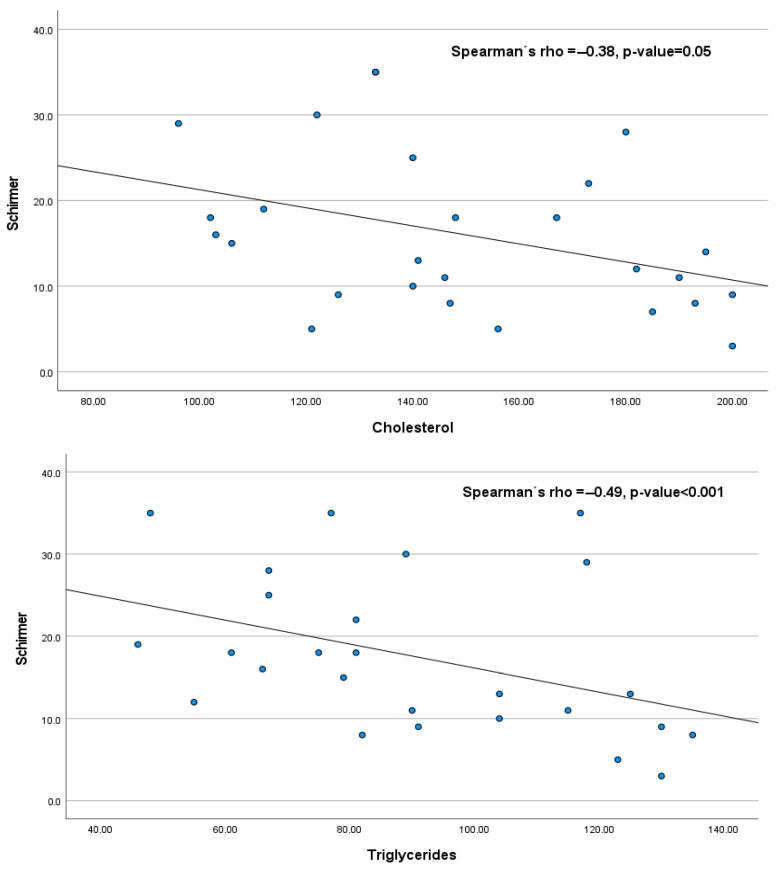 Figure 4
Peer Reviews
No public reviews on file for this paper yet. If you reviewed it on a platform where reviews are public (OpenReview, ICLR, NeurIPS, ICML), you can paste yours below so the community can read it here.
Videos
No videos yet. Explain this paper in a talk, walkthrough, or lecture? Add one.
Taxonomy
TopicsOcular Surface and Contact Lens · Facial Rejuvenation and Surgery Techniques · Obstructive Sleep Apnea Research