Oncotype DX Recurrence Score Predicts Survival in Invasive Micropapillary Breast Carcinoma: A National Cancer Database Analysis
Ali J. Haider, Mohummad Kazmi, Kyle Chang, Waqar M. Haque, Efstathia Polychronopoulou, Jonathon S. Cummock, Sandra S. Hatch, Andrew M. Farach, Upendra Parvathaneni, E. Brian Butler, Bin S. Teh

TL;DR
The Oncotype DX test can predict survival outcomes in a rare and aggressive type of breast cancer called invasive micropapillary carcinoma.
Contribution
This study is the first to validate the Oncotype DX recurrence score as a prognostic tool for invasive micropapillary breast carcinoma patients.
Findings
High Oncotype DX scores (>25) were associated with worse five-year survival in invasive micropapillary carcinoma patients.
Low and intermediate Oncotype DX scores (≤25) showed similar excellent survival outcomes.
Omission of radiation therapy and higher comorbidity burden were linked to worse survival in these patients.
Abstract
Invasive micropapillary carcinoma (IMPC) is a rare and aggressive form of breast cancer that often spreads to lymph nodes early on. The 21-gene Oncotype DX test estimates risk of recurrence and guides chemotherapy use in common hormone-receptor-positive breast cancers, but its value in IMPC is unknown. Using the U.S. National Cancer Database, we identified women with early-stage IMPC who received Oncotype DX testing and were not treated before surgery. Patients with high scores (>25) had worse five-year survival than those with low (≤11) or intermediate (12–25) scores, while low and intermediate groups had similarly excellent outcomes. The assay therefore helps identify IMPC patients at higher risk and may inform decisions about adjuvant therapy, including radiation. (1) Background: Invasive micropapillary carcinoma (IMPC) is a rare, aggressive breast cancer subtype marked by high…
Genes, proteins, chemicals, diseases, species, mutations and cell lines named across the full text — each resolved to its canonical identifier and authoritative record.
Click any figure to enlarge with its caption.
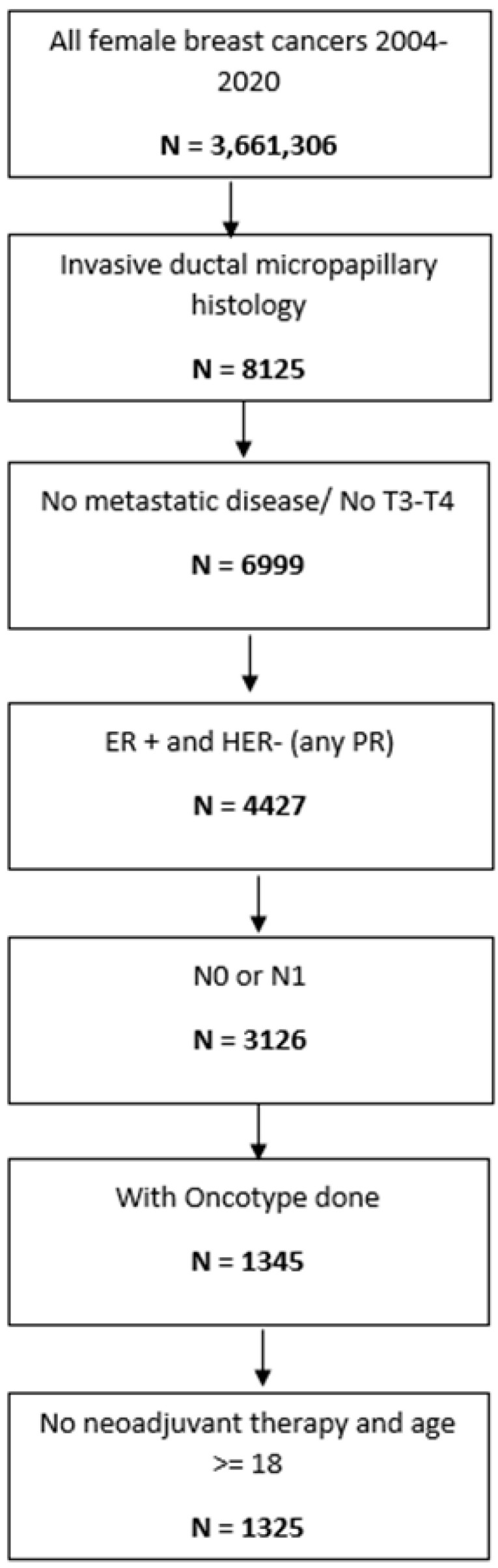 Figure 1
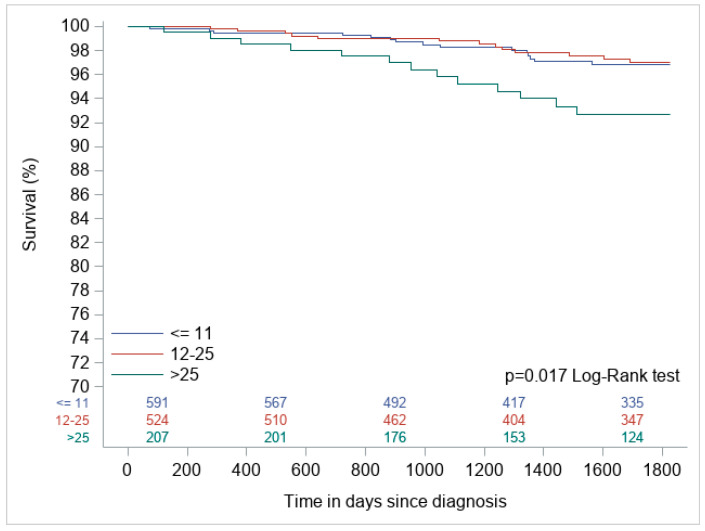 Figure 2
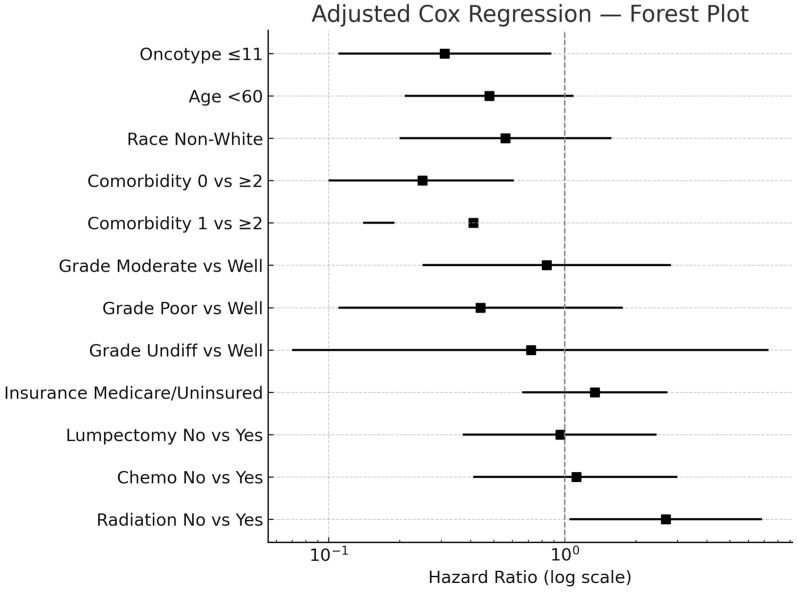 Figure 3
Peer Reviews
No public reviews on file for this paper yet. If you reviewed it on a platform where reviews are public (OpenReview, ICLR, NeurIPS, ICML), you can paste yours below so the community can read it here.
Videos
No videos yet. Explain this paper in a talk, walkthrough, or lecture? Add one.
Taxonomy
TopicsBreast Cancer Treatment Studies · Breast Lesions and Carcinomas · Breast Implant and Reconstruction