A Stretchable and Transparent Electrode for Visual Electrophysiological Acquisition
Qiwei Dong, Maowen Xie, Mengyao Yuan, Wenhao Lou, Guang Yao, Yuan Lin

TL;DR
A new stretchable and transparent electrode improves eye health diagnostics by offering better comfort and performance.
Contribution
A novel stretchable and transparent electrode design with mechanical flexibility and reliable electrophysiological performance.
Findings
The electrode maintains performance after 1000 cycles of strain, showing mechanical durability.
It achieves signal-to-noise ratios comparable to commercial Ag/AgCl electrodes in ERG, EOG, and VEP tests.
The electrode's design allows seamless attachment to soft tissue and inconspicuous use in diagnostics.
Abstract
Visual impairments pose a significant global health challenge, and visual electrophysiological (EP) acquisition plays a pivotal role in diagnosing ophthalmic diseases. However, traditional electrodes still encounter limitations such as inadequate mechanical adaptability and reusability. This study proposes a stretchable and transparent electrode (STE) consisting of a conductive paste/indium tin oxide layer on a polymethyl methacrylate substrate. Leveraging an island–bridge design, the STE renders reliable performance even after being subjected to 1000 cycles of 25% lateral strain and 18% diagonal strain, exhibiting exceptional mechanical flexibility and realizing seamless attachment to soft tissue. Furthermore, optimized conductive paste layer thickness yields a signal-to-noise ratio comparable to commercial electrodes, achieving equivalent performance to Ag/AgCl electrodes in…
Genes, proteins, chemicals, diseases, species, mutations and cell lines named across the full text — each resolved to its canonical identifier and authoritative record.
Click any figure to enlarge with its caption.
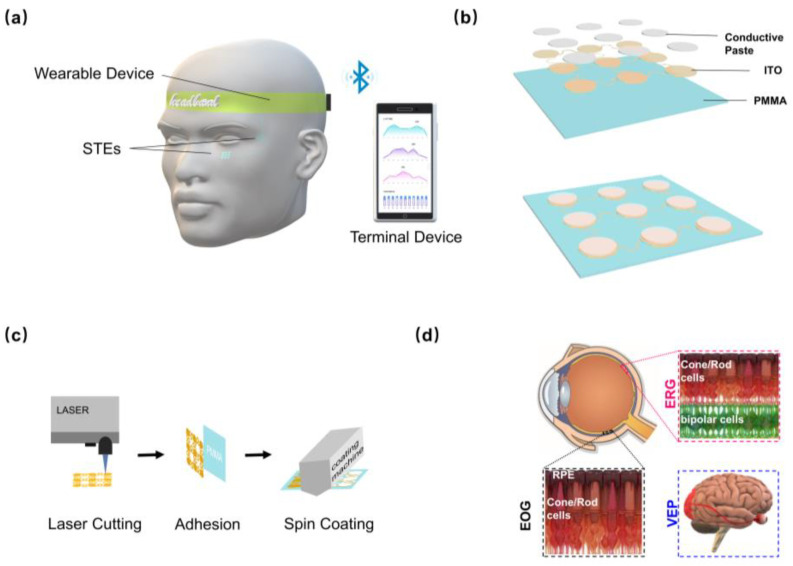 Figure 1
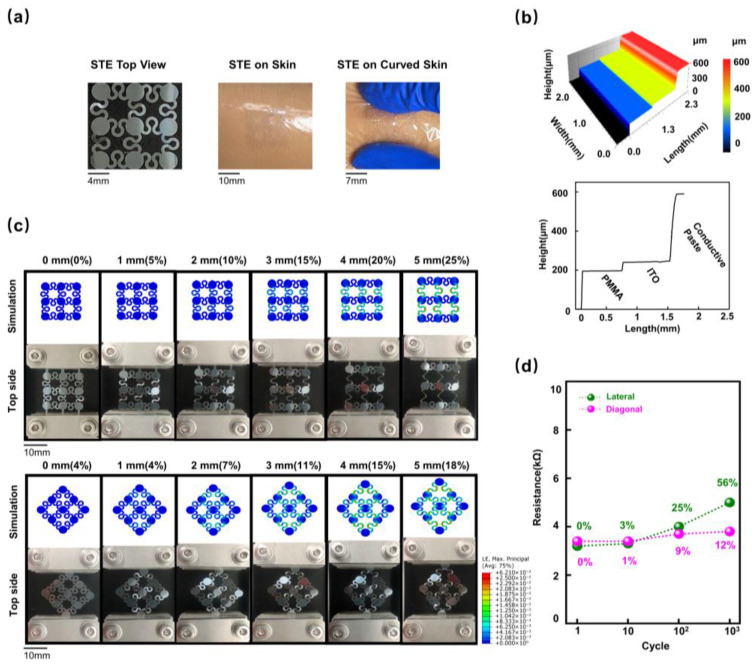 Figure 2
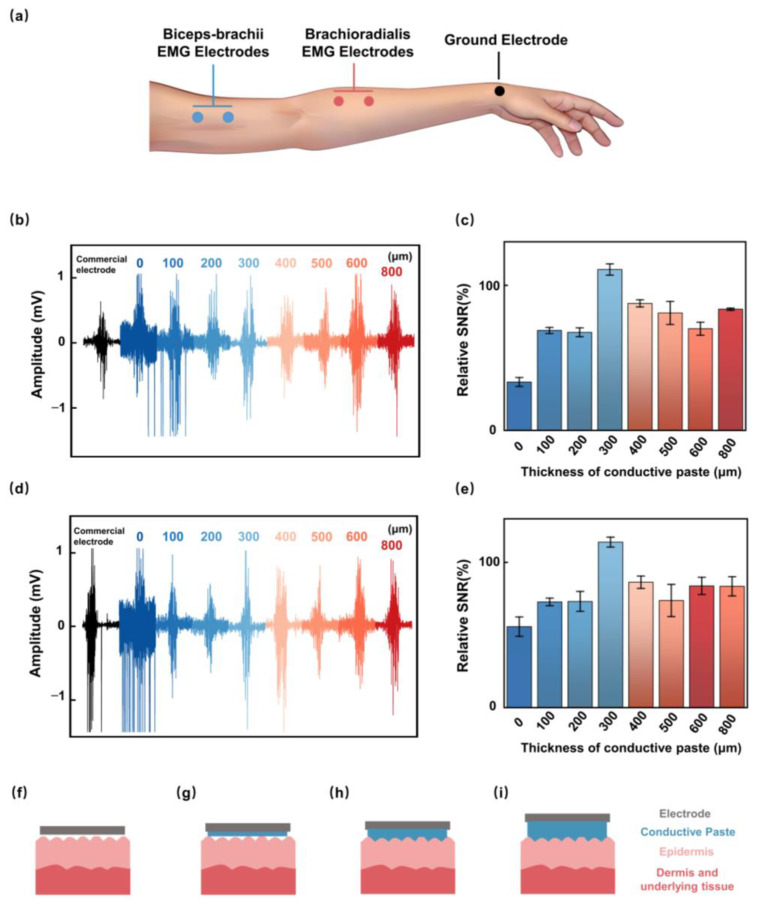 Figure 3
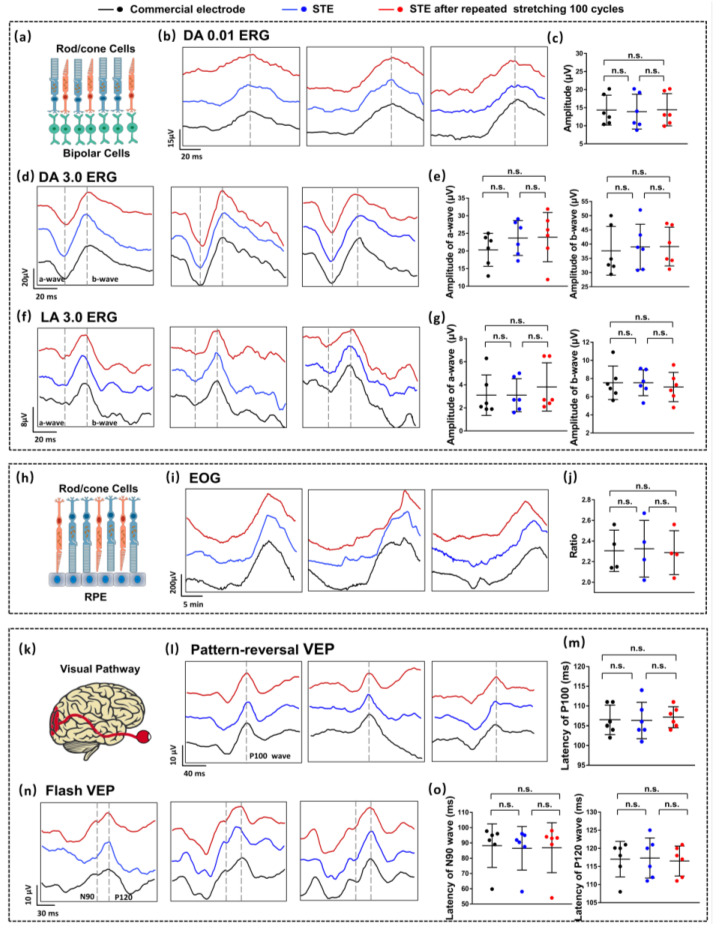 Figure 4
Peer Reviews
No public reviews on file for this paper yet. If you reviewed it on a platform where reviews are public (OpenReview, ICLR, NeurIPS, ICML), you can paste yours below so the community can read it here.
Videos
No videos yet. Explain this paper in a talk, walkthrough, or lecture? Add one.
Taxonomy
TopicsNeuroscience and Neural Engineering · Retinal Development and Disorders · Photoreceptor and optogenetics research