G4 Oligonucleotide-Based Chaperones of Heterogeneous Nuclear Ribonucleoprotein A1
Elizaveta Malakhova, Julia Svetlova, Iuliia Pavlova, Sabina Alieva, Vyacheslav Severov, Nikolay Barinov, Dmitry Klinov, Tatiana Vedekhina, Anna Varizhuk

TL;DR
Scientists designed new drug-like molecules that bind to a protein called hnRNP A1 and prevent it from forming harmful clumps linked to neurodegenerative diseases.
Contribution
The first rational design of oligonucleotide chaperones targeting hnRNP A1 with high specificity and anti-aggregation activity.
Findings
The designed chaperone binds to hnRNP A1 at micromolar concentrations.
The chaperone inhibits hnRNP A1 condensate and fibril formation by over 90%.
Modifications to the oligonucleotide backbone improved its affinity and activity.
Abstract
Pharmacological chaperones of heterogeneous nuclear ribonucleoproteins (hnRNPs) show promise as potential neuroprotective drug candidates. They are expected to prevent the accumulation of neurotoxic hnRNP biocondensates and aggregates, which are hallmarks of severe degenerative diseases. Here, we present the first rational design of oligonucleotide chaperones of hnRNP A1. This design was inspired by previous studies on the specificity of the RNA recognition motif (RRM) and the RGG motif of hnRNP A1 for endogenous nucleic acids. To obtain robust and specific chaperones, we combined an RRM-binding sequence with an RGG-binding G-quadruplex oligonucleotide that inhibits hnRNP A1 aggregation and introduced various modifications into the sugar-phosphate backbone of the oligonucleotide. Modifications that locked the RRM-binding sequence in a conformational state characteristic of RNA improved…
Genes, proteins, chemicals, diseases, species, mutations and cell lines named across the full text — each resolved to its canonical identifier and authoritative record.
Click any figure to enlarge with its caption.
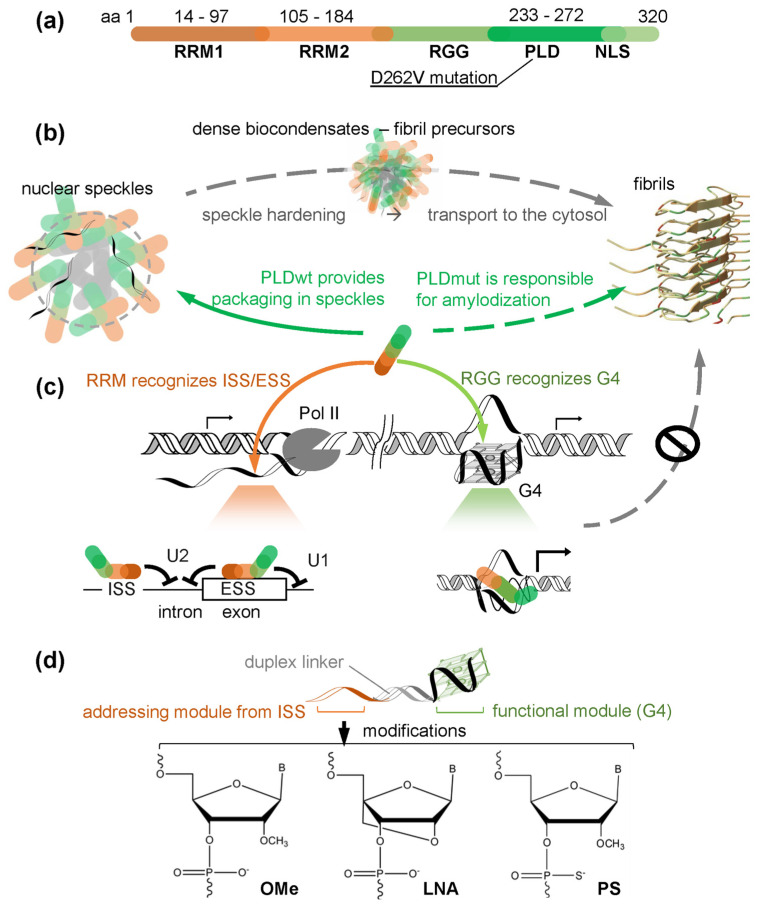 Figure 1
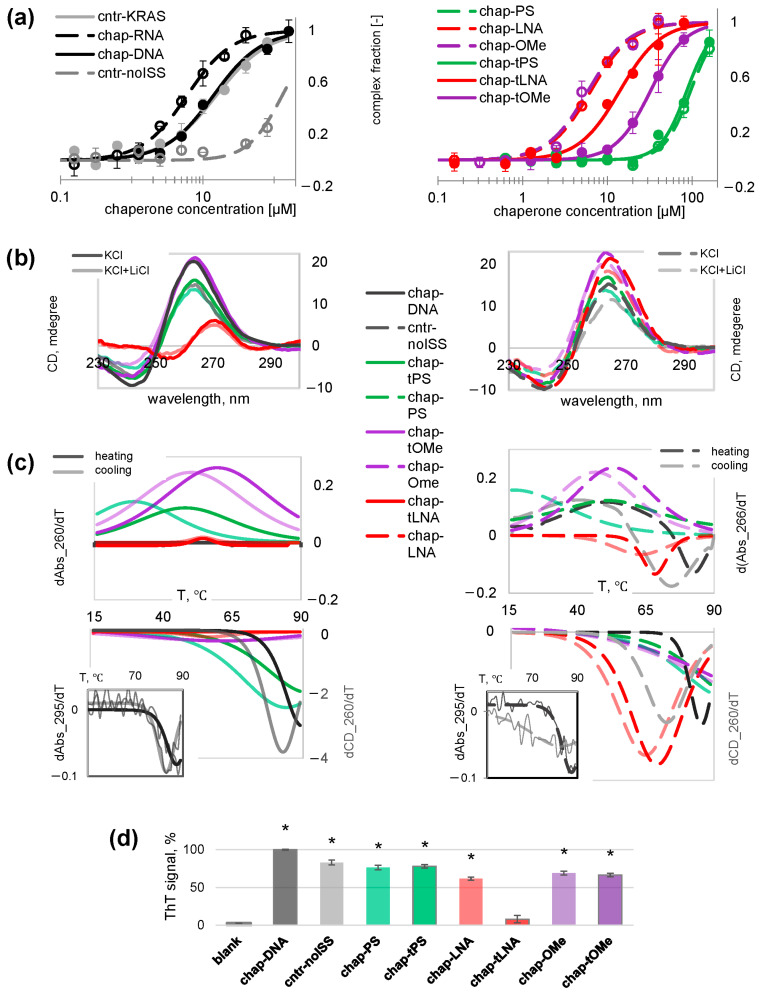 Figure 2
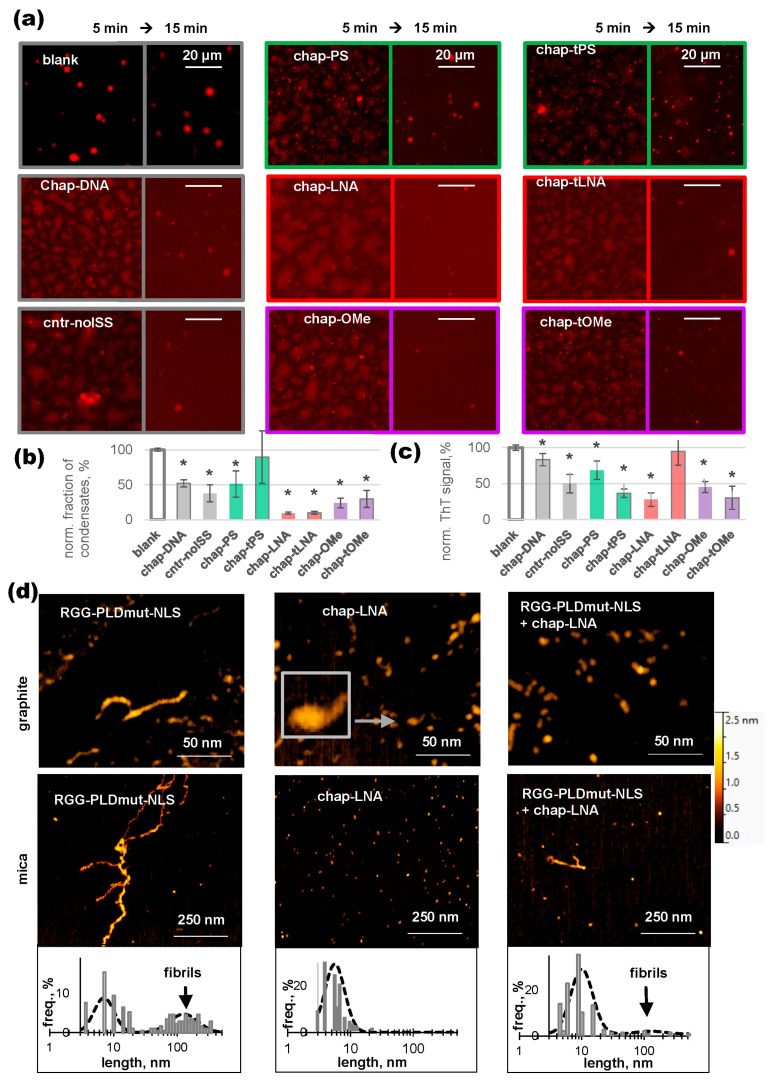 Figure 3
Peer Reviews
No public reviews on file for this paper yet. If you reviewed it on a platform where reviews are public (OpenReview, ICLR, NeurIPS, ICML), you can paste yours below so the community can read it here.
Videos
No videos yet. Explain this paper in a talk, walkthrough, or lecture? Add one.
Taxonomy
TopicsRNA Research and Splicing · Heat shock proteins research · RNA and protein synthesis mechanisms