Sensing Cellular Damages Induced by Food Safety Hazards Using Bacterial Stress-Responsive Biosensors
Ruiqi Li, Manzhuan Lou, Wei He, Shu Quan

TL;DR
Researchers developed bacterial biosensors to detect specific types of cellular damage caused by food safety hazards, offering a sensitive and cost-effective alternative to traditional methods.
Contribution
A panel of Escherichia coli whole-cell biosensors was developed to distinguish different types of cellular damage with high specificity and sensitivity.
Findings
An optimized RecA-LexA-based DNA damage biosensor achieved a 35.5% reduction in baseline signal and 36.6-fold fluorescence induction.
Promoters Pfpr, PkatG, PgrpE, and PfabA were identified for constructing biosensors targeting oxidative, proteotoxic, and membrane stress.
The DNA damage biosensor detected norfloxacin with an LOD of 1.3 ng/mL in solution and 3.0 ng/mL in milk, comparable to HPLC.
Abstract
Food safety hazards induce diverse cellular damages including DNA damage, oxidative stress, proteotoxic stress, and membrane disruption, ultimately contributing to various human diseases. Conventional toxicity assays, while effective, are often resource-intensive and lack the capacity to distinguish among these different damage types, thereby limiting insight into toxic responses and the development of effective strategies for targeted risk mitigation. Here, we constructed a panel of Escherichia coli whole-cell biosensors capable of distinguishing distinct categories of cellular damage. Specifically, an optimized RecA-LexA-based DNA damage biosensor that precisely controls the exogenous expression of the transcriptional repressor LexA achieved a 35.5% reduction in baseline signal and a 36.6-fold induction of fluorescence. In parallel, systematic promoter screening identified Pfpr,…
Genes, proteins, chemicals, diseases, species, mutations and cell lines named across the full text — each resolved to its canonical identifier and authoritative record.
Click any figure to enlarge with its caption.
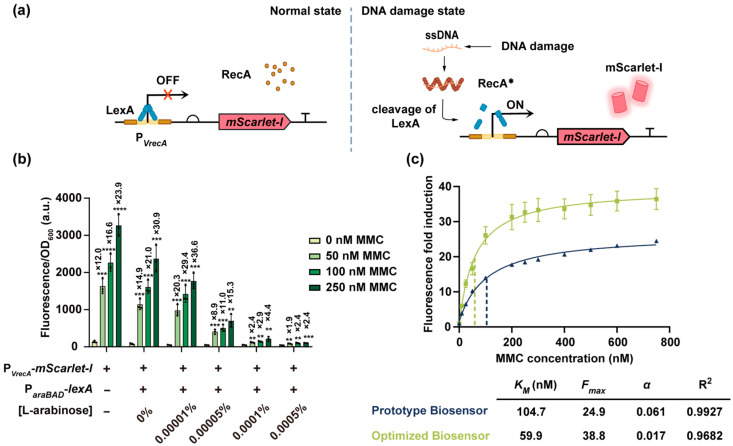 Figure 1
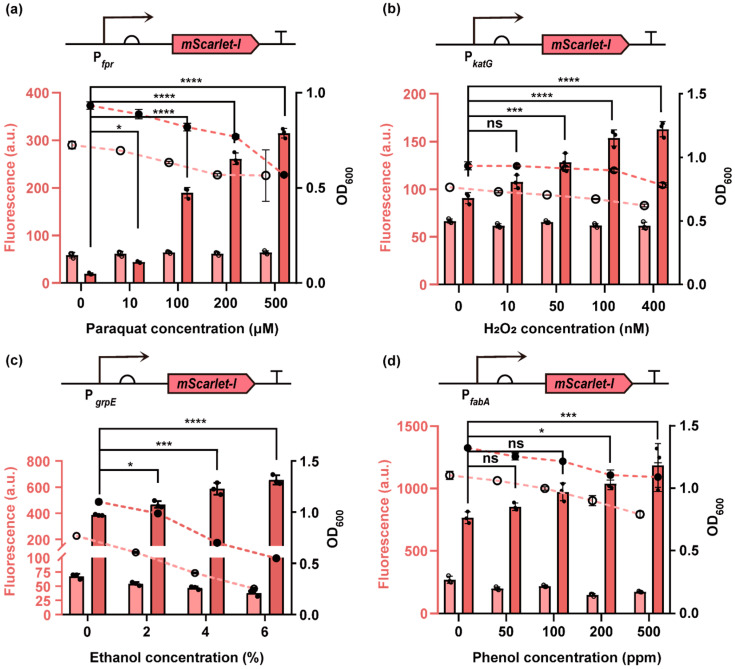 Figure 2
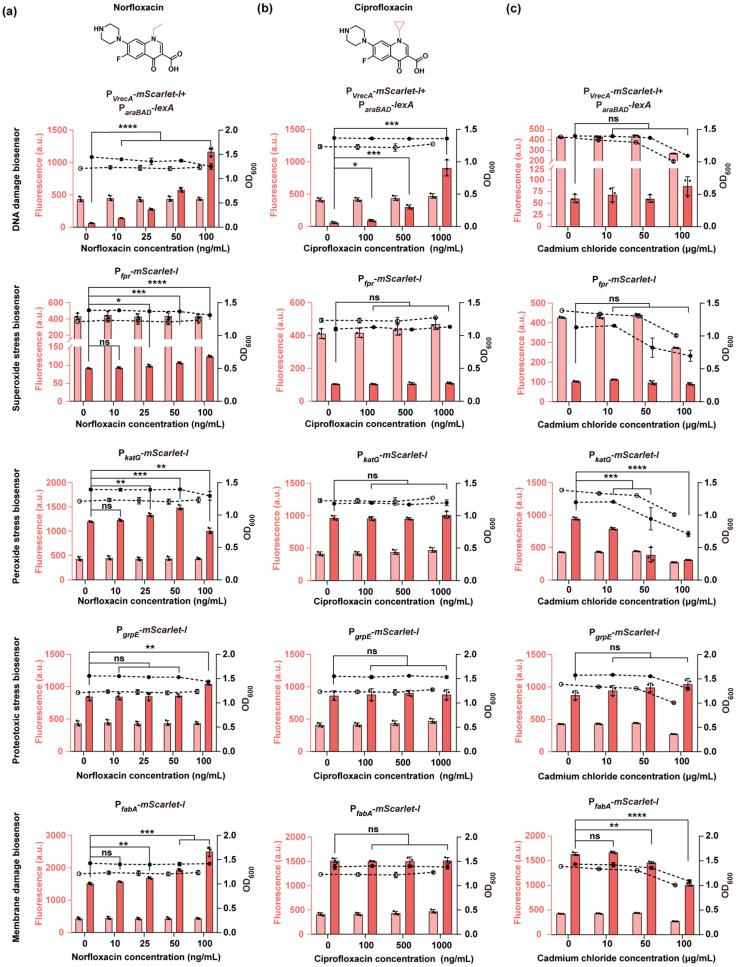 Figure 3
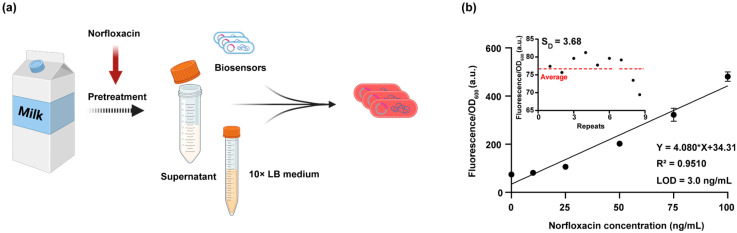 Figure 4
Peer Reviews
No public reviews on file for this paper yet. If you reviewed it on a platform where reviews are public (OpenReview, ICLR, NeurIPS, ICML), you can paste yours below so the community can read it here.
Videos
No videos yet. Explain this paper in a talk, walkthrough, or lecture? Add one.
Taxonomy
Topicsbioluminescence and chemiluminescence research · Bacillus and Francisella bacterial research · Bacterial biofilms and quorum sensing