Modular Virus-like Particles for Antigen Presentation: Comparing Genetic Fusion and Click-Chemistry for Purification
Karsten Balbierer, Volker Jenzelewski, Fabian C. Herrmann, Michael Piontek, Joachim Jose

TL;DR
This study compares genetic fusion and click-chemistry methods for purifying virus-like particles (VLPs) used in antigen presentation, highlighting their advantages and challenges.
Contribution
A novel HBc variant for post-translational modification via click-chemistry is introduced, showing high conjugation efficiency and VLP stability.
Findings
SplCo-OspC fusions showed 90% solubility in E. coli, significantly higher than HBc-OspC fusions.
Click-chemistry enabled 59% conjugation efficiency of fluorophores to VLPs without compromising stability.
Dissociative AEX yielded 84% VLPs for the modified HBc variant, outperforming native AEX.
Abstract
The recent SARS-CoV-2 pandemic has highlighted the need for quickly adaptable technologies in vaccine manufacturing. This can be achieved through virus-like particles (VLPs) as presentation platforms for target antigens. In this study, we investigated the purification of VLPs of the Hepatitis B Core antigen (HBc) and the SplitCore (SplCo) technology. The outer surface protein C (OspC) of Borrelia burgdorferi was genetically fused to HBc and its N-terminal SplCo protein. Product solubility in E. coli increased from 40% for HBc-OspC to 90% for SplCo-OspC. This could not be reproduced with similar SARS-CoV-2 receptor-binding domain fusions due to inclusion body formation. Hydrophobicity was found to be significantly lowered for the OspC fusions, in particular for the SplCo variant. Pre-purified samples were generated by precipitating soluble cell lysate. Subsequently, solubilized…
Genes, proteins, chemicals, diseases, species, mutations and cell lines named across the full text — each resolved to its canonical identifier and authoritative record.
Click any figure to enlarge with its caption.
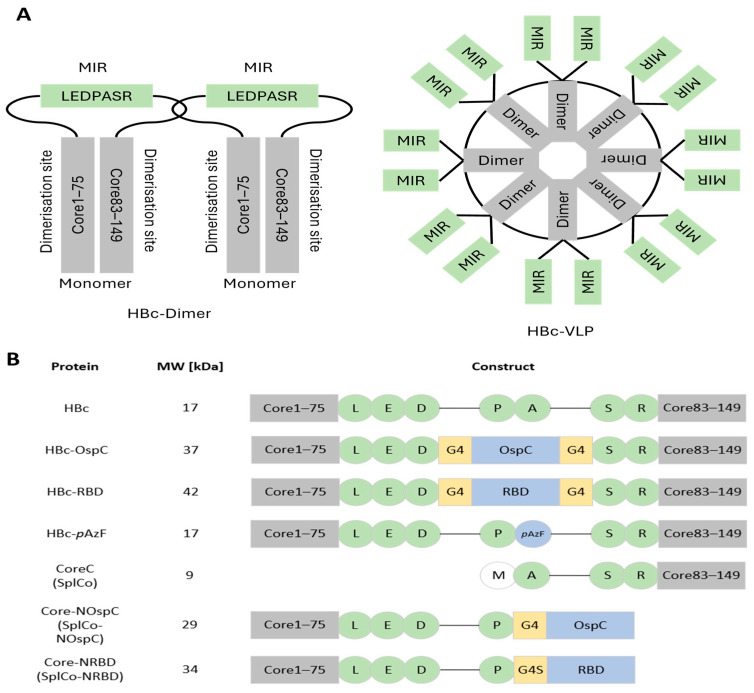 Figure 1
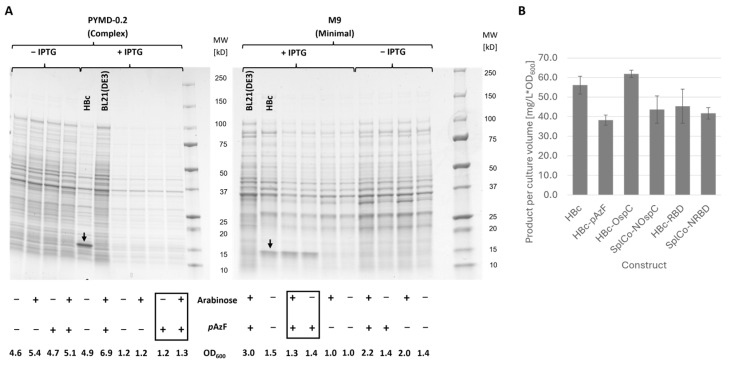 Figure 2
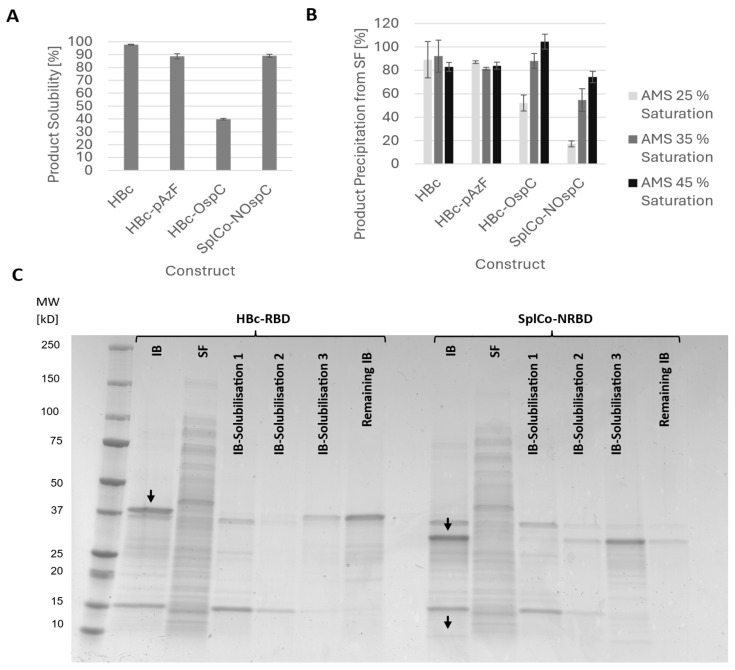 Figure 3
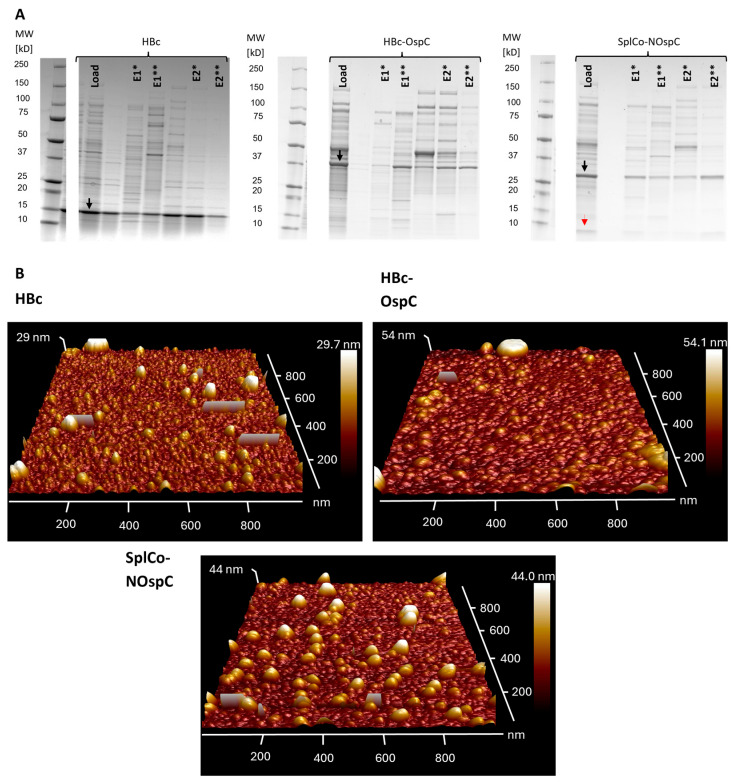 Figure 4
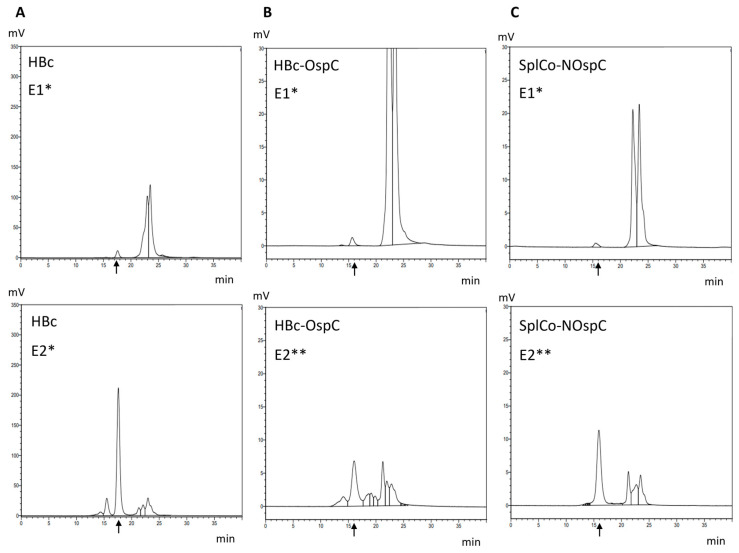 Figure 5
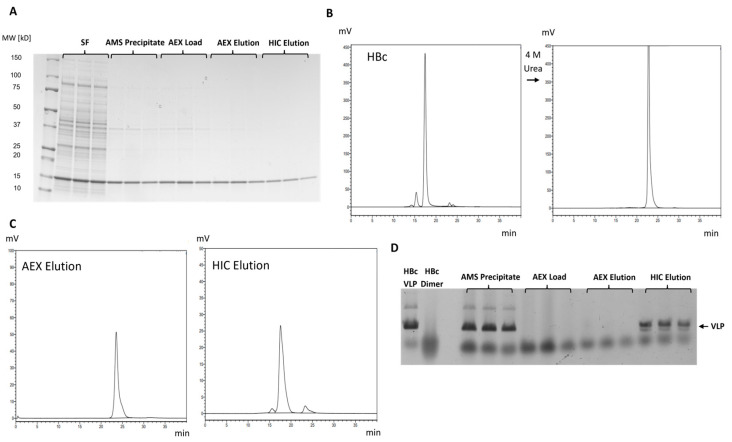 Figure 6
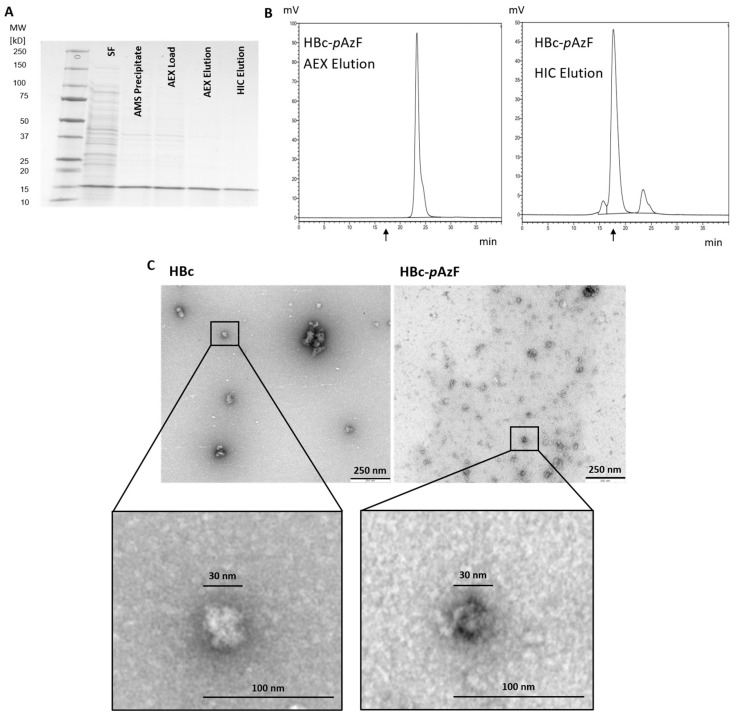 Figure 7
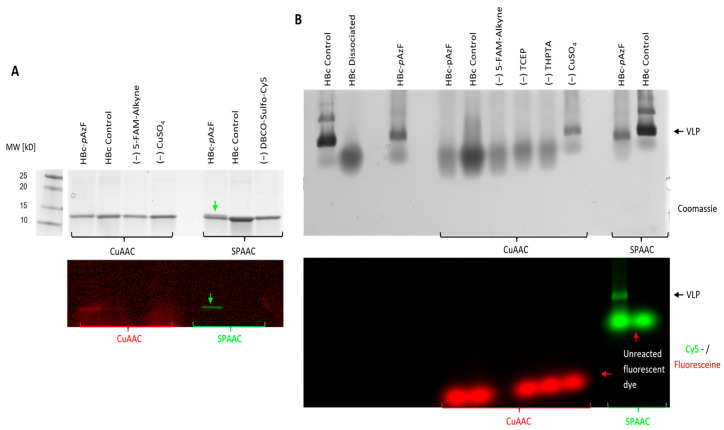 Figure 8
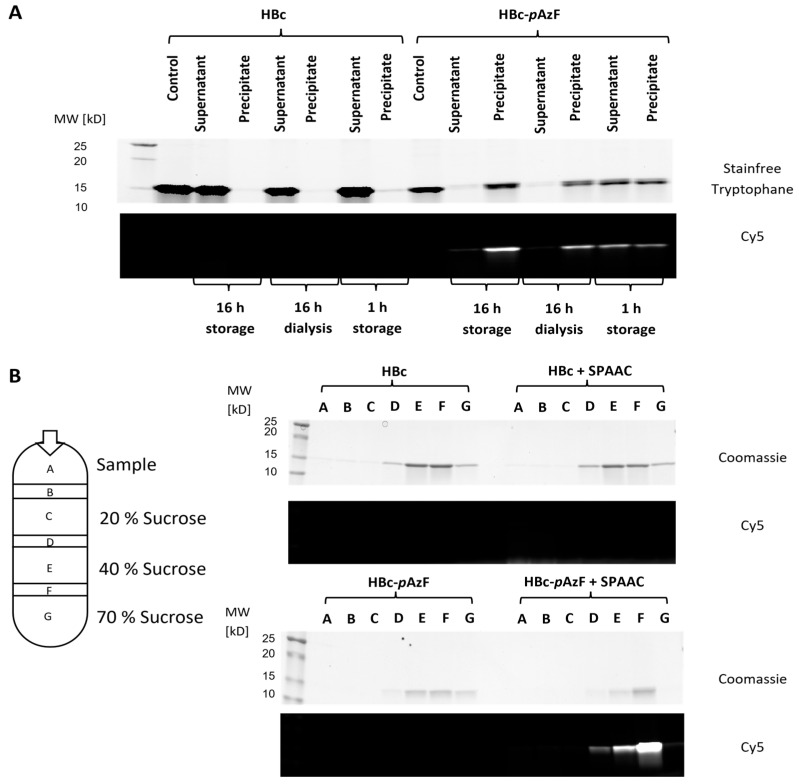 Figure 9
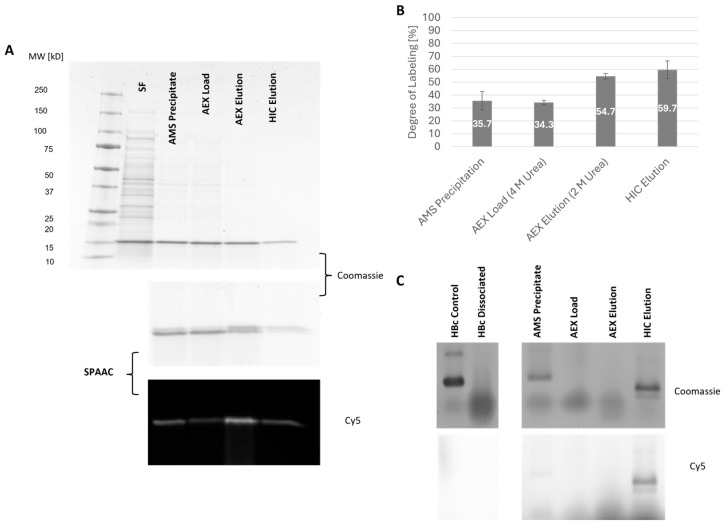 Figure 10
Peer Reviews
No public reviews on file for this paper yet. If you reviewed it on a platform where reviews are public (OpenReview, ICLR, NeurIPS, ICML), you can paste yours below so the community can read it here.
Videos
No videos yet. Explain this paper in a talk, walkthrough, or lecture? Add one.
Taxonomy
TopicsBacteriophages and microbial interactions · Advanced Biosensing Techniques and Applications · Monoclonal and Polyclonal Antibodies Research