Island vs. Mainland: Genetic Divergence of Calotes versicolor (Daudin, 1802) (Squamata: Agamidae) in Thailand
Bhuvadol Gomontean, Warayutt Pilap, Chavanut Jaroenchaiwattanachote, Panida Laotongsan, Pichit Pliankham, Jatupon Saijuntha, Wittaya Tawong, Chairat Tantrawatpan, Weerachai Saijuntha

TL;DR
This study examines how geographic isolation affects the genetic diversity of Oriental Garden lizards in Thailand, finding that both historical and current factors shape their genetic structure.
Contribution
The study reveals that regional geography, not just island-mainland separation, influences genetic divergence in Calotes versicolor.
Findings
Island and mainland populations show both shared and unique haplotypes, indicating mixed genetic relationships.
Divergence-time analysis links lineage splits to late Pleistocene climatic changes and sea-level fluctuations.
Three major genetic lineages were identified, including a clade restricted to specific regions like Trat Province and Phuket Island.
Abstract
Islands provide unique opportunities to study how geographic isolation influences genetic diversity and evolutionary processes. The Oriental Garden lizard (Calotes versicolor) is a widespread reptile found across mainland and island habitats in Thailand. By analyzing mitochondrial CO1 sequences from populations in the Andaman Sea and Gulf of Thailand regions, we assessed their genetic diversity and population structure. The results revealed a mixture of shared and unique haplotypes, with some island and mainland populations being genetically similar, while others showed clear divergence. These patterns suggest that both historical connections and current geographic barriers have shaped the genetic landscape of C. versicolor. Our findings contribute to the understanding of reptile biogeography in Southeast Asia and provide valuable information for biodiversity conservation. Geographic…
Genes, proteins, chemicals, diseases, species, mutations and cell lines named across the full text — each resolved to its canonical identifier and authoritative record.
Click any figure to enlarge with its caption.
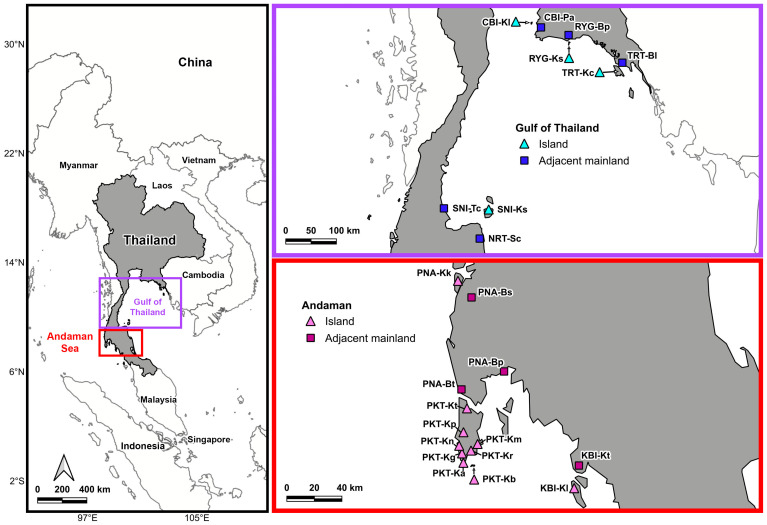 Figure 1
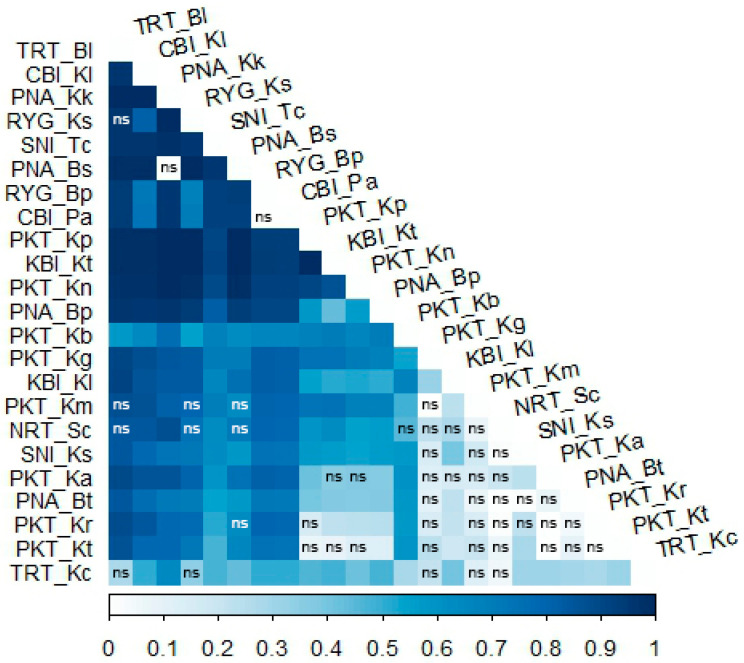 Figure 2
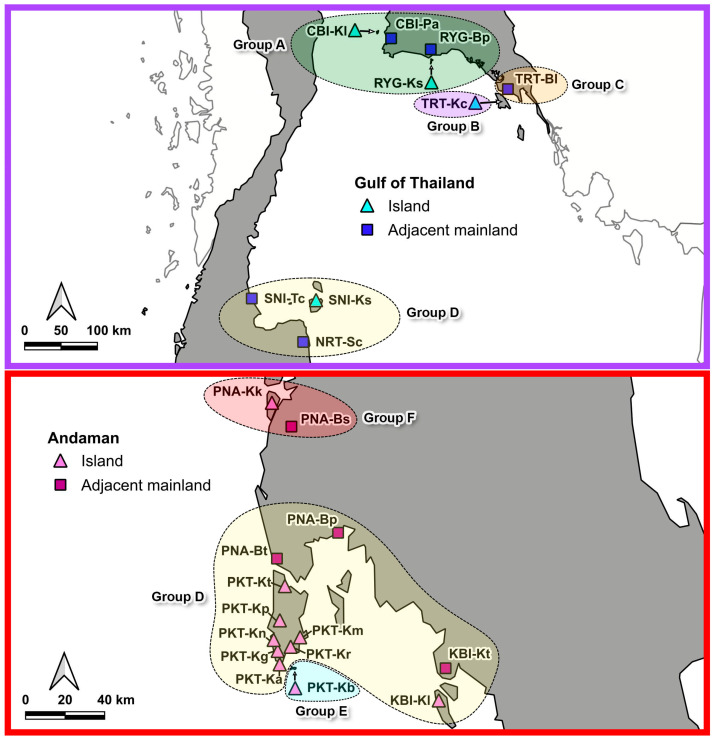 Figure 3
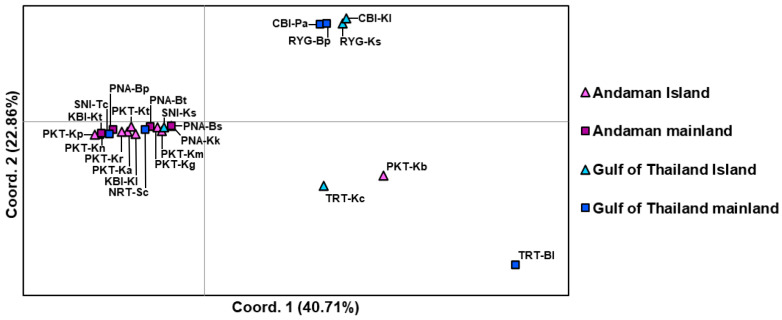 Figure 4
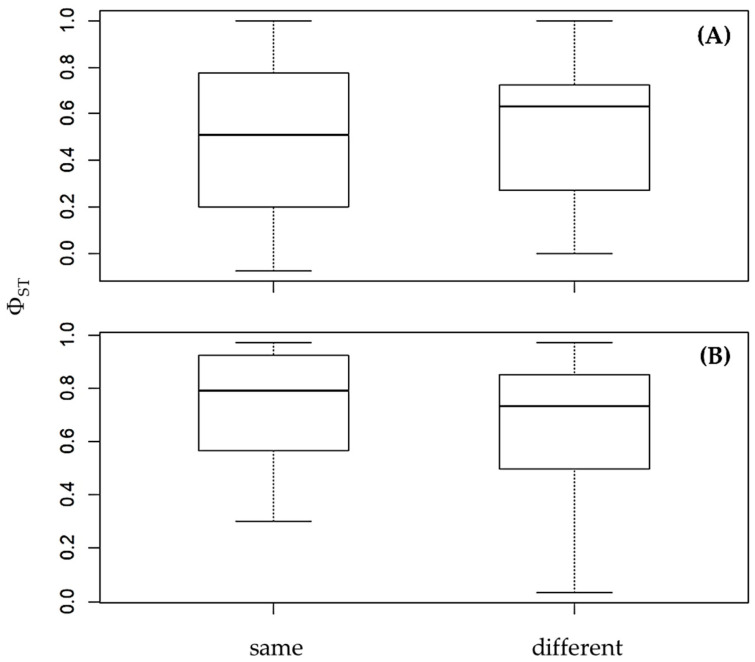 Figure 5
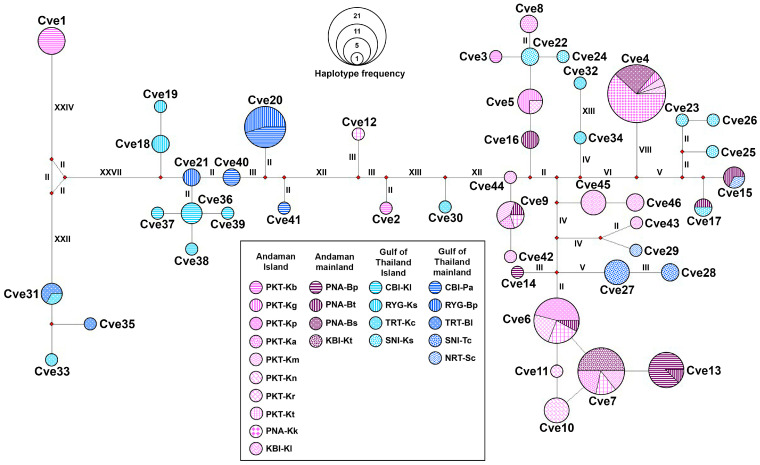 Figure 6
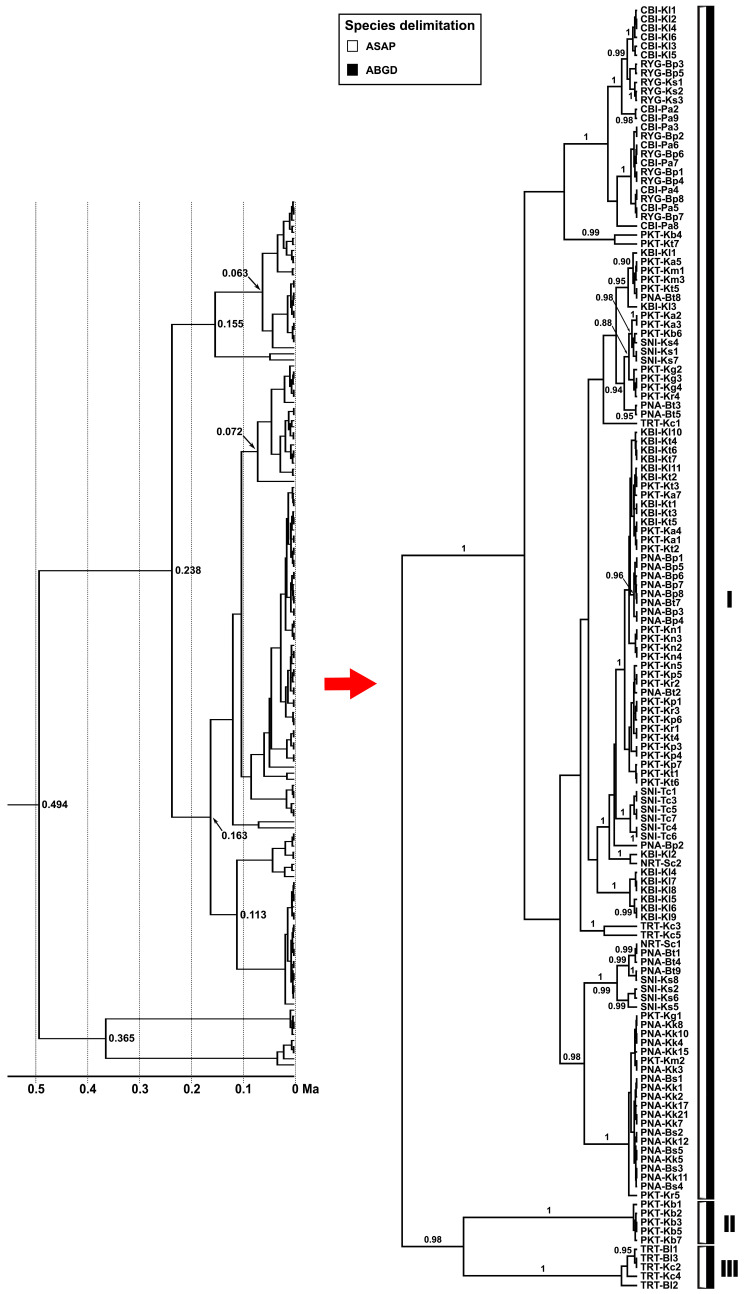 Figure 7
- —Thailand Science Research and Innovation (TSRI)
Peer Reviews
No public reviews on file for this paper yet. If you reviewed it on a platform where reviews are public (OpenReview, ICLR, NeurIPS, ICML), you can paste yours below so the community can read it here.
Videos
No videos yet. Explain this paper in a talk, walkthrough, or lecture? Add one.
Taxonomy
TopicsAmphibian and Reptile Biology · Species Distribution and Climate Change · Animal and Plant Science Education
1. Introduction
Investigating genetic variation between mainland and island populations is essential for understanding the evolutionary dynamics, biogeographic history, and conservation needs of reptile species [1]. Islands, under their geographic isolation, often foster unique evolutionary processes such as genetic drift, founder effects, and local adaptation, which can lead to significant genetic divergence from mainland populations [2,3]. In contrast, mainland populations usually maintain higher gene flow and more stable genetic structures. Comparative genetic studies between these populations provide key insights into patterns of diversification, speciation, and adaptation [4,5]. Such studies are especially important in biodiversity hotspots like Southeast Asia, where geological complexity and ecological heterogeneity have shaped the evolutionary histories of many terrestrial vertebrates [6,7,8].
Calotes versicolor (Daudin, 1802), the oriental garden lizard, is an ecologically adaptable agamid reptile widely distributed across South and Southeast Asia. It inhabits a range of environments, from forests and agricultural landscapes to urban areas [9,10]. Despite being regarded as a single widespread species, C. versicolor exhibits notable morphological, behavioral, and genetic variation across its range, suggesting possible cryptic diversity and regional adaptation [11,12]. Island populations of C. versicolor, in particular, may have undergone distinct evolutionary trajectories compared to their mainland counterparts due to prolonged isolation and environmental differences.
Molecular genetic tools, especially mitochondrial DNA markers such as cytochrome c oxidase subunit 1 (CO1), 16S ribosomal RNA (16S rRNA), and cytochrome b sequences (Cyt-b), have proven effective in revealing hidden genetic structure, lineage diversification, and phylogeographic patterns in C. versicolor [13,14,15,16]. When coupled with spatial landscape data, these tools can help identify environmental or geographic features that facilitate or impede gene flow. By comparing genetic variation between island and mainland populations of this species within a landscape genetics framework, researchers can uncover how historical biogeography, natural selection, and contemporary landscape features contribute to population divergence and potentially to speciation.
Recent studies have emphasized the extent of cryptic genetic diversity within the C. versicolor complex [10,13,15,16]. For example, Calotes populations from Hainan Island, China, have been recognized as a distinct species, Calotes wangi hainanensis, based on both morphological and mitochondrial DNA evidence [17]. Similarly, a study of C. versicolor populations along the Mekong River in Thailand and Lao PDR revealed the existence of at least six genetically distinct mitochondrial lineages (C–H), suggesting that cryptic speciation may also be occurring within continental populations of Southeast Asia. Interestingly, this study found no significant genetic barrier effect of the Mekong River, highlighting the importance of geographic distance over physical barriers in shaping population structure in this species [15].
Comparing island and mainland populations provides a powerful lens to explore how geographic isolation, ecological differences, and limited gene flow drive divergence. Island populations often exhibit reduced genetic diversity and stronger effects of drift or local adaptation, while mainland populations typically retain greater connectivity. Understanding these dynamics helps reveal cryptic diversity and guides conservation priorities. However, no study has yet conducted a systematic comparison of island and adjacent mainland C. versicolor populations across the Thai archipelagos. Our study addresses this gap by examining mitochondrial CO1 sequence variation between insular and mainland populations in the Andaman Sea and Gulf of Thailand, providing the first comprehensive assessment of island–mainland genetic divergence of C. versicolor in this region.
2. Materials and Methods
2.1. Sample Collection
Since all Calotes agamid lizards, including C. versicolor, are protected animals by law in Thailand, we obtained approval to conduct this research through the Department of National Parks, Wildlife and Plant Conservation of Thailand. A total of 88 samples were collected from 14 localities on islands in the Gulf of Thailand and the Andaman Sea, including 55 samples from 9 localities in adjacent mainland areas (Table 1 and Figure 1). The C. versicolor were captured by fishing pole method [18]. Buccal epithelial cells were collected using the buccal swab method described by Koutsokali et al. [19]. Each swab was gently rubbed against the inner cheek and oral epithelium for approximately 6 s to obtain cellular material. All specimens were released at their original collection sites immediately after buccal swabbing. Swabs were immediately placed into tubes containing TE/SDS buffer and stored on ice in the field before transfer to −20 °C in the laboratory for DNA extraction.
2.2. Molecular Analysis
Buccal swabs from each individual lizard were used for DNA extraction using the E.Z.N.A.^®^ Tissue DNA Kit (Omega Bio-tek, Norcross, GA, USA), following the manufacturer’s instructions. Swabs were first thawed, vigorously vortexed to release epithelial cells, and then removed. The adhered material was washed with TE buffer and added back to the original tube before proceeding with DNA extraction. The extracted DNA was then used as a template to amplify the CO1 gene using primers and PCR conditions described in a previous study [15]. All PCR products, approximately 1500 bp in size, were gel-purified using the E.Z.N.A.^®^ Gel Purification Kit (Omega Bio-tek, Norcross, GA, USA). The purified PCR products were then sent for DNA sequencing at ATGC Co., Ltd. (Pathum Thani, Thailand).
2.3. Data Analyses
All 1258-bp CO1 sequences generated in this study were aligned using the ClustalW program version 2.0 [20], and variable sites among haplotypes were examined using the BioEdit program version 7.2.5 [21]. Molecular diversity indices, haplotype data, and mismatch distribution analysis were calculated using the DnaSp program version 5.0 [22]. Haplotype network was constructed in the Network program version 10.2 (https://www.fluxus-engineering.com/; accessed on 25 July 2025) based on a median-joining network [23] using all sequences generated in this study. Analysis of Molecular Variance (AMOVA) and genetic differentiation (Φ_ST_) analyses were conducted using the Arlequin program version 3.5.2.2 [24]. A spatial analysis of molecular variance (SAMOVA) version 1.0 was applied to cluster the CO1 sequences into genetically and geographically homogeneous groups [25]. SAMOVA partitions variance into K groups using the AMOVA framework and estimates variation among groups (FCT), variation among populations within group (FSC), and variation among individuals within population (FST). Analyses were performed for K = 2–8 with 1000 simulated annealing steps from 100 random starting conditions. Principal coordinate analysis (PCoA) was conducted in GenAIEx 6.5 [26] using pairwise Nei’s genetic distance to assess interpopulation affinities. Isolation-by-barrier (IBB) patterns were evaluated in R version 4.5.0 [27] by plotting Φ_ST_ values between populations within the same habitat type (island or mainland) and between different habitat types (island vs. mainland).
2.4. Time-Calibrated Phylogenetic Tree
To estimate the phylogeny and divergence times for the 143 CO1 sequences of C. versicolor, we conducted a Bayesian analysis using the program BEAST version 2.7.7 [28]. Using a strict molecular clock with a mean substitution rate of 5.87% per site per million years, estimated by a previous diversification and demography study of C. versicolor [13]. The most appropriate evolutionary model was selected in MrModeltest version 2.4 [29], in which GTR+I+G was selected by the Akaike Information Criterion (AIC) method. A coalescent constant population prior was used for the tree. Samples from the posterior were drawn every 1000 steps over a total of 3 × 10^7^ MCMC steps. The analysis was checked for MCMC convergence in Tracer version 1.7.2 [30]. The initial 10% of steps was discarded as burn-in and visualized in Figtree version 1.4.4. [31]
2.5. Species Delimitation Analysis
Two phenetic, single-locus species delimitation methods were applied to the C. versicolor CO1 dataset: Automatic Barcode Gap Discovery (ABGD) [32] and Assemble Species by Automatic Partitioning (ASAP) [33]. Both analyses were conducted using the bioinformatic toolkit iTaxoTools v0.1 [34]. For ABGD, the Kimura (K80) substitution model was employed, with the default maximum and minimum intraspecific distances (Pmax = 0.1, Pmin = 0.001). The barcode gap width was set to 1.5. Since recursive partitions appeared over-split, a non-recursive partition was selected, with a prior maximal distance of p = 7.77 × 10^−3^. For ASAP, the partition with the lowest ASAP score and an appropriate threshold distance (dT) was chosen under the Kimura (K80) model, using a default transition/transversion ratio of 2.0 and minimum and maximum threshold distances of 0.05 and 0.5, respectively.
3. Results
3.1. CO1 Sequence Variation
A total of 143 individuals from 23 populations were analyzed to assess genetic variation based on mitochondrial CO1 sequences, which have been deposited in GenBank under accession numbers PX308698–PX308840. Across six population groups defined by SAMOVA (Table S1), 161 polymorphic sites and 46 haplotypes were identified (Table 2). Genetic diversity varied among groups. Group A (n = 25) contained 18 polymorphic sites and 10 haplotypes, with high haplotype diversity (Hd = 0.797 ± 0.076) but low nucleotide diversity (π = 0.0043 ± 0.0003). Group B (n = 5) showed the highest nucleotide diversity (π = 0.0355 ± 0.0072) and complete haplotype diversity (Hd = 1.000 ± 0.126), based on 82 segregating sites and five haplotypes. Group C (n = 3) exhibited moderate haplotype diversity (Hd = 0.667 ± 0.314) and low nucleotide diversity (π = 0.0027 ± 0.0013). Group D (n = 85), the largest sample, had 71 segregating sites, 27 haplotypes, and high diversity (Hd = 0.932 ± 0.013; π = 0.0076 ± 0.0006). Group E (n = 7) contained 76 segregating sites but only three haplotypes, resulting in moderate haplotype diversity (Hd = 0.524 ± 0.209) and relatively high nucleotide diversity (π = 0.0245 ± 0.0092). In contrast, Group F (n = 18) was monomorphic, with a single haplotype (Hd = 0.000; π = 0.0000). Overall, haplotype diversity across all groups was very high (Hd = 0.948 ± 0.008), and nucleotide diversity reached 0.0180 ± 0.0014.
3.2. Genetic Differentiation
The pairwise genetic differentiation (Φ_ST_) heat map illustrated the genetic differences among C. versicolor populations from various island and mainland localities in Andaman Sea and Gulf of Thailand (Figure 2). Populations from Phuket Province, a biggest island in Thailand, exhibited low genetic divergence and potential gene flow. In contrast, several comparisons between island and mainland populations, revealed weak or non-significant correlations (Φ_ST_ < 0.2, p > 0.05), suggesting notable genetic divergence. These findings support a pattern of isolation in insular populations. The presence of numerous non-significant (ns) pairwise correlations, primarily involving island populations, further underscoring their distinct genetic composition. Notably, populations from islands in northern Gulf of Thailand (e.g., TRT-Kc, RYG-Ks, and CBI-Kl) consistently displayed significant genetic differences with the adjacent mainland populations (TRT-Bl, RYG-Bp, and CBI-Pa), indicating limited gene flow between populations.
3.3. Genetic Structure
Analysis of molecular variance (AMOVA) was conducted to measure genetic differentiation between island and mainland populations of C. versicolor in both the Andaman Sea and Gulf of Thailand regions. In the Andaman Sea region, only a small portion of the total genetic variation was explained by differences between island and mainland groups (FCT = 0.07395, p > 0.05), indicating minimal genetic separation at this level. Most genetic variation occurred among populations within each group (FSC = 0.62462, p < 0.001), and there was also substantial variation within individual populations. The overall genetic differentiation was high (FST = 0.59686, p < 0.001), reflecting considerable genetic diversity across populations regardless of island or mainland status. By comparison, populations from the Gulf of Thailand showed a somewhat higher degree of genetic differentiation between island and mainland groups (FCT = 0.14827, p > 0.05), suggesting a moderate effect of geographic grouping here. However, as in the Andaman Sea region, the majority of genetic variation was still found among populations within groups (FSC = 0.72971, p < 0.001), along with significant variation within populations themselves (FST = 0.68963, p < 0.001). These results indicate that while there is some genetic differentiation between island and mainland populations most genetic variation exists at the population level rather than strictly between island and mainland groups.
The Spatial Analysis of Molecular Variance (SAMOVA) based on CO1 data revealed clear genetic structuring of C. versicolor across island and mainland populations. The proportion of variation among groups (FCT) ranged from 0.58234 at K = 3 to 0.67849 at K = 8 (Table S1, Figure S1). Although the highest FCT value at K= 8 suggested over-fragmentation, FCT reached a plateau at K = 6 (FCT = 0.66885, p < 0.001). At this level, variation among populations within groups declined sharply (FSC = 0.30753, p < 0.001) (Table 3).
The SAMOVA analysis identified six genetic clusters corresponding broadly to the Andaman Sea and Gulf of Thailand regions (Figure 3). In the Gulf of Thailand, four clusters were detected: group A (RYG-Ks, RYG-Bp, CBI-Kl, CBI-Pa), group B (TRT-Kc), group C (TRT-Bl), and group D (SNI-Tc, SNI-Ks, NRT-Sc). Group A included both island and mainland populations, while group D showed affinities with some Andaman populations. Groups B and C, each represented by a single population, were genetically distinct from their neighbors. In the Andaman region, three clusters were identified: group D (island and mainland populations from both regions), group E (southern Phuket Island, PKT_Kb), and group F (one Andaman Island and an adjacent mainland population). Group D, the most complex, indicates historical gene flow between regions. Overall, genetic differentiation was strongest between the Andaman Sea and Gulf of Thailand, whereas island and mainland populations within each region generally shared similar genetic backgrounds.
The Principal Coordinate Analysis (PCoA) based on genetic distances revealed some variation among populations of C. versicolor from both mainland and island locations (Figure 4). The first two coordinates accounted for 63.57% of the total genetic variation, with 40.71% and 22.86% explained by the first and second axes, respectively. Most island populations in the Andaman Sea and adjacent mainland populations clustered closely together, indicating minimal genetic differences and suggesting moderate genetic similarity between island and mainland groups. A few populations—such as TRT-Bl from the Gulf of Thailand mainland, TRT-Kc from a Gulf of Thailand island, and PKT-Kb from an island in Andaman Sea, were somewhat separated, representing localized divergence rather than a broad pattern. Additionally, some island populations from the Gulf of Thailand grouped closely with certain Andaman mainland populations, suggesting historical connectivity or gene flow. These findings indicate no significant genetic differentiation between mainland and island populations, with most groups exhibiting substantial genetic similarity despite geographic separation.
Pairwise genetic distances (Φ_ST_) showed no clear difference between island–mainland (different) and same-landmass (same) comparisons in either region (Figure 5). In the Andaman Sea (Figure 5A), median Φ_ST_ values were similar between the two categories, suggesting that seawater boundaries do not strongly restrict gene flow. Likewise, in the Gulf of Thailand (Figure 5B), both categories exhibited consistently high Φ_ST_ values, indicating that factors other than seawater separation, such as historical isolation or limited dispersal, may be the primary drivers of population genetic structure in this region.
3.4. Haplotype Network
The haplotype network based on partial CO1 sequences revealed clear genetic structuring of C. versicolor across islands and adjacent mainland regions of Thailand (Figure 6). A total of 46 haplotypes (Cve1–Cve46) were identified. Several haplotypes (e.g., Cve4, Cve6, and Cve20) were shared between island and mainland populations, indicating recent divergence or gene flow. In contrast, many haplotypes were restricted to specific regions, such as Cve31 and Cve33 in the Gulf of Thailand mainland and Cve1 in the Andaman Islands, suggesting local differentiation. The most frequent haplotypes (Cve4, Cve6, and Cve20) occupied central positions in their respective clusters and were surrounded by numerous low-frequency and singleton haplotypes, forming star-like patterns typical of recent population expansion.
3.5. Divergence Time and Species Delimitation
The time-calibrated phylogeny based on CO1 sequences revealed that C. versicolor populations from islands and adjacent mainland regions of Thailand diverged relatively recently, within the last 0.5 million years (Ma) (Figure 7). The deepest split among the sampled lineages was estimated at ~0.49 Ma, with subsequent diversification events occurring at ~0.36, 0.24, 0.16, and 0.11 Ma. Most nodes were strongly supported, with posterior probabilities ranging from 0.90 to 1.00, indicating high confidence in the branching topology. Species delimitation analyses using ASAP and ABGD consistently identified three major genetic clusters. Clade I included the majority of populations examined, reflecting a wide distribution across both islands and adjacent mainland areas. Clade II was restricted to a subset of populations, including PKT and TRT, whereas Clade III was exclusively represented by individuals from Ko Chang Island and the adjacent mainland in Trat Province (TRT). Both delimitation methods yielded nearly identical species boundaries, supporting the robustness of these groupings.
4. Discussion
This study provides the first systematic comparison of mitochondrial CO1 sequence variation between island and mainland populations of C. versicolor in Thailand. We found high haplotype diversity (Hd = 0.500–1.000) and moderate nucleotide diversity (π = 0.0046–0.0245), indicating that populations retain substantial genetic variation, consistent with the wide ecological tolerance and broad distribution of the species [10,13]. Such genetic diversity has also been reported in other broadly distributed agamids [35,36] and is often associated with long-term persistence across varied habitats.
Clustering of some island and mainland populations, particularly in the Gulf of Thailand, suggests historical connectivity facilitated by Pleistocene sea-level fluctuations. During glacial maxima, sea levels dropped by ~120 m, exposing land bridges that enabled dispersal between islands and adjacent mainland regions [37,38]. Divergence-time analyses indicate that lineage diversification occurred within the last 0.5 Ma, coinciding with late Pleistocene climatic oscillations and sea-level changes. The presence of identical haplotypes across both regions is consistent with this scenario, reflecting either retention of ancestral polymorphisms from recent divergence or occasional over-water dispersal that has maintained genetic similarity. Comparable patterns of shallow divergence between islands and nearby mainland populations have been reported in other Southeast Asian reptiles and amphibians, including Varanus salvator [39], Gekko gecko [40,41], and Bronchocela cristatella [42].
In C. versicolor, the presence of identical haplotypes across Gulf of Thailand islands and adjacent mainland localities, as well as between the Andaman Sea islands and nearby mainland sites, suggests either ongoing over-water dispersal, possible in species capable of rafting or surviving short saltwater crossings, or recent divergence without sufficient time for mutation accumulation. Such genetic similarity indicates that these populations are either still connected through occasional gene flow or have not been separated long enough for substantial divergence to occur. Although such dispersal events are generally rare, they have been documented in lizards from island archipelagos [43,44]. This pattern aligns with the relatively low and non-significant genetic differentiation observed in our AMOVA, IBB, and PCoA analyses. Similarly, evidence from the Mekong River indicates that it does not function as a significant natural barrier for C. versicolor [15], further supporting the species’ ability to maintain genetic connectivity across geographic features that might restrict dispersal in other reptiles.
Unique haplotypes restricted to particular islands suggest long-term isolation and independent evolutionary trajectories. Similar patterns have been documented in Draco lizards of Southeast Asia, where island populations often form distinct genetic lineages [45,46]. Over evolutionary timescales, such isolation can potentially promote genetic divergence that may lead to cryptic speciation, as demonstrated by C. versicolor populations from Hainan Island, which show distinct genetic divergence from nearby mainland populations [13]. These Hainan populations have subsequently been described as a new species, Calotes wangi, with a new subspecies, C. w. hainanensis [17]. Therefore, our findings may indicate that C. versicolor populations inhabiting isolated islands, particularly in Phuket Island in the Andaman Sea, are on similar evolutionary paths that could ultimately result in speciation. Our findings raise the hypothesis that C. versicolor populations inhabiting isolated islands, particularly in Phuket Island in the Andaman Sea, may be on similar evolutionary paths. However, this requires confirmation using multilocus nuclear markers, morphology, and ecological evidence.
From a conservation perspective, populations with high divergence or unique haplotypes (e.g., TRT-Kc in the Gulf of Thailand and PKT-Kb in the Andaman Sea) represent potential evolutionarily significant units (ESUs) [47,48]. Protecting such lineages is crucial to preserving the evolutionary potential of C. versicolor. Conservation strategies should prioritize habitat protection, genetic monitoring, and preventing the introduction of non-native reptiles that may hybridize with local forms. Given the broad range of C. versicolor and evidence of deep intraspecific genetic structuring in other parts of its range [10,12,13,15], including further taxonomic investigation using multilocus genomic data, may reveal unrecognized lineages in Thailand. Integrating morphological, ecological, and genomic analyses could clarify whether the observed divergence reflects population-level variation or cryptic species boundaries.
5. Conclusions
Our analysis of mitochondrial CO1 sequences in C. versicolor populations across islands and adjacent mainland areas in Thailand revealed a mosaic of genetic patterns. Some island and mainland populations remain genetically similar, likely due to historical land connections and possible ongoing dispersal, while others exhibit localized divergence shaped by long-term isolation. Although sample sizes were limited for some populations and only a mitochondrial marker was used, the results underscore the combined influence of historical processes and contemporary barriers on population structure. Conservation of C. versicolor should address both widespread interconnected lineages and geographically restricted, genetically distinct populations, which may represent ESUs. Future research integrating nuclear genomic data, morphology, and ecological information will be essential to refine the evolutionary history of this species and to support evidence-based conservation strategies.
The reference list from the paper itself. Each links out to its DOI / PubMed record.
- 1Johnson K.P. Adler F.R. Cherry J.L. Genetic and Phylogenetic Consequences of Island Biogeography Evolution 20005438739610.1111/j.0014-3820.2000.tb 00041.x 10937215 · doi ↗ · pubmed ↗
- 2Losos J.B. Ricklefs R.E. Adaptation and Diversification on Islands Nature 200945783083610.1038/nature 0789319212401 · doi ↗ · pubmed ↗
- 3Mac Arthur R.H. Wilson E.O. The Theory of Island Biogeography 13th printing Princeton University Press Princeton, NJ, USA 2001978-0-691-08836-5
- 4Clegg S.M. Degnan S.M. Kikkawa J. Moritz C. Estoup A. Owens I.P.F. Genetic Consequences of Sequential Founder Events by an Island-Colonizing Bird Proc. Natl. Acad. Sci. USA 2002998127813210.1073/pnas.10258339912034870 PMC 123032 · doi ↗ · pubmed ↗
- 5Thorpe R.S. Surget-Groba Y. Johansson H. The Relative Importance of Ecology and Geographic Isolation for Speciation in Anoles Philos. Trans. R. Soc. B Biol. Sci.20083633071308110.1098/rstb.2008.007718579479 PMC 2607314 · doi ↗ · pubmed ↗
- 6Hughes J.B. Round P.D. Woodruff D.S. The Indochinese–Sundaic Faunal Transition at the Isthmus of Kra: An Analysis of Resident Forest Bird Species Distributions J. Biogeogr.20033056958010.1046/j.1365-2699.2003.00847.x · doi ↗
- 7Grismer L.L. Quah E.S.H. Duzulkafly Z. Yambun P. On the Taxonomy of Lygosoma bampfyldei Bartlett, 1895 (Squamata: Scincidae) with Descriptions of New Species from Borneo and Peninsular Malaysia and the Resurrection of Lygosoma schneideri Werner, 1900 Zootaxa 2018443852855010.11646/zootaxa.4438.3.630313134 · doi ↗ · pubmed ↗
- 8Borah P.K. Grismer L.L. Das A. Purkayastha J. Deuti K. Lalremsanga H.T. Datta-Roy A. What Is Sphenomorphus maculatus (Blyth, 1854 “1853”) (Reptilia: Squamata: Scincidae)? Validating Cryptic Diversity and the Designation of a Neotype Zootaxa 2024554357959010.11646/zootaxa.5543.4.539646089 · doi ↗ · pubmed ↗