Modulation of Egg Elemental Metabolomics by Dietary Supplementation with Flavonoids and Orange Pulp (Citrus sinensis)
Evangelos Zoidis, Athanasios C. Pappas, Michael Goliomytis, Panagiotis E. Simitzis, Kyriaki Sotirakoglou, Savvina Tavrizelou, George P. Danezis, Constantinos A. Georgiou

TL;DR
Adding dried orange pulp to chicken feed changes the elemental composition of eggs, especially in yolk and albumen.
Contribution
This study shows that dietary orange pulp modulates egg elemental profiles, offering a novel approach to tailor egg composition.
Findings
Dried orange pulp significantly reduced concentrations of Co, Fe, Mn, Ni, and Se in egg yolk.
Flavonoid supplementation altered element levels in albumen and shell, with 100% correct classification of dietary treatments via PCA.
Egg elemental profiles can be tailored through dietary interventions using orange pulp and its flavonoids.
Abstract
Dried orange pulp (Citrus sinensis) is known for its antioxidant properties. This study aimed to examine the effects of adding dried orange pulp (OP) to the layers’ diets on the concentration of selected elements in the egg. The present work was part of a bigger project aiming to investigate the effect of orange pulp in layers’ diets on the performance of birds and egg quality. There were three dietary treatments and 63 layers per treatment, with 189 layers in total. Cages were the experimental units, and seven cages were allocated per treatment (n = 7). The dietary treatments were (1) a control treatment (C) that involved a basal diet without orange pulp addition, (2) an OP treatment with the addition of 9% dried orange pulp, and (3) a hesperidin–naringin (EN) treatment with 0.767 g hesperidin and 0.002 g naringin added per kg of diet; these levels of hesperidin and naringin represent…
Genes, proteins, chemicals, diseases, species, mutations and cell lines named across the full text — each resolved to its canonical identifier and authoritative record.
Click any figure to enlarge with its caption.
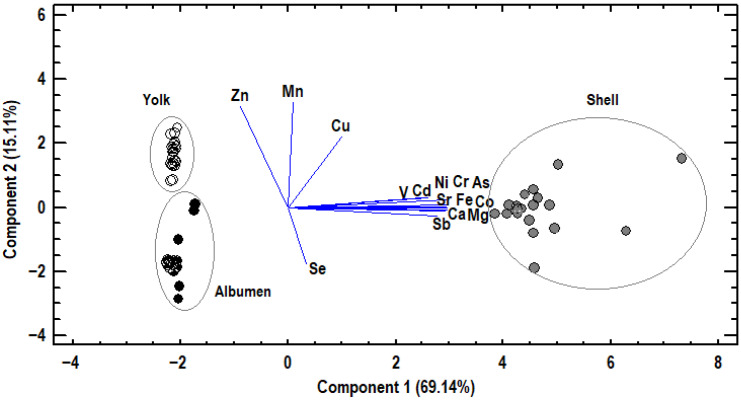 Figure 1
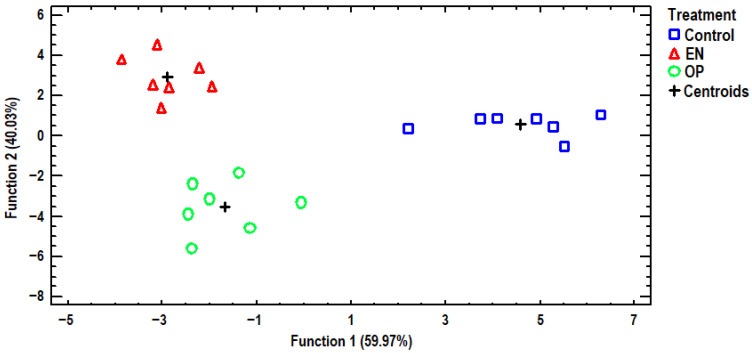 Figure 2
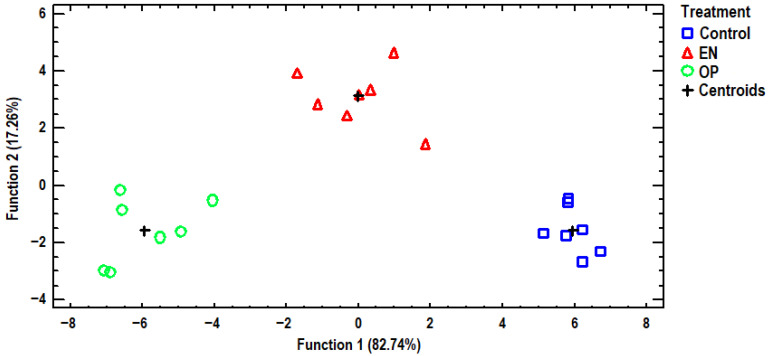 Figure 3
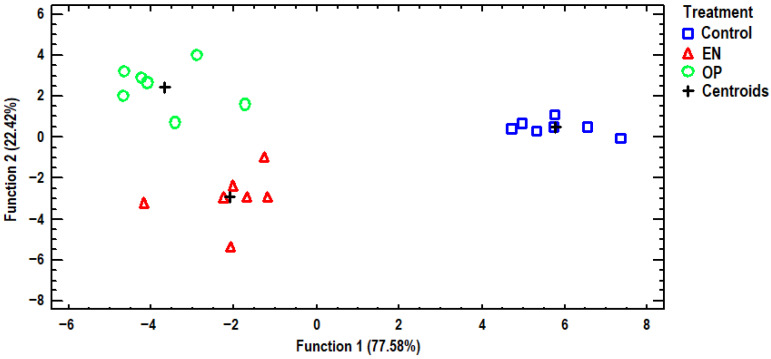 Figure 4
 Figure 5
- —“Thalis—The effects of antioxidant dietary supplementation on animal product quality”
- —Hellenic State and European Union. C.A.G.
- —“FoodOmicsGR Comprehensive Characterisation of Foods”
- —Action “Reinforcement of the Research and Innovation Infrastructure”
- —Operational Program “Competitiveness, Entrepreneurship and Innovation”
- —Greece and the European Union (European Regional Development Fund)
Peer Reviews
No public reviews on file for this paper yet. If you reviewed it on a platform where reviews are public (OpenReview, ICLR, NeurIPS, ICML), you can paste yours below so the community can read it here.
Videos
No videos yet. Explain this paper in a talk, walkthrough, or lecture? Add one.
Taxonomy
TopicsGABA and Rice Research · Phytoestrogen effects and research · Food Quality and Safety Studies
1. Introduction
The term “biometals” refers to trace metals that are involved in regular body functions [1], and the totality of metal and metalloid species found is referred to as the “metallome” [2]. Numerous elements in the organism interact and compete during absorption, metabolism, and homeostasis. Thus, measuring and monitoring these elements in samples are the main goals of elemental metabolomics. The application of elemental metabolomics as a methodology in agriculture, nutrition, and food science has emerged in the last decade [3,4]. Moreover, consumer demand for premium-quality foods has led to the development of functional foods and designer eggs [5], which consist of, but are not restricted to, lower-cholesterol eggs, ω-3-enriched eggs, and eggs enhanced with minerals, pigments, vitamin E, and a variety of bioactive substances [6,7,8,9,10].
Flavonoids represent a group of bioactive polyphenols known as plant-derived secondary metabolites, abundant in vegetables and fruits [11]. They participate in the defensive systems of antioxidants since they have free radical scavenging and metal chelating functions [12,13].
Recently, the rising costs of feedstuffs such as cereal grains and soybean products have steadily increased the expenses associated with livestock production. Therefore, low-input feeding techniques that rely on alternative food supplies, including agro-industrial byproducts, are necessary to reduce animal nutrition costs [14]. Moreover, animal products must shield consumers from oxidative stress-related degenerative disorders in addition to meeting nutritional needs. To promote mental and physical health, consuming foods rich in functional components (i.e., nutraceuticals) can corroborate the body’s defenses against these disorders [15,16].
The use of agro-industrial byproducts in livestock nutrition reduces the environmental impact of production, improves the scope of the circular economy, and promotes sustainability within the food chain of ingredients with added value. These byproducts are thought to be an inexpensive source of certain nutrients [17]. Citrus pulp, a byproduct rich in antioxidant flavonoids, has already been utilized in poultry diets, with diverse results in terms of performance output but significantly positive effects on antioxidant properties. The use of 2% dried orange pulp [18] or 80–480 mg/kg of dried tangerine peel extract [19] had a positive effect on performance parameters, but when 5–10% citrus pulp was provided, growth parameters decreased [20]. Furthermore, flavonoids, such as those present in citrus byproducts, have been examined to assess their potent beneficial effects on poultry, since they are regarded as natural antioxidants and accepted as safer than synthetic ones [21,22]. Most notably, the inclusion of hesperidin [23,24] or naringin [25] in chickens’ diets has improved growth performance and antioxidant capacity.
This study was part of a larger project aiming to utilize agro-industrial byproducts, more specifically citrus byproducts, in poultry diets and, thus, promote sustainability and meet consumer demands for products rich in natural antioxidants. In detail, the wider project aimed to include dried orange pulp, rich in antioxidants, in layers’ diets and examine the performance of birds and egg quality. According to our knowledge, no data exists regarding the effect of adding orange pulp to hens’ diets on the egg metallome. This study envisaged how eggs with an altered metallome would satisfy the nutritional demand of consumers and protect them from metabolism-related issues. Taking into account the fact that some elements (i) act as structural components (Calcium-Ca); (ii) participate in activation or/and signaling (Magnesium-Mg, Ca); (iii) are components of enzymes, proteins, and hormones (Cobalt-Co, Chromium-Cr, Copper-Cu, Iron-Fe, Manganese-Mn, Nickel-Ni, Selenium-Se, Vanadium-V and Zinc-Zn); (iv) are related to toxicity (Arsenic-As and Cadmium-Cd); (v) or have an undefined role (Antimony-Sb and Strontium-Sr), fifteen elements, namely As, Ca, Cd, Co, Cr, Cu, Fe, Mg, Mn, Ni, Sb, Se, Sr, V, and Zn, were detected in the egg.
2. Materials and Methods
2.1. Trial Design and Experimental Procedures
This study was part of a larger project aiming to investigate the role of adding orange pulp to layers’ diets, and the methods used in our experiment were approved by the Research Ethics Committee of the Department of Animal Science of the Agricultural University of Athens [26]. Data on the nutritional requirements, feed ingredients, chemical composition, and the performance of birds have been presented previously [26]. In brief, 189 45-wks old Lohmann Brown-Classic hens were placed into 3 treatment groups. For each treatment group, there were 7 replicate cages. The cage was the experimental unit; thus, n = 7. There were 9 hens per cage, with 63 per treatment. Regarding treatments, (1) hens receiving the control treatment (C) were offered a basal diet without added orange pulp, (2) those receiving dried orange pulp (OP) treatment were offered a diet with 9% dried orange pulp, and (3) hens receiving hesperidin–naringin (EN) treatment were offered a diet with 0.767 g/kg of hesperidin (Tokyo Chemical Industry Co., Ltd., Tokyo, Japan) and 0.002 g/kg of naringin (Alfa Aesar GmbH & Co KG, Emmerich am Rhein, Germany). OP contained peels and seeds and originated from leftovers from the processing of the oranges. The inclusion of 9% OP in the experimental diet was based on (i) earlier findings from our research team [26,27] reporting that adding 0.75 g/kg of hesperidin to the diet improved yolk oxidative stability; (ii) a chemical analysis that revealed hesperidin and naringin contents in OP of 8.52 and 0.0223 g/kg, respectively [28,29,30]; and (iii) ration calculations performed to meet hens’ nutrient requirements [31]. Thus, with a 9% inclusion level, the hesperidin and naringin contents in the OP diet were 0.767 g/kg (8.52 × 0.09) and 0.002 g/kg (0.0223 × 0.09), respectively. Since the inclusion of 9% orange pulp provided the aforementioned levels of hesperidin and naringin, EN treatment was designed to represent those levels present in dried orange pulp compared to OP treatment. During the design of this study, the EN treatment was included to explore whether the anticipated results could be attributed to hesperidin and naringin solely or to other compounds present in the OP. The trial lasted for 30 days, and hens were fed diets with similar energy and protein contents. The OP proximate analysis revealed dry matter of 951.3 g/kg, crude protein of 58.3 g/kg, fat content of 12 g/kg, and fiber of 101 g/kg [26]. Feed was given ad libitum. Birds had free access to water. The light/dark program included 16 h of continuous light and 8 h of darkness. On the 30th day of the experiment, 3 eggs per replicate cage were collected, with 21 per treatment, or 63 in total, and subjected to elemental analysis.
2.2. Determination of Selected Elements in Eggs
Inductively Coupled Plasma Mass Spectrometry (Perkin Elmer, Elan 9000, SCIEX, Toronto, ON, Canada) was applied to determine the elemental profiles of eggs [7,8]. Suprapur^®^ 65% w/v nitric acid was used (Merck, Darmstadt, Germany). Multi-element standards were provided by Inorganic Ventures, Christiansburg, VA, USA. Ultrapure water with 18.2 MΩ cm^−1^ resistance (Merck Millipore, Darmstadt, Germany) was used. A microwave-assisted digestion system (CEM, Mars X-Press, Matthews, NC, USA) was used for sample digestion. Wet samples (1 g yolk, 1 g albumen, and 0.1 g of eggshell) were weighed and placed in a polypropylene tube. The predigestion of samples occurred for 30 min. The resulting sample suspensions were transferred quantitatively into the polytetrafluoroethylene MARS vessels (CEM, Mars X-Press, Matthews, NC, USA). The MARS digestion program included ramping for 20 min from 100 W to 1200 W and stability for 15 min. The maximum temperature was 200 °C, and then 15 min of cool-down followed. No sample losses occurred since the polytetrafluoroethylene vessels were sealed. Sample solutions were filtered with 0.20 μm/15 mm filters (Chromafil, Macherey-Nagel, Düren, Germany). Sample solutions were diluted with ultrapure water and injected into the ICP-MS tool. ICP-MS was performed with a nebulizer gas flow of 0.91 L min^−1^, a lens voltage of 8.5 V, an ICP RF (radiofrequency) power of 1050 W, and a pulse stage voltage of 950 V. High-purity standards were used for the calibration curves.
2.3. Statistical Analysis
The Statgraphics statistical package (version 17) was used. Data are shown as least squares means ± standard errors. Data distribution was explored with the Shapiro–Wilk test and graphical methods (Q–Q plots) to assess normality. The homogeneity of variances was checked using Levene’s test. The effects of dietary treatments on element concentrations were explored using one-way analysis of variance (ANOVA). When appropriate, post hoc analyses were performed using Duncan’s multiple range test. When the assumptions of ANOVA, such as the normality and homogeneity of variances, were not met, a nonparametric test (Kruskal–Wallis) was performed, followed by Dunn’s multiple range test. A reduction in data dimensionality and an investigation of the relationships between the elements were performed with principal component analysis (PCA). Discriminant analysis was performed on albumen, yolk, or shell data to investigate the differentiation of samples by dietary treatment and further explore the elements’ ability to distinguish the samples. Discriminant variables were selected using Wilk’s lambda (λ) criterion. For all tests, the significance level was set at 5%.
3. Results
3.1. Elemental Content
The concentrations of selected elements in egg albumen are presented in Table 1. In our experiment, the inclusion of 9% dried orange pulp decreased the concentrations of Co (39%), Cr (15%), Cu (52%), Fe (15%), and Se (63%) compared to the control treatment. Hesperidin and naringin supplementation significantly decreased the concentrations of Co (24%) and Ni (33%) and increased that of Sb (60%) compared to the control (Table 1).
The concentrations of selected elements in egg yolk are illustrated in Table 2. The supplementation of dried orange pulp (Citrus sinensis) significantly decreased levels of Co (19%), Fe (20%), Mn (41%), Ni (12%), and Se (58%), while increasing the concentration of V (12%), compared to the control.
Moreover, the supplementation of feed with hesperidin plus naringin at 0.767 and 0.002 g/kg notably decreased, compared to the control, the concentrations of As (15%), Co (13%), and Se (50%) (Table 2).
Concentrations of selected elements in eggshell are presented in Table 3. The supplementation of 9% dried orange pulp significantly decreased the concentrations, compared to the control, of As (3.5-fold), Ca (7%), Cd (5-fold), Cr (12%), Cu (4.3-fold), and V (35%). Adding Hesperidin and naringin to the diet decreased, compared to the control, the concentrations of the elements Cr (15%), Cu (3.8-fold), Mg (14%), Se (10-fold), Sr (9%), and V (26%) (Table 3).
3.2. Principal Component Analysis
Principal component analysis (PCA) was applied to elements deposited in egg albumen, yolk, and eggshell to examine relationships between elements and find those that were capable of differentiating the samples (Figure 1). Two principal components were found via PCA, which accounted for 84.24% of the total variability. In Figure 1, the selected elements in albumen, yolk, and eggshell samples are illustrated as a function of both the first and second principal components. In total, 69.14% of the total variability was explained by the first principal component (PC1), and this variability was defined by As, Ca, Cd, Co, Cr, Fe, Mg, Ni, Sb, Sr, and V. These elements were placed away from the axis’ origin and clustered together, indicating strong positive correlations. Samples selected from eggshells clustered near them and, therefore, had higher concentrations of these elements compared to the samples from egg yolk and egg albumen, clustered on the negative side of PC1. Moreover, 15.11% of total variability was explained by the second principal component (PC2) and defined by Cu, Mn, Se, and Zn. Cu, Mn, and Zn were located close together on the positive side of PC2, suggesting a positive correlation. These elements were positioned opposite to Se and, therefore, were negatively correlated. Samples collected from egg yolk were clustered near Zn, Mn, and Cu, indicating higher concentrations of these elements compared to those originating from egg albumen and eggshell. In contrast, albumen samples were clustered on the negative side of PC2, near Se, and they, therefore, had higher concentrations of Se. Consequently, it was possible to clearly distinguish between the albumen, yolk, and eggshell samples.
3.3. Discriminant Analysis
Discriminant analysis was further employed to distinguish the data from selected elements of egg albumen to examine whether the samples could be differentiated against the three dietary treatments, as well as find those elements capable of distinguishing the samples. A discriminant plot of the first two discriminant functions, which successfully distinguishes the samples, can be seen in Figure 2. All examined samples were clustered by dietary treatment, and the classification was 100% accurate. The control group samples were placed on the positive side of the first discriminant function, far away from all the treated samples. Additionally, the second discriminant function distinguished between samples from treatments EN and OP. A stepwise discriminant analysis showed that Co, Cu, Ni, and Sb made the largest contributions to the observed differentiation. Another discriminant plot is presented in Figure 3, based on selected elements of egg yolk, discriminating samples according to dietary treatment. One discriminant function was statistically significant (p = 0.002) for differentiating the samples, and a 100% classification accuracy was achieved. The control group samples were clustered in the bottom right-hand corner of the plot, very distant from all the samples of the treatment groups. Conversely, samples from the OP treatment group were placed on the left side of the plot, furthest away from the samples of the control group, showing that the greatest discrimination for the selected elements was noted for the dietary treatment groups. Samples from the EN treatment group were placed in the middle of the plot, and accordingly, samples from the EN treatment group had intermediate contents of the examined elements. In addition, a stepwise discriminant analysis showed that Co, Cr, Mn, Se, and Sr were mainly responsible for distinguishing the observations. We attempted to further differentiate the samples based on the analyzed elements of the eggshell, as shown in Figure 4. In this instance, the control group’s samples were also grouped far away from the OP treatment group’s samples, as in the egg yolk’s discriminant plot, again indicating that the most discriminations in the examined elements were noted between these dietary treatments. One discriminant function was statistically significant (p = 0.004), and once again, a 100% classification accuracy was achieved. In addition, stepwise discriminant analysis showed that Ca, Co, Cu, and Sr contributed the most to the observed discrimination.
4. Discussion
4.1. Antioxidant Substances in Animals’ Nutrition
To the best of our knowledge, this is the first report to study the effects of supplementing laying hens’ diets with dried orange pulp and how flavonoids present in pulp can alter the egg metallome. The results of this study may support the use of agro-industrial byproducts, more specifically citrus byproducts, in poultry diets to meet consumer demands for products rich in natural antioxidants and to promote sustainability, since they are used elsewhere rather than discarded. Previously, the potential of orange pulp for improving the laying rate, egg quality, and oxidative stability was investigated, with promising results [32]. A crucial component of improving animal welfare and health, as well as livestock performance and output, is improving the composition of food [33]. This study, conducting research from a different perspective, envisaged how eggs with altered metallomes would satisfy the nutritional demands of consumers and protect them from metabolism-related issues.
To delay the natural deterioration and peroxidation of foods, the food industry frequently uses synthetic antioxidants and antimicrobial food additives [34]. Long-term use of these compounds has been associated with an increased risk of carcinogenesis, although it is thus far unclear exactly how they affect human health [35]. Therefore, it is crucial to identify natural substitutes for these ingredients that will not have any negative long-term health effects. Consuming animal products, such as meat and eggs, that are high in these healthy nutraceuticals can improve human health and immunity to illness [36,37,38].
After extracting orange fruit juice and drying the leftover material, dried orange pulp can be used as an industrial byproduct. Orange pulp, which is made of pulp, peel, and seeds, has naturally occurring active ingredients, such as flavonoids and phenolic acids [38,39]. In addition, orange peel contains pectin and dietary fiber. Dietary fiber is essential for preventing the development of cancer, diabetes, heart disease, and gastrointestinal issues [32]. Vitamin C and the flavonoids found in orange pulp have chelating, antibacterial, immune-stimulating, and beneficial antioxidant qualities [40].
Naringin and hesperidin, acting as potential chelating agents, can be used to modulate the egg metallome by changing the contents of specific elements relative to the contents of those elements in the eggs of hens receiving a control diet or a control diet augmented with vitamin E [7]. Orange pulp supplementation at a rate of 50 g/kg combined with organic selenium has recently been found to enhance the nutritional value and oxidative stability of meat without negatively impacting broiler chicken performance [41]. Adding up to 12% citrus pulp to laying hens’ diets has also been shown to have no detrimental effects on hens’ performance or egg quality [42]. This study was part of a larger project, and the performance results demonstrated that adding 90 g/kg of orange increased the oxidative stability of the laying hens’ eggs, though its supplementation was linked to negative outcomes for the laying hens’ performance and egg quality [26]. Reduced feed intake values in birds fed OP may be attributed to the low palatability of OP, and this factor may have affected the intake and availability of micro- and macronutrients in this research. Future studies on OP and elements should consider the fact that gradually increasing citrus pulp levels in layers’ diets may act as an adaptation and positively affect feed intake, overcoming any adverse effects on performance.
According to earlier research, quercetin, another flavonoid, protects erythrocytes from oxidative damage, while naringin and hesperidin exhibit neuroprotective effects linked to their metal chelating properties [43,44]. Additionally, citrus flavonoids may assist in modulating the concentrations of several minerals, according to a study that examined their role in the bioavailability of Ca, Fe, Mg, P, and Zn in eggshells, as well as their role in preventing bone loss [45].
4.2. “Metallophenolomics” and Alteration of Egg Metallome
Orange pulp has been shown to impact trace-element homeostasis in hen eggs, as evidenced by variations in the elemental profiles of the three egg parts.
Compared to the yolk and albumen, the eggshell had the highest concentrations of most elements in this study. Furthermore, the yolk contained larger amounts than the albumen, suggesting that the yolk stores fundamental elements, deposits the majority of egg minerals, and facilitates their efficient transmission to the growing embryo through the yolk sac [8]. Specialized proteins such as Cu transporters, Zn transporters, and Mg channels are responsible for maintaining mineral homeostasis, which is the balance between the absorption and excretion of elements [46].
Orange pulp supplementation decreased the concentrations of most elements in all egg components. In particular, the concentrations of Co, Cr, Cu, Fe, Sb, and Se were decreased in egg albumen; furthermore, Co, Fe, Mn, Ni, and Se concentrations were decreased in egg yolk, and As, Ca, Cd, Cr, Cu, Se, and V concentrations were decreased in eggshell. Only the content of V was increased in egg yolk with orange pulp supplementation compared to the control and EN-fed layers. Notably, elements including As, Cd, Cr, and Cu, thought to be toxic at high concentrations, were reduced following orange pulp supplementation. That said, it is difficult to reach definite conclusions regarding the mitigation of or increase in toxicity. Plant studies have shown that flavonoids are significant components influencing the tolerance of toxic elements such as Cd [47]. Furthermore, polyphenols have been demonstrated to protect cells from oxidative damage induced by excess Fe concentrations [48]. Some flavonoids have also been shown to reduce trace element absorption when added to a diet. Grape seed extracts, for example, have been shown to reduce Fe and Zn intestinal absorption in a dose-dependent manner [8]. Nonetheless, more investigation is needed to determine whether dietary orange pulp supplementation and metal complexing properties are directly related.
The formation of flavonoid complexes with elements could be linked to flavonoids’ effects on the homeostasis of trace elements. Recently, many flavonoids have attracted a lot of interest for use as nutritional additives [8]. Flavonoids are best known for their ability to scavenge free radicals. Their beneficial effects are connected to their ability to scavenge free radicals and exhibit complexation capacities with metal ions [49]. This study’s results are consistent with prior data on rodents, indicating that the production of chelates and complexes with organic ligands can affect the interaction between the absorption and membrane transport of certain metal ions and the tissue availability of several elements [50].
Flavonoids’ chelating and antioxidant properties in in vivo biological systems are complex and depend on varied conditions such as bioavailability at the target tissue site; relatively low absorption; metabolite production following absorption, which reduces their activity; and the surrounding flavonoid environment, which can greatly influence to what extent polyphenols exert their effects [51]. Variations in flavonoids may be attributed to their chelation sites, stereoisomers, and structures. Additional research is needed to determine the metal complexation properties of various orange pulp metabolite levels in eggs. In this context, the concept of “metallophenolomics” was recently proposed as a subgroup of metallomics for studying phenolics–metal(loid) complexations [52].
In this study, adding orange pulp to hens’ diets modulated concentrations of several elements in specific egg compartments. Various factors, such as dosage, the type of substance, and combination with other compounds, seem to impact trace element absorption and assimilation by polyphenols.
5. Conclusions
This study showed that orange pulp may modify the elemental profiles of eggs due to the existence of flavonoids that can change the amounts of specific elements present in egg parts. The observed results showed complicated interactions that cannot be solely attributed to element chelation, indicating that more research is required.
The future is promising regarding the use of orange pulp in this field, but more research is needed to understand the appropriate levels of orange pulp that should be added to diets to create eggs with altered metallomes without compromising bird performance. In addition, it is hypothesized that interactions could be addressed through feeding studies with fine-tuned elemental supplementation and concurrently differentially adjusted concentrations of flavonoids.
The reference list from the paper itself. Each links out to its DOI / PubMed record.
- 1Silver S. Bio Metals: A historical and personal perspective Biometals 20112437939010.1007/s 10534-011-9417-621279732 · doi ↗ · pubmed ↗
- 2Mounicou S. Szpunar J. Lobinski R. Metallomics: The concept and methodology Chem. Soc. Rev.2009381119113810.1039/b 713633 c 19421584 · doi ↗ · pubmed ↗
- 3Wishart D. Metabolomics: Applications to food science and nutrition research Trends Food Sci. Technol.20081948249310.1016/j.tifs.2008.03.003 · doi ↗
- 4Wu W. Zhang L. Zheng X. Huang Q. Farag M.A. Zhu R. Zhao C. Emerging applications of metabolomics in food science and future trends Food Chem. X 20221610050010.1016/j.fochx.2022.10050036519105 PMC 9743159 · doi ↗ · pubmed ↗
- 5Alagawany M. Farag M.R. Dhama K. Patra A. Nutritional significance and health benefits of designer eggs World’s Poult. Sci. J.20187431733010.1017/S 0043933918000041 · doi ↗
- 6Réhault-Godbert S. Guyot N. Nys Y. The Golden Egg: Nutritional Value, Bioactivities, and Emerging Benefits for Human Health Nutrients 20191168410.3390/nu 1103068430909449 PMC 6470839 · doi ↗ · pubmed ↗
- 7Pappas A.C. Zoidis E. Goliomytis M. Simitzis P.E. Sotirakoglou K. Charismiadou M.A. Nikitas C. Danezis G. Deligeorgis S.G. Georgiou C.A. Elemental Metabolomics: Modulation of Egg Metallome with Flavonoids, an Exploratory Study Antioxidants 2019836110.3390/antiox 809036131480630 PMC 6770739 · doi ↗ · pubmed ↗
- 8Zoidis E. Pappas A.C. Goliomytis M. Simitzis P.E. Sotirakoglou K. Tavrizelou S. Danezis G. Georgiou C.A. Quercetin and Egg Metallome Antioxidants 2021108010.3390/antiox 1001008033435281 PMC 7826751 · doi ↗ · pubmed ↗