Circadian rhythm parameters differentiate euthymic, manic and depressive mood states in bipolar disorders – an explorative pilot study
J. Clemens, E. Mühlbauer, I. Reinhard, M. Bauer, A. B. Neubauer, P. Ritter, V. M. Ludwig, W. E. Severus, U. W. Ebner-Priemer, S. E. Schmitz

TL;DR
This study shows that circadian rhythm patterns can help distinguish between different mood states in bipolar disorder, offering a new way to monitor symptoms.
Contribution
The study introduces circadian rhythm parameters as potential digital biomarkers for differentiating mood states in bipolar disorder.
Findings
Lower MeanDiff, IS, and IV and higher FormDiff were linked to depressive mood states.
Higher MeanDiff, IS, IV, and lower FormDiff were associated with (hypo)manic symptoms.
Circadian rhythm parameters effectively differentiate between euthymic, depressive, and (hypo)manic states.
Abstract
Bipolar disorders (BD) pose significant therapeutic health challenges due to recurrent and largely unpredictable depressive and (hypo)manic episodes. Traditional self-report methods for symptom monitoring are limited by their dependence on patient adherence which is frequently diminished during symptomatic phases. Circadian movement patterns, measured via actigraphy, have emerged as promising digital biomarkers for distinguishing mood states in BD. This study examined the utility of circadian rhythm parameters in differentiating euthymic, depressive, and (hypo)manic states. This study analyzed data from 27 BD patients (mean age = 46 years, 16 female) monitored over 12 months as part of the BipoSense project. Wrist-worn accelerometers continuously recorded physical activity, while mood state was assessed using daily self-reports and biweekly expert evaluations. Circadian rhythm…
Genes, proteins, chemicals, diseases, species, mutations and cell lines named across the full text — each resolved to its canonical identifier and authoritative record.
Click any figure to enlarge with its caption.
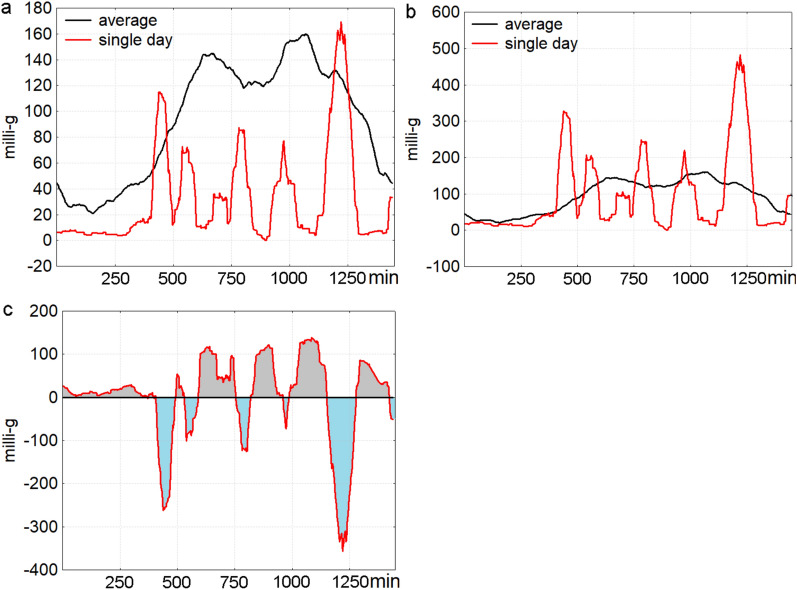 Figure 1
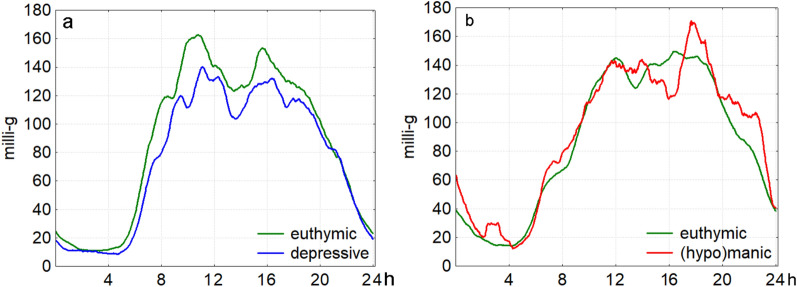 Figure 2
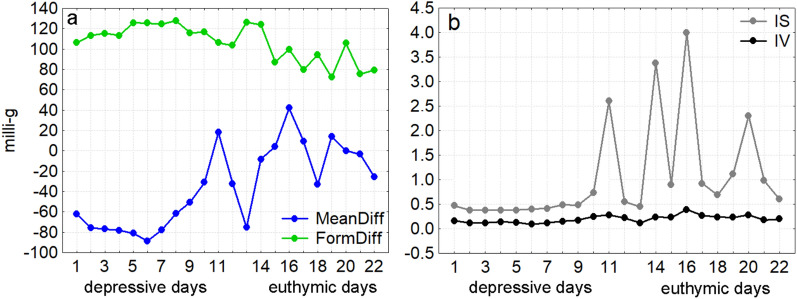 Figure 3
Peer Reviews
No public reviews on file for this paper yet. If you reviewed it on a platform where reviews are public (OpenReview, ICLR, NeurIPS, ICML), you can paste yours below so the community can read it here.
Videos
No videos yet. Explain this paper in a talk, walkthrough, or lecture? Add one.
Taxonomy
TopicsBipolar Disorder and Treatment · Circadian rhythm and melatonin · Tryptophan and brain disorders